Disclosure: As an Amazon Associate, Curry Ingredients earns from qualifying purchases. If you buy through links on this page we may earn a small commission at no extra cost to you. We only recommend gear that suits the curries we cook on this site.
Many of the world’s favourite curries are built on two ingredients from a can and a tub: coconut milk and curry paste. They are the base of Thai green curry, massaman curry and Sri Lankan fish curry. Choose them well and your curry tastes like it came from a Bangkok street stall; choose badly and it is thin and flat.
How to Choose Coconut Milk
- Read the ingredients: the best cans contain coconut and water, with maybe a natural stabiliser. Avoid long ingredient lists.
- Full-fat for curry: look for a fat content around 17–24%. The thick cream on top is what you “crack” (fry until the oil separates) with the curry paste.
- Light coconut milk is just watered down – use full-fat and add water yourself if you want a lighter sauce.
- Cartons vs cans: cartons of coconut milk for drinking are too thin for curry. Use cans or UHT packs labelled for cooking.
- Coconut cream is thicker still – great for finishing rich curries and desserts.
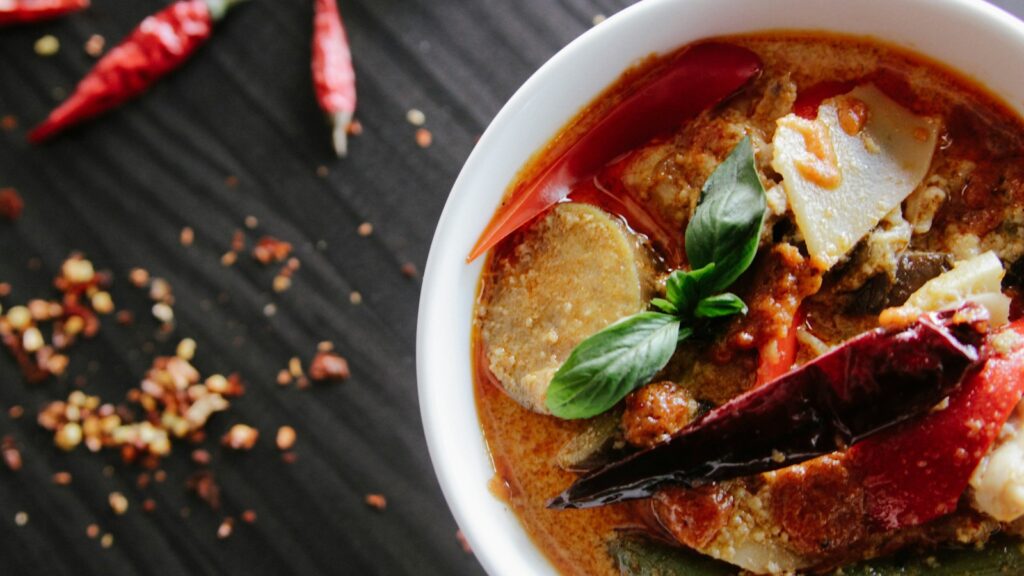
Coconut Milk Brands Cooks Trust
1. Aroy-D Coconut Milk
A Thai favourite with a clean, fresh coconut flavour and very few additives. Available in cans and in handy UHT cartons for cooking.
Why we like it:
- Rich and creamy
- Short ingredient list
- Cracks well for Thai curry
Keep in mind:
- Different pack types have different thickness – check the label
See Aroy-D Coconut Milk on Amazon →
2. Chaokoh Coconut Milk
One of the most widely used brands in Thai restaurants abroad. Consistent, creamy and easy to find.
Why we like it:
- Consistent quality
- Widely available
- Good value in multi-packs
Keep in mind:
- Some cans separate a lot – shake or stir before using
See Chaokoh Coconut Milk on Amazon →
How to Choose Thai Curry Paste
Making paste from scratch in a mortar and pestle is wonderful, but a good shop-bought paste is what many Thai home cooks use on weeknights. Look for pastes that list chillies, lemongrass, galangal, garlic and shallots near the top of the ingredients.
3. Mae Ploy Curry Paste
Strong, authentic and spicy. Sold in tubs of red, green, yellow, massaman and panang paste. A little goes a long way.
Why we like it:
- Big, authentic flavour
- Large tubs keep for months in the fridge
- Many varieties
Keep in mind:
- Quite hot and salty – start with less and taste
See Mae Ploy Curry Paste on Amazon →
4. Maesri Curry Paste
Small cans of paste, each enough for one curry for 3–4 people. Perfect if you only cook Thai curry now and then and don’t want an open tub in the fridge.
Why we like it:
- Single-use cans – no waste
- Good range including massaman and panang
- Inexpensive
Keep in mind:
- Each can is a fixed amount
See Maesri Curry Paste on Amazon →
The Secret: Crack the Coconut Cream
- Don’t shake the can. Spoon the thick cream from the top into a hot wok or karahi.
- Fry it for 2–3 minutes until it bubbles and the oil starts to separate.
- Add the curry paste and fry for another 1–2 minutes until very fragrant.
- Add your meat or vegetables, then the rest of the coconut milk.
- Season at the end with fish sauce, palm sugar and lime.
Frequently Asked Questions
Should I use full-fat or light coconut milk for curry?
Full-fat. It gives a creamy sauce and lets you fry the paste in the coconut cream. You can always thin it with water or stock.
How long does curry paste last once opened?
A tub of Thai curry paste keeps for several months in the fridge in a sealed container. Freeze small portions for longer storage.
Can I use coconut milk in Indian curries?
Yes. It is traditional in South Indian, Sri Lankan and Goan curries, such as fish curry and prawn curry.