
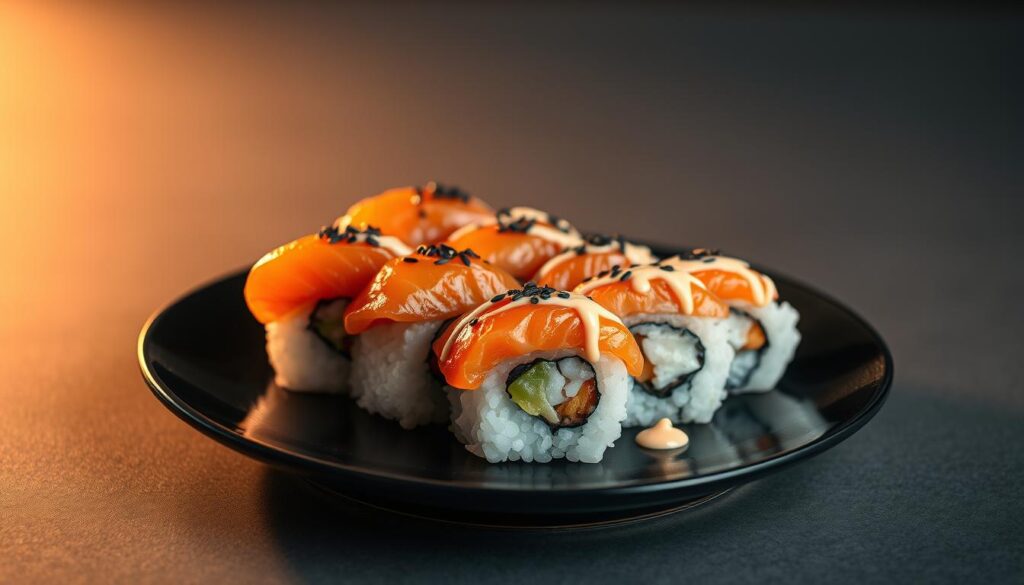
Do you remember the first time you were unsure about sushi? You wanted something comforting but weren’t sure about raw fish. Cooked salmon sushi is like a warm hug for your taste buds.
Baked salmon sushi is a mix of seasoned rice, creamy salmon, and spices. It’s topped with avocado, furikake, and sesame seeds. You can also add green onions and fish roe for extra flavor and texture.
This dish is perfect for those who love cooked salmon. You can use leftover salmon or cook it fresh. It’s ready in 30–45 minutes and serves 4–6 people. It’s great for avoiding raw fish, meal prep, or impressing guests.
Next, we’ll dive into what cooked salmon sushi is, its health benefits, and what ingredients you’ll need. You’ll also get step-by-step instructions for making the dish. Plus, we’ll cover variations, serving ideas, storage tips, and advice for beginners.
Table of Contents
What is Cooked Salmon Sushi?
Sushi starts with seasoned short-grain rice mixed with rice vinegar, sugar, and salt. This rice gives sushi its unique texture and a mild tang. Nori sheets, furikake seasoning, soy sauce, and wasabi are common partners that enhance the flavor.
Cooked salmon sushi replaces raw fish with fully cooked salmon. You can use baked, grilled, air-fried, or leftover cooked salmon. Canned salmon, drained and flaked, works when fresh fish is not available. Variations range from baked sushi bake casseroles to warm, broiled sushi-topped rolls and deconstructed sushi bowls.
Cooked versions often combine baked salmon with cream cheese, Kewpie mayonnaise, sriracha, and unagi sauce to form a creamy, umami-rich topping. This mix gets broiled or baked for a warm, melty finish that contrasts with cold sushi rice.
Raw sushi emphasizes delicate, chilled slices of fish served with little added richness. Cooked-salmon sushi ingredients tend to be bolder. Typical cooked salmon sushi ingredients include mayonnaise, spicy seasonings, and broiled toppings that create more savory depth than the minimal approach used for raw sashimi-style presentations.
Food safety is a practical advantage. If you avoid raw seafood or plan a family meal or potluck, cooked salmon sushi reduces concerns about raw-fish handling while still delivering familiar sushi textures. You can still practice safe storage and proper reheating when using leftovers.
Understanding the Basics of Sushi
Sushi is built around that seasoned rice; fish and fillings are accents. When you learn to balance rice seasoning, nori placement, and fillings, you can adapt recipes to cooked or raw styles. Simple tools like a rice paddle, a sharp knife, and a bamboo mat help shape consistent rolls and bowls.
Difference Between Cooked and Raw Sushi
Raw sushi focuses on purity: fresh, cold fish and minimal condiments to highlight flavor and texture. Cooked sushi leans into cooked-salmon sushi ingredients and preparations that add creaminess and umami. The texture shifts from silky to flaky, and the serving temperature can be warm or room temperature.
| Feature | Raw Sushi | Cooked Salmon Sushi |
|---|---|---|
| Main Protein | Fresh, raw fish slices | Cooked or canned salmon, flaked or baked |
| Typical Add-ins | Minimal: soy, wasabi, pickled ginger | Cream cheese, Kewpie mayonnaise, sriracha, unagi sauce |
| Serving Temp | Cold | Warm or room temperature |
| Food-Safety | Requires strict handling and freshness | Lower risk from pathogens due to full cooking |
| Best For | Purists and raw seafood lovers | Beginners, families, potlucks |
Health Benefits of Cooked Salmon
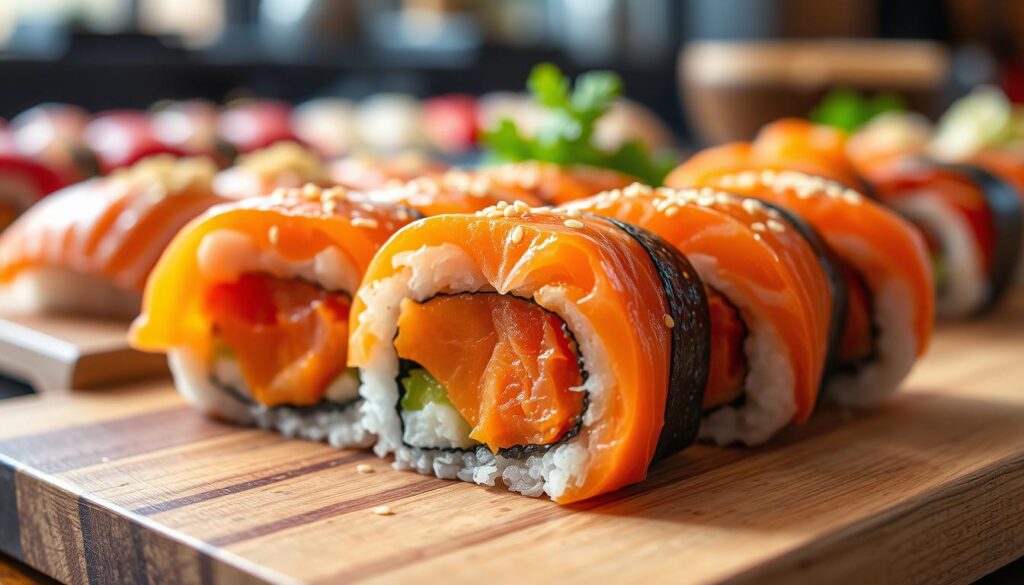
Cooked salmon is packed with nutrients and is safer than raw fish. It offers protein, healthy fats, and vitamins that boost energy and brain health. Here are quick nutrition facts and tips to pick the best cooking method for your meals.
Nutritional Value of Salmon
Salmon is a great source of protein, with about 25–30 grams per serving. It also has omega-3 fatty acids, B vitamins, vitamin D, selenium, and potassium.
Lighter cooking methods like air-frying or using low-fat spreads keep calories in check. A healthy portion of cooked salmon sushi can have around 380 calories. It has about 30g of protein, 40g of carbs, and 15g of fat, making it good for muscle repair and energy.
Advantages Over Raw Salmon
Cooking salmon makes it safer by killing pathogens and parasites. This is good for young kids, pregnant women, and people with weak immune systems. You can serve warm or seared salmon with confidence at family dinners.
Cooked salmon allows you to add flavors with herbs, soy sauce, garlic, and paprika. You can make a tasty cooked salmon sushi roll or bowl. Just remember, creamy fillings and sushi rice add calories and sodium. Using low-fat mayonnaise or less rice can help keep it tasty without too much fat.
Below is a table comparing the nutritional values and practical differences of three common cooked-salmon styles.
| Style | Approx. Calories per Serving | Protein | Fat | Notes |
|---|---|---|---|---|
| Baked Salmon Roll (light mayo) | ~380 kcal | 30 g | 15 g | Balanced macros; lower fat with light mayo; good cooked salmon sushi nutritional value |
| Air-Fried Salmon Nigiri | ~320 kcal | 28 g | 12 g | Crisp texture; reduced oil; ideal for calorie-conscious eaters |
| Seared Salmon with Cream Cheese | ~460 kcal | 32 g | 22 g | Richer flavor; higher calories from creamy layers; good for special occasions |
Remember to control portion sizes and rice seasoning to keep the benefits of cooked salmon sushi. Small adjustments can make your meals healthy and delicious without too many calories.
How to Prepare Cooked Salmon Sushi
Making cooked salmon sushi at home is easy when you follow a few steps. Start by planning so the rice and salmon are ready at the same time. This ensures the best flavor and texture in your sushi.
Choose salmon that’s fresh and easy to flake. Opt for boneless, skinless fillets if you can. Fresh or thawed fillets work well. Leftover baked salmon or canned salmon can also be great options.
Remove bones and skin after cooking to make mixing easier. If using frozen salmon, thaw it in the fridge overnight. Pat the fillet dry before seasoning to help it brown evenly.
Selecting Fresh Salmon
Look for salmon with firm flesh and a mild smell. Avoid fish that smells too fishy or has soft, discolored spots. At Whole Foods or local markets, ask for sushi-grade fillets.
For canned salmon, pick brands like Bumble Bee or Chicken of the Sea. Drain it well. Leftover baked salmon can be flaked and used in your topping.
Cooking Techniques You Can Use
Baking at 375–400°F is easy; cook for 15–20 minutes until it flakes. Air-frying at 400°F takes about 20 minutes for a 1-lb fillet. Pan-searing and grilling add more texture and char.
Season the salmon lightly before cooking with soy sauce or coconut aminos. Add minced garlic or garlic powder, salt, pepper, paprika, and olive oil. After cooking, remove the skin for easier mixing into sushi.
Sushi Rice Preparation Tips
Use short-grain sushi rice or Calrose for a sticky texture. Rinse the rice until the water is clear to remove starch. Soaking for 15–20 minutes improves texture.
Use a water ratio of 1:1.4 to 1:1.75. For example, 1¼ cups uncooked rice to 1¾ cups water makes about 3½ cups cooked. Season the warm rice with a mix of rice vinegar, sugar, and salt, and a bit of toasted sesame oil.
Fold the seasoning gently to avoid mashing the rice. If using leftover rice, warm it slightly before seasoning. This helps it absorb the dressing evenly.
You can bake the salmon while the rice cooks to save time. For a sushi bake, press the seasoned rice into a greased 9×9 pan, sprinkle furikake, top with the salmon mixture, bake at 400°F for 12–15 minutes, and broil 1–2 minutes for golden browning.
| Step | Action | Timing / Temp |
|---|---|---|
| Choose salmon | Boneless, skinless fillet or drained canned salmon | Buy fresh or thawed |
| Prep rice | Rinse, soak 15–20 min, cook, season while warm | Ratio 1:1.4–1.75 (rice:water) |
| Cook salmon | Bake, air-fry, grill, or pan-sear; season for umami | Bake 375–400°F 15–20 min; Air-fry 400°F ~20 min |
| Assemble | Flake salmon, remove skin, top rice or press for sushi bake | Sushi bake: 400°F 12–15 min, broil 1–2 min |
| Serve | Garnish with furikake, scallions, mayo, or sesame | Serve warm for the best cooked salmon sushi at home |
Essential Ingredients for Cooked Salmon Sushi
Begin with a few key pantry items for cooked salmon sushi. You’ll need short-grain sushi rice or a Calrose substitute, along with rice vinegar, sugar, and salt. Add a bit of toasted sesame oil for that authentic rice taste. Use 1 lb (about 453 g) of cooked salmon for the main protein.
For creamy rolls or a sushi bake, include Kewpie mayonnaise or a lighter mayo, and cream cheese or a lower-fat option. Don’t forget sriracha for a bit of heat. Have nori sheets ready for wrapping, along with avocado and cucumber for texture. Top it off with sesame seeds and furikake.
When making cooked salmon sushi at home, prepare two bowls. One for rice seasoning (rice vinegar, sugar, salt) and another for sauces (spicy mayo, eel sauce). This makes prep easier and speeds up assembly.
Use the list below to guide your shopping and prep. This way, your cooked salmon sushi rolls will come together quickly and consistently.
| Ingredient | Purpose | Notes / Substitutes |
|---|---|---|
| Short-grain sushi rice (Calrose) | Base for rolls and bowls | Jasmine can work, but stick to short-grain for stickiness |
| Rice vinegar, sugar, salt | Season rice | Adjust sugar for sweetness level you prefer |
| Cooked salmon (1 lb / 453 g) | Main protein | Bake, poach, or pan-sear for tender flakes |
| Nori sheets | Wraps or scooping option | Seaweed snacks work for snacks or deconstructed dishes |
| Kewpie mayonnaise + sriracha | Spicy mayo topping | Regular mayo is fine; adjust sriracha to taste |
| Eel (unagi) sauce | Sweet-savory glaze | Simmer equal parts soy, sugar, rice vinegar to thicken |
| Furikake | Rice seasoning for umami | Sesame-nori mix adds crunch and flavor |
| Avocado, cucumber | Texture and freshness | Slice thin for even rolls |
| Soy sauce, tamari, or coconut aminos | Dipping and seasoning | Use tamari or coconut aminos for gluten-free options |
| Green onions, sesame seeds | Garnish and aroma | Chop green onions fine for even distribution |
Notable Sushi Accompaniments
Choose accompaniments that contrast well. Pickled ginger cleanses the palate between bites. Fish roe adds briny texture. Use extra avocado slices or thin cucumber ribbons to brighten rolls.
Furikake sprinkled on rice layers brings sesame and seaweed notes that enhance simple preparations. Nori sheets can be used as a wrap for classic rolls or torn into pieces for a sushi bake crust.
Common Condiments and Sauces
Spicy mayo is essential for many cooked salmon sushi rolls. Mix Kewpie mayonnaise with sriracha for a silky, spicy finish. Eel sauce adds sweet-savory depth; simmer soy, sugar, and rice vinegar until it thickens.
Keep soy sauce or tamari for dipping. For a lighter kick, whisk reduced-fat mayo with wasabi paste, rice vinegar, and a drop of sesame oil to make wasabi mayo. For gluten-free alternatives, swap soy for tamari or coconut aminos without losing flavor.
Popular Variations of Cooked Salmon Sushi
You can make many tasty dishes with cooked salmon for weeknight dinners or parties. This section covers bake-style casseroles, lighter versions, classic rolls, and deconstructed bowls. Each idea focuses on texture, seasoning, and simple swaps for delicious cooked salmon sushi at home.
Try a sushi bake for a crowd-pleaser. Layer sushi rice, furikake, and a creamy salmon mix. The mix includes flaked cooked salmon, cream cheese, Kewpie mayo, and sriracha. Bake at 400°F for 12–15 minutes until it bubbles. Serve with nori sheets for guests to scoop and roll.
For a healthier option, air-fry the salmon. Use reduced-fat cream cheese and light mayonnaise instead of full-fat. Add garlic powder, onion powder, and smoked paprika for flavor. A serving has about 380 calories and 30 g protein, making it a good choice for macros.
Cooked salmon rolls are perfect for those who love classic sushi. Use inside-out or maki style and fill with seasoned cooked salmon, avocado, cucumber, and spicy mayo or unagi sauce. Kewpie mayo adds richness, while light mayo cuts calories. These rolls are great for both traditional and modern sushi fans.
For a quick meal, make a sushi bowl. Start with sushi rice, then add seasoned cooked salmon, avocado, cucumber, and cream cheese or mayo. Top with furikake, black sesame, and green onions. Add spicy mayo and unagi drizzle for a nice contrast. Bowls are easy to make and perfect for lunches.
Try different proteins for variety. Use imitation crab for a surf-and-turf mix, or shrimp, tofu, grilled chicken, or canned salmon when time is short. Drain and flake canned salmon well to match other textures.
| Variation | Main Components | Cooking Method | Why Try It |
|---|---|---|---|
| Sushi Bake | Sushi rice, flaked cooked salmon, cream cheese, Kewpie mayo, furikake | Baked at 400°F for 12–15 minutes | Easy to share, rich flavors, nori for scooping |
| Health-Conscious Bake | Air-fried salmon, light mayo, reduced-fat cream cheese, spices | Air-fry salmon, quick bake optional | Lower calories and fats, high protein |
| Cooked Salmon Rolls | Flaked cooked salmon, avocado, cucumber, spicy mayo | Rolled as maki or inside-out rolls | Traditional format, great texture contrast |
| Sushi Bowl | Sushi rice, seasoned flaked salmon, avocado, furikake, sauces | No roll; assemble in bowl | Fast assembly, ideal for meal prep |
| Quick Swap Options | Canned salmon, imitation crab, shrimp, tofu | Pan-sear, grill, or use canned | Convenience and variety |
Use these ideas to create your best cooked salmon sushi recipe. Mix and match fillings and sauces until you find flavors you love. With simple tweaks, you can make sushi rolls, bowls, and bakes that are both new and familiar.
Serving Suggestions for Cooked Salmon Sushi
Make your cooked salmon sushi at home feel like a restaurant. Start with a brief intro to get everyone excited. This makes your setup look inviting and intentional.
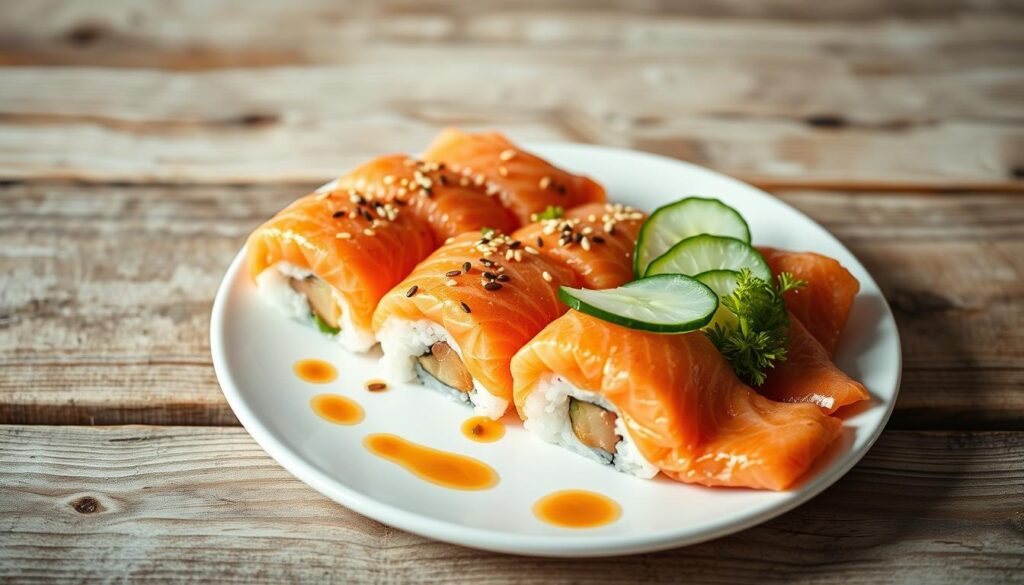
For family nights, set up a simple spread. For guests, create an elegant platter. Include nori sheets or seaweed snacks for scooping. Add pickled ginger and small bowls of soy sauce or tamari for dipping.
Have spicy mayo or wasabi mayo ready for finishing touches. Serve light sides like cucumber salad, edamame, miso soup, or a crisp green salad. These sides balance the richness of the fish and rice.
Ideal Pairings for a Complete Meal
Choose beverages and sides that contrast and refresh. Green tea is great because it soothes the palate and complements the umami in the roll.
For drinks, try chilled sake, a light lager, or a crisp white wine like Sauvignon Blanc or Pinot Grigio. These drinks enhance the flavors without overpowering them.
Edamame adds texture, while pickled ginger refreshes between bites. Use these pairings to plan a menu that’s cohesive and balanced.
Presentation Tips for Your Sushi Plate
Press seasoned rice into a square baking dish for clean slices. For rolls and bowls, arrange toppings in color blocks. Use avocado, cucumber, and roe for strong stripes.
Sprinkle furikake, sliced green onions, and black sesame seeds for contrast. Finish with a drizzle of eel sauce and spicy mayo for shine and color.
Serve sushi bake with small plates and nori sheets for hand rolls. Keep sauces in squeeze bottles for neat drizzles. This enhances your cooked salmon sushi presentation.
Storing Leftover Cooked Salmon Sushi
When you have leftover cooked salmon sushi, it’s important to act fast. Cool the pieces at room temperature for no more than two hours before storing. This helps prevent moisture buildup and keeps the flavor fresh.
Use airtight containers to keep it fresh. If you have a sushi bake, separate the rice and creamy toppings if you can. If not, cover it tightly to keep air out. Always label containers with the date to keep track of how long it lasts.
Best Practices for Refrigeration
Store containers in the middle shelf of your fridge at 40°F (4°C) or below. Place individual rolls in a single layer to avoid damage. For sushi bowls, keep the salmon and rice separate for reheating.
Reheat gently to preserve moisture and texture. Use an oven at 350°F for 8–12 minutes for a crisp finish. Microwave in short bursts, checking often to avoid overcooking. Never refreeze sushi after it’s thawed and reheated.
How Long Can You Keep It?
Refrigerated cooked salmon sushi lasts about three days. This applies to sushi bakes and light protein preparations. Always follow refrigeration times to avoid quality loss and food safety risks.
If you want to store it longer, freeze a cooled sushi bake tightly wrapped. It freezes well for two to three months. Thaw overnight in the fridge before reheating. Note that rice and avocado textures may change after freezing; add avocado just before serving.
| Storage Method | Temperature | Recommended Time | Notes |
|---|---|---|---|
| Refrigerator (airtight) | 40°F / 4°C or below | Up to 3 days | Cool to room temp under 2 hours; separate toppings when possible |
| Freezer (wrapped tightly) | 0°F / -18°C | 2–3 months | Thaw overnight in fridge; expect texture changes in rice and avocado |
| Reheating – Oven | 350°F / 175°C | 8–12 minutes | Even heating; good for sushi bake and assembled items |
| Reheating – Microwave | Variable | Short bursts until warm | Use brief intervals to avoid drying out salmon |
Frequently Asked Questions About Cooked Salmon Sushi
Many home cooks wonder if cooked salmon sushi is just a quick fix. It’s not. To get the real taste, you need proper sushi rice and the right vinegar seasoning. You can also adjust the richness by tweaking mayonnaise or cream cheese, or by picking lighter versions.
Is cooked fish safer than raw? Yes, it is. Cooking fish reduces the risks of raw seafood. It’s safer for kids, pregnant people, and older adults. Just remember to store leftovers right and reheat them gently to keep them safe and tasty.
For beginners, start with the rice. Rinse it until the water is clear, soak it if you can, and season it warm with vinegar. Fold it gently to keep the grains whole. When working with salmon, don’t over-flake it. Leave some meaty chunks for texture.
For an easy unagi-style glaze, mix equal parts soy sauce, sugar, and rice vinegar until it’s slightly reduced. Use Kewpie mayonnaise for the real deal, or regular/light mayo as substitutes.
Hosting a meal where everyone can make their own sushi? Give out nori sheets and small plates for DIY hand rolls. Also, have spoons ready for scooping sushi bake. If the rice gets mushy, stir it less. If the topping is too runny, drain the salmon juices. If the top gets too brown, broil it briefly but watch it closely to avoid burning. These tips will help you get better at making cooked salmon sushi fast.
FAQ
What is cooked salmon sushi and how does it differ from traditional raw sushi?
Is cooked salmon sushi safer than raw salmon sushi?
What are the typical ingredients in a cooked salmon sushi bake or roll?
How long does it take to make a cooked salmon sushi bake?
Can I use leftover or canned salmon for cooked salmon sushi?
How do I prepare authentic sushi rice for cooked salmon sushi?
What cooking methods work best for the salmon?
How can I make a lighter or lower-calorie cooked salmon sushi?
What are common variations of cooked salmon sushi I can try at home?
What sauces and condiments pair best with cooked salmon sushi?
How should I store leftover cooked salmon sushi and how long will it keep?
Can I freeze cooked salmon sushi or sushi bake?
What nutrition benefits does cooked salmon sushi provide?
Do cooked-salmon toppings change the flavor profile compared to raw salmon sushi?
Any tips for first-time makers to get great results?
What are common mistakes and how do I avoid them?
Can I make eel/unagi sauce at home and how?
If you enjoyed this Recipe, don’t miss our other delicious desserts on CurryIngredients.com — you’ll find easy ideas, tips, and inspiration for every occasion. For more festive recipes and global favorites, check out WhatForDinner.com and discover what everyone’s cooking next!


Перебирала варіанти, де купити [url=https://hometextiles.com.ua/]постільну білизну, махрові рушники, пледи[/url], щоб матеріал був ніжним, шви рівними, а вартість адекватною. Переглянула кілька інтернет-магазинів і натрапила на один тлумачний проєкт. Асортимент тішить — від класичної бязі до турецького люксу, також є кухонний текстиль і приладдя для ванни. На сайті hometextiles.com.ua доставляють по Україні швидко, з поверненням проблем немає, до того ж часто бувають приємні знижки за промокодами.
I’ve always been fascinated by historical coins, but only recently started researching seriously. I eventually discovered https://groshi.xyz online.
I was looking for up-to-date market insights, and most sources were outdated.
On this website I found structured articles about coins, their history, and their value. It helped me better understand basic principles of numismatics.
I can confidently recommend this resource if you’re interested in coin collecting or want reliable information about numismatics.
Recently I became interested in numismatics. I eventually discovered https://groshi.xyz online.
I was looking for details about rare and collectible coins, and most sources were outdated.
On this website I found clear descriptions about coins, their history, and their value. It helped me better understand how to evaluate coins.
It’s worth visiting this website if you’re interested in coin collecting or want reliable information about numismatics.