

Imagine coming home after a long day and enjoying a simple dinner. It’s like a warm hug that reminds you of home. Learning to make salmon patties can bring that comfort to your table every week. You can use fresh filets, canned Wild Planet salmon, or even leftover cooked salmon.
This recipe will guide you through making easy salmon patties. You’ll learn to mix basic ingredients into a delicious, golden patty. These patties are packed with protein and omega-3s.
With these steps, you’ll be able to make homemade salmon patties for any occasion. Whether it’s a weeknight dinner, an appetizer, or a meal to freeze for later, you’ll feel confident in the kitchen.
Jump to RecipeTable of Contents
Understanding Salmon Patties and Their Benefits
Salmon patties are a great choice for a quick, tasty meal at home. You can make them with leftover salmon or canned fish. They’re perfect for busy weeknights.
Nutritional Value of Salmon
Salmon is full of omega-3 fatty acids and protein, good for your heart and brain. It also has vitamins B and D, potassium, and minerals. A small patty has 7–12 g of protein and not many calories.
Why Choose Salmon Patties?
Patties are easy on the wallet and loved by kids. Canned wild Alaskan salmon, like Wild Planet, is a reliable choice. You can fry them for a crispy texture or bake for a healthier option.
Versatility in Serving Options
Salmon patties can be appetizers, main dishes, or even burgers. Try them in tacos, on salads, or with roasted veggies. Serve with different sauces like tartar or lemon-dill mayo.
Make them into finger foods for parties or freeze for later. They stay good in the freezer for up to three months. Reheat in a skillet or air fryer.
Ingredients You’ll Need for Salmon Patties
When making salmon patties, pick ingredients that fit your taste and texture goals. This guide helps you choose the right fish, pantry items, and seasonings. This way, your salmon patties will always be tasty and consistent.

Fresh Salmon vs. Canned Salmon
Fresh wild-caught salmon, like coho, sockeye, or king, offers a bright, buttery taste. King salmon is richer, so you might need less binder. To prepare, roast the filets at 425°F for 10–13 minutes, then cool and flake gently.
Canned salmon is great for quick meals. Opt for Wild Planet or other top wild Alaskan brands for quality. Use a 14–15 oz can or three 6‑oz cans to get about 16 oz. Since canned salmon can be drier, add a bit more mayonnaise when making patties.
Essential Seasonings and Spices
Start with a core mix of flavors to enhance the fish. Mix garlic salt or powder with sea salt and black pepper. Add Worcestershire sauce and Dijon mustard for fresh salmon to deepen the flavor.
Lemon zest and juice add brightness to each bite. Fresh herbs like parsley and dill complement salmon well. These seasonings help balance the flavors without overpowering the fish.
Optional Ingredients to Enhance Flavor
For extra texture and sweetness, sauté diced onion or red bell pepper. Minced garlic, capers, or chopped green onions add savory flavors. These ingredients make your salmon patties even better.
Use panko breadcrumbs or almond flour for binders and texture, or go gluten-free. Eggs help hold the patties together. Mayonnaise keeps them moist, which is crucial for canned salmon patties. Cooking in butter or olive oil adds richness.
Preparing the Salmon for Patties
Before mixing ingredients, prepare the salmon for the best taste and texture. Whether you use fresh salmon from Whole Foods or canned salmon from Bumble Bee, a few steps make a big difference. Follow these steps to clean, debone, drain, and flake the salmon for the best results.
Cleaning and Deboning Fresh Salmon
If you have fresh salmon filets, roast them at 425°F until just cooked. This usually takes 10 to 13 minutes, depending on the thickness. Let the fillets cool in the fridge for 10–15 minutes to firm up.
Remove the skin by sliding a sharp knife between the flesh and skin. Then, run your fingers over the fillet to find pin bones and pull them out with clean pliers.
After deboning, flake the cooked salmon with a fork into bite-sized pieces. For oily king salmon, you might need less binder; one beaten egg can be enough. For leaner Atlantic or coho cuts, stick to your usual egg and breadcrumb ratio to keep patties cohesive.
Draining and Flaking Canned Salmon
Choose a 14–16 ounce can for many recipes to yield the right amount of protein. Start by draining canned salmon well to remove excess liquid. Press the salmon gently in a fine-mesh strainer or use the lid to hold the fish back while you pour off the liquid.
Break large pieces apart and remove any big skin pieces if you prefer a smoother texture. Pick out bones if you want a boneless finish; canned salmon bones are edible and add calcium if you leave them in. If the canned fish feels dry after draining, boost the moisture with mayonnaise — increase from 2 tablespoons up to 1/4 cup as needed.
To flake salmon properly, open the can or laid-out fillet and use two forks to separate the flesh along natural grain lines. Aim for uniform flakes so your patties mix evenly and form without large chunks. Mastering how to flake salmon gives a consistent texture that cooks evenly and holds together when forming patties.
| Step | Fresh Salmon | Canned Salmon |
|---|---|---|
| Cooking | Bake at 425°F for 10–13 minutes until just done | Already cooked; no heat needed |
| Cooling | Refrigerate 10–15 minutes before handling | Not required |
| Deboning | Remove pin bones with pliers | Pick out soft bones if desired |
| Draining | Not applicable | Drain thoroughly to remove liquid |
| Flaking | Use fork to make bite-sized pieces | Use forks to separate along grain; remove skin if preferred |
| Binder adjustments | Oily salmon needs less binder | Add mayonnaise up to 1/4 cup if dry |
Making the Salmon Patty Mixture
Begin by making a salmon patty mix that’s both tender and holds shape. Use cooled, flaked salmon and taste as you go. The mix needs the right balance of moisture and binder to stay together during cooking.
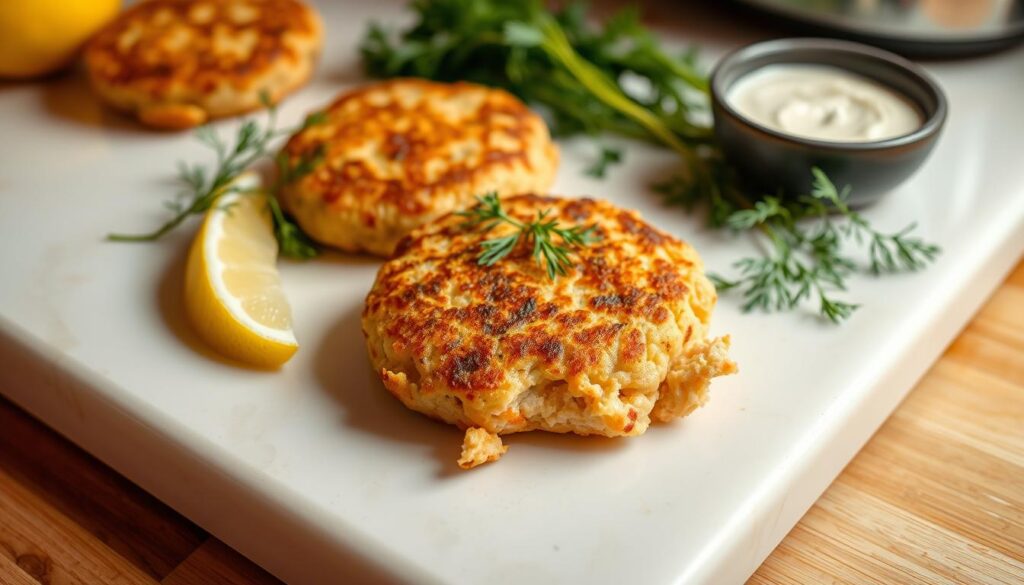
Most people use eggs and bread crumbs to bind the patties. One large egg per pound of salmon is a good starting point. You can also use 1/2 cup of Panko or regular bread crumbs. For a gluten-free option, try almond flour.
Mayonnaise is great for binding and adding moisture. Use 2 tablespoons for moist salmon, or up to 1/4 cup for drier fish. A little Worcestershire sauce, Dijon mustard, or lemon juice can enhance flavor and help the patties stick together.
Check the mix’s texture by hand. If it’s too loose, add more crumbs or almond flour slowly. If it’s too dry, a bit more mayo or an extra egg white can help.
Vegetables add texture and freshness. Sauté diced onion and red bell pepper in olive oil and butter until they’re soft. Let them cool before adding to the mix to prevent the binder from melting.
Minced garlic, chopped parsley, and dill can enhance the flavor without overpowering the fish. Gently fold these ingredients into the mix. Shape the patties about 2 inches wide and 1/3–1/2 inch thick for small servings or larger for salmon burgers.
For the best results, portion the mix with a heaping tablespoon for small patties or a 4-ounce scoop for standard ones. Chill the patties 15–30 minutes before cooking to improve browning.
Cooking Methods for Salmon Patties
You can cook salmon patties in several ways, depending on your schedule and taste. Each method offers a unique texture and flavor. Choose the method that fits your kitchen and equipment.
Pan-Frying
Start by heating olive oil and butter in a nonstick skillet over medium heat. Place the patties in a single layer. Cook for about 3–4 minutes on each side until they’re golden brown.
If they brown too quickly, lower the heat. This way, they’ll cook through evenly. Pan-frying gives you crispy edges and a moist inside, perfect for a quick meal.
Baking for a Healthier Option
Preheat your oven to 400–425°F. Place the patties on a parchment-lined or lightly oiled baking sheet. Bake for about 10–12 minutes on each side, or 20–24 minutes total, until they’re golden and cooked through.
Baking is a healthier option that works well for large batches. Lightly spray or brush oil on the patties before flipping. This helps create a crispy outer layer when baking.
Grilling for a Smoky Flavor
Make the patties a bit thicker so they stay together on the grill. Oil the grill grates or use a grill-safe pan or cast-iron griddle to prevent sticking. Grill over medium heat for about 4–5 minutes on each side, watching carefully to avoid them flaking apart.
Flip gently with a wide spatula and avoid pressing down. Grilling adds a smoky char that pairs well with lemon-dill or tartar sauces. It’s a great way to enjoy grilling salmon patties outdoors.
| Method | Time per Side | Best For | Pro Tip |
|---|---|---|---|
| Pan-Frying | 3–4 minutes | Quick weeknight meals, crispy salmon patties | Use olive oil and butter; lower heat if browning too fast |
| Baking | 10–12 minutes | Healthier batches, oven or air-fryer substitutes | Spray with oil for a crisper exterior and bake on parchment |
| Grilling | 4–5 minutes | Outdoor cookouts, smoky flavor | Make patties thicker and oil grates or use a cast-iron pan |
Tips for Perfectly Cooked Salmon Patties
Follow these tips to make your salmon patties perfect every time. A few tweaks in the mix and cooking time can enhance flavor and texture. Read these tips before you start making your patties.
Achieving the Right Consistency
Strive for a mix that sticks together but isn’t too dense. If it’s too dry, add a bit more mayonnaise or an egg. For a wet mix, add breadcrumbs, panko, or almond flour a little at a time.
Make patties about 1/3–1/2 inch thick. Thicker patties are harder to flip and might break apart. Chill the patties on a parchment-lined tray for 15–20 minutes. This helps them firm up and makes frying or grilling easier.
Avoiding Common Mistakes
Don’t overcrowd the pan. Cook patties in a single layer to keep the heat even and edges crispy. If patties brown too fast, lower the heat to prevent a dry center. Drain and pat dry canned salmon to avoid a soggy mix.
Use fresh herbs sparingly to let the salmon’s flavor shine. For baking, lightly spray the tops with oil and flip halfway through for a crisp finish. For reheating, avoid high microwave heat which dries out the patties. Use a skillet or air fryer instead.
- Best salmon patty recipe tips: measure binders, chill patties, and test one before cooking the whole batch.
- To avoid salmon patty mistakes: keep an eye on cook time and avoid heavy handling while flipping.
- Consider panko for crunch or almond flour for low-carb options when adjusting moisture.
Serving Suggestions for Salmon Patties
Turn a simple meal into something special with these serving suggestions. Start with a warm plate or a soft bun. Then, add flavors that match the fish. Make sure the portions are balanced so the patties are the main attraction.
Simple sauces and fresh herbs are great with salmon. Try homemade tartar sauce or creamy lemon-dill mayo. Use Hellmann’s or Best Foods mayonnaise, chopped dill, lemon zest, and a pinch of salt. Garlic aioli adds depth, while a squeeze of fresh lemon brightens each bite. Sprinkle parsley or dill on top for color and lift. For a casual option, place patties in brioche or potato buns to make salmon burgers.
Choose side dishes that balance texture and flavor. Roast broccoli or fingerling potatoes tossed in olive oil and rosemary for warmth. Sautéed green beans with garlic provide a crisp contrast. For a lighter plate, serve a mixed green salad with cucumber, sliced red onion, and a lemon vinaigrette made from extra-virgin olive oil and Dijon mustard.
If you plan to serve salmon patties as tacos, offer slaw and salsa verde on the side. Slaw with cabbage, lime, and cilantro adds crunch. Salsa verde lends acidity and herbaceous notes that cut through the richness of the patties.
For appetizers or a party platter, arrange mini patties with dipping bowls of tartar sauce, aioli, and lemon wedges. Label each sauce so guests know their choices. These accompaniments for salmon patties make entertaining easy and let diners mix flavors to their taste.
Create a balanced plate by pairing warm vegetables with a fresh salad. These side dishes for salmon patties keep the meal bright and healthy while highlighting the patties’ flavor. Use whole-grain rolls or leafy greens to serve salmon burgers for a satisfying, well-rounded dinner.
Storing and Reheating Leftover Salmon Patties
After you’re done, let the patties cool down completely. Then, pack them in an airtight container and put it in the fridge. They last 3–4 days, so plan your meals ahead and label the container.
To store them longer, make freezer-friendly patties. Stack cooled patties with parchment paper in between. Freeze them flat first, then put them in a sealed bag or container. This way, they stay good for up to three months, perfect for quick meals.
To reheat, thaw frozen patties in the fridge overnight. For crisp edges, reheat in a skillet with a bit of oil or use an air fryer. These methods keep the patties moist, unlike microwaving which can dry them out.
If microwaving is your only option, cover the patties with a damp paper towel or add a splash of water. This helps keep them moist. You can also eat canned salmon patties cold in salads or sandwiches for a quick snack. Just warm them up gently to keep the flavor and texture right.
FAQ
What basic ingredients do you need to make salmon patties?
Should you use fresh salmon or canned salmon for patties?
How do you clean and debone fresh salmon before making patties?
How do you drain and flake canned salmon for patties?
What binding ratios make salmon patties hold together?
How should you add vegetables and aromatics without making patties soggy?
What’s the best pan-frying method for crispy salmon patties?
How do you bake salmon patties for a healthier option?
Can you grill salmon patties without them falling apart?
How do you achieve the right patty consistency so they aren’t dense or crumbly?
What common mistakes should you avoid when making salmon patties?
What sauces and sides pair best with salmon patties?
How should you store leftover salmon patties and how long do they keep?
What’s the best way to reheat salmon patties without drying them out?
Are salmon patties healthy and what nutrition can you expect?
Can you make gluten-free or low-carb salmon patties?
What quantities of canned salmon should you buy for a recipe that serves several people?
Can you make salmon croquettes with the same method?
Easy Salmon Patties
Equipment
- Equipment List based on the recipe Baking sheet (for baking fresh salmon or baking patties)Parchment paper (optional but recommended)Skillet or nonstick frying panSpatula (wide spatula for flipping patties)Mixing bowlForks (for flaking salmon)Knife and cutting boardMeasuring cups and spoonsFine-mesh strainer (for draining canned salmon)Cast-iron pan or grill-safe griddle (if grilling)Tongs or grilling spatula (if grilling)
Ingredients
- 12 –16 oz cooked salmon fresh, canned, or leftover, flaked
- 1 large egg
- 1/2 cup panko or regular breadcrumbs or almond flour for gluten-free
- 2 –4 tbsp mayonnaise 2 tbsp for moist salmon, up to 1/4 cup for dry canned salmon
- 1/2 –1 tsp salt or to taste
- 1/2 tsp black pepper
- 1/2 tsp garlic powder or garlic salt
- 1 –2 tsp lemon zest
- 1 –2 tsp lemon juice
- 1 tsp Dijon mustard
- 1 tsp Worcestershire sauce optional, especially for fresh salmon
- 1/4 cup sautéed diced onion optional
- 1/4 cup sautéed diced red bell pepper optional
- 1 –2 cloves minced garlic optional
- 1 –2 tbsp chopped parsley or dill
- Oil or butter for cooking pan-frying
Instructions
- Prepare SalmonFresh Salmon:Bake at 425°F for 10–13 minutes until just cooked.Cool 10–15 minutes, remove skin, debone, and flake.Canned Salmon:Drain thoroughly.Remove skin and bones if desired.Flake with a fork.In a bowl, combine salmon, egg, breadcrumbs, and mayonnaise.Add Dijon, Worcestershire (optional), lemon zest/juice, salt, pepper, and garlic powder.Fold in cooled sautéed onions/peppers, garlic, parsley, or dill if using.Adjust texture:Too dry → add mayo or 1 egg white.Too wet → add more breadcrumbs or almond flour.Form into patties 1/3–1/2 inch thick.Chill patties for 15–30 minutes to help them hold together.Heat oil/butter over medium heat.Cook patties 3–4 minutes per side until golden.Preheat oven to 400–425°F.Place patties on parchment-lined sheet, spray tops with oil.Bake 10–12 minutes per side (20–24 minutes total).Oil grill or use cast-iron griddle.Grill over medium heat 4–5 minutes per side.Flip gently.Serve with tartar sauce, lemon-dill mayo, or garlic aioli.Make into salmon burgers on brioche or potato buns.Serve with:Roasted broccoli or potatoesSautéed green beansMixed green salad with lemon vinaigretteUse in tacos with cabbage slaw and salsa verde.Make mini patties for appetizers with dipping sauces.Refrigerate: 3–4 days in airtight container.Freeze: Up to 3 months, separated by parchment paper.Reheat:Skillet with a little oilAir fryer for crisp resultsMicrowave only if necessary (cover with damp towel)Make the Patty MixtureChoose Cooking MethodPan-FryingBakingGrillingServing SuggestionsStorage & Reheating
Notes
If you enjoyed this Recipe, don’t miss our other delicious desserts on Here — you’ll find easy ideas, tips, and inspiration for every occasion. For more festive recipes and global favorites, check out WhatForDinner.com and discover what everyone’s cooking next!