
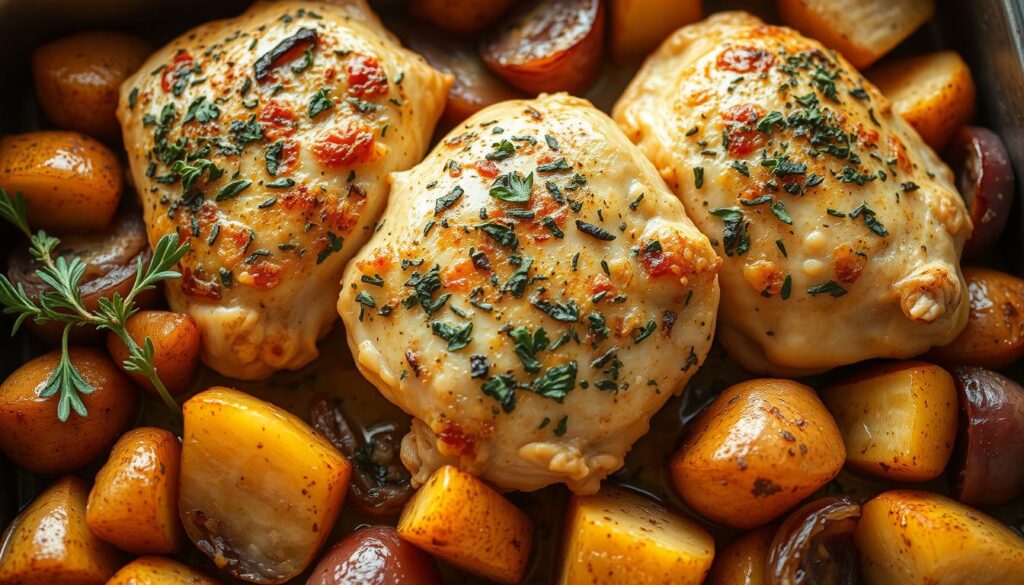
Do you remember that scent? It’s the warm olive oil, fresh lemon, and oregano that fills your kitchen. It makes you feel right at home. When you cook this one-pan meal, the house slows down. Everyone gathers around the table.
Delicious Greek Chicken and Potatoes is a simple yet bold dish. It’s all about the lemony chicken and golden potatoes. The potatoes get crispy on the outside and stay soft inside. The chicken gets a savory, garlic-kissed crust.
This recipe is rooted in Mediterranean cuisine and Greek home cooking. It’s perfect for busy weeknights or when you’re entertaining. You can use a whole roasted chicken, bone-in pieces, or boneless thighs. Add carrots or root vegetables if you want.
Nutrition-wise, it’s a great mix of protein and carbs. It also has vitamin C and potassium from the lemons and potatoes. Plus, leftovers are great for salads or reheating for another meal.
Table of Contents
Introduction to Greek Chicken and Potatoes
Greek chicken and potatoes is a dish loved in many Greek homes. It’s a simple yet flavorful dish that’s a staple in Mediterranean cuisine. The secret to its success lies in the choice of ingredients and cooking methods.
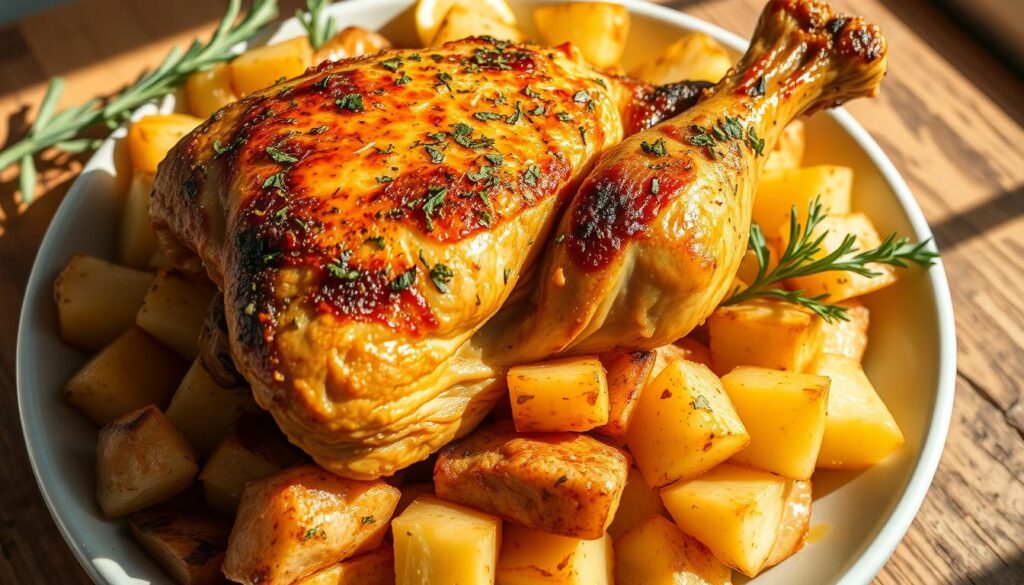
Greek cooks value simplicity and bold flavors. A mix of lemon, oregano, garlic, and olive oil transforms ordinary ingredients into a memorable meal. The goal is to achieve bright acidity, crisp potatoes, and juicy chicken that’s full of flavor.
These dishes have their roots in family gatherings where a whole chicken fed many. Chicken became a versatile and affordable protein for roasting, braising, or making stock. This tradition has kept recipes like kotopoulo lemonato me patates alive in many homes.
The Origins of Greek Cuisine
Greek cuisine is shaped by farming and coastal trade. It relies on staples like olive oil, citrus, herbs, and vegetables. This simplicity allows for dishes that focus on technique rather than complex ingredients.
Roasting chicken with potatoes is a classic technique. It creates rich pan juices for basting and a sauce for the potatoes. Different regions have their own twists, like riganato and lemonato, which highlight oregano or lemon.
Importance of Fresh Ingredients
Fresh ingredients make a big difference in this dish. Fresh lemon juice and zest add a brightness that bottled juice can’t match. Greek extra-virgin olive oil is preferred for its authentic aroma, but some mix in neutral oil for cost and texture.
Choose fresh or dried Greek oregano for that distinct scent. Garlic and paprika support the main flavors. For potatoes, Yukon Golds are creamy, while russets are better for crispy fries.
Remember to handle chicken safely: don’t wash raw poultry and use a meat thermometer. Whole chicken should reach 180°F (82°C) for tender and safe results.
| Element | Why It Matters | Practical Tip |
|---|---|---|
| Fresh Lemon | Provides bright acidity and fresh aroma | Use zest plus freshly squeezed juice for maximum flavor |
| Greek Extra-Virgin Olive Oil | Delivers authentic fruitiness and richness | Drizzle on before roasting; mix with a neutral oil to temper strong olive taste |
| Oregano (fresh or dried) | Gives the dish its classic herbal profile | Sprinkle generously as part of your homemade greek seasoning |
| Potato Type | Affects texture and final mouthfeel | Choose Yukon Gold for creaminess, russet for crisp edges |
| Cooking Method | Shapes the dish’s character and crust | Roasting yields caramelized flavors associated with mediterranean cuisine |
Ingredients You’ll Need for Greek Chicken and Potatoes
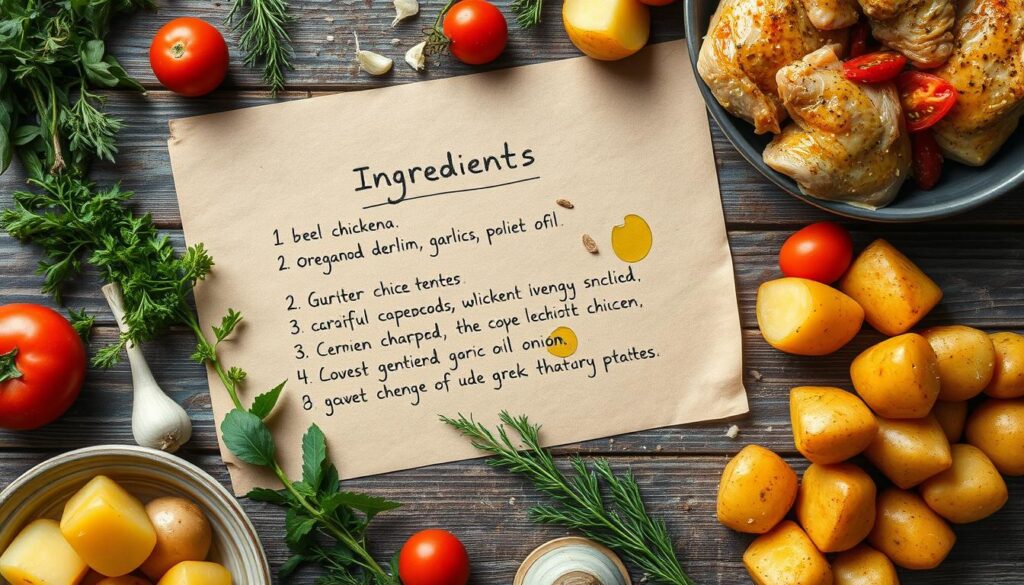
Getting the right ingredients is key to a delicious meal. Here’s a list of what you’ll need and some tips. This will help you make a tasty homemade Greek seasoning or a quick dinner for family and friends.
Fresh Herbs and Spices
Start with dried Greek oregano, fresh garlic, and lemons. Use 1 tablespoon oregano for potatoes and 1 teaspoon for chicken. Add 1/2 cup fresh lemon juice to the potatoes for bigger batches.
Don’t forget salt, black pepper, and sweet paprika for color and sweetness. Finish with extra virgin olive oil and carrot chunks for extra flavor. This mix is the heart of your homemade Greek seasoning.
Chicken Selection Tips
For classic roasting, choose a whole chicken. It gives you white and dark meat and bones for stock. For juicier pieces, go for bone-in thighs or drumsticks.
For quicker cooking, boneless, skinless thighs are great. If using flavored cuts, reduce the marinade to avoid over-flavoring. Use a thermometer to check if the chicken is done; it should be 180°F (82°C) in the thickest parts.
Ideal Potatoes for This Dish
Yukon Gold or yellow-fleshed potatoes are best for roasted wedges. They’re creamy inside and caramelize well. Russets are good for crisp oven fries that brown nicely.
Petite golds, halved, are perfect for single servings. For a meal for six, use 10–12 medium yellow-fleshed potatoes. For a thigh-and-fries braise, 2 pounds of russets works well.
Leave skins on or peel as you like. Cut into wedges or fries and toss with lemon, oil, oregano, salt, and pepper. Roast in a single layer for even browning.
| Component | Recommended Options | Typical Quantity |
|---|---|---|
| Herbs & Spices | Dried Greek oregano, fresh garlic, sweet paprika, lemon zest | 1 tbsp oregano (potatoes), 1 tsp oregano (chicken), 1/2 cup lemon juice |
| Oils & Finishes | Extra virgin olive oil, lemon juice | 2–4 tbsp oil, to taste for finishing |
| Chicken Cuts | Whole chicken, bone-in thighs/drumsticks, boneless skinless thighs | Whole bird for family; 4–6 thighs for smaller groups |
| Potatoes | Yukon Gold, Russet, Petite gold | 10–12 medium Yukon Gold (6 people); 2 lb Russets for thigh version |
| Optional Add-ins | Carrot chunks, store-bought flavored cuts (adjust seasoning) | To taste; small amounts to add color and sweetness |
Step-by-Step Preparation of Greek Chicken and Potatoes
Plan your steps carefully to move smoothly from prep to oven. This makes marinating the chicken, preparing the potatoes, and cooking easier. Keep all your tools and ingredients ready for a seamless one-pan meal or braise-and-roast method.
Marinating the Chicken
If you’re roasting a whole bird, squeeze lemon juice over the cavity and outside. Season with salt, dried oregano, and black pepper. Rub with olive oil and add paprika for color, if you like.
For boneless thighs, season with dried oregano, kosher salt, and pepper. Mix in minced garlic, lemon juice, and olive oil. Braise in a Dutch oven until tender.
Roasting right away works, but resting the chicken for 30 minutes to several hours enhances flavors. Adjust lemon and oil if your thighs are pre-seasoned.
Preparing the Potatoes
Cut potatoes into wedges or fries. Toss with lemon juice, dried oregano, salt, pepper, and oil. Use more oil for larger batches, less for smaller ones.
For roasted wedges, place potatoes around the pan’s edge with optional carrot chunks. For oven fries, spread them on a sheet pan for browning. Finish under the broiler for crisp edges.
Let some potatoes stick to the pan. These caramelized bits add rich flavor that complements the chicken.
Arranging for Cooking
For a classic one-pan meal, put the chicken in the center of a large roasting pan. Surround it with seasoned potatoes and carrots. Roast at about 400°F, letting vegetables roast in the pan juices.
If you choose braise plus oven fries, simmer the chicken until tender. Roast fries separately. Reduce the braising liquid, mix with roasted potatoes, and spoon over the chicken.
Mid-cook, turn the chicken after about 90 minutes and baste potatoes with pan juices. For color, finish under a broiler or sear the skin in a skillet. Deglaze with juices or broth for a glossy finish.
| Step | Key Actions | Timing |
|---|---|---|
| Marinate | Lemon, oregano, salt, pepper, olive oil; paprika optional for color | Immediate to several hours |
| Prep Potatoes | Toss with lemon, oregano, salt, pepper, oil; choose wedges or fries | 10–15 minutes |
| Arrange | Center chicken in pan, surround with potatoes; or braise then roast fries | Place immediately before roasting |
| Mid-Cook | Turn or baste chicken, brown potatoes, finish under broiler if needed | Around halfway through roast |
Cooking Methods for Greek Chicken and Potatoes
There are a few reliable ways to build flavor and texture. Below, you’ll find tips on oven and grill techniques. Plus, easy ways to get potatoes crisp and golden every time.
Oven roasting is great for flavor. Roast a whole bird with lemon-and-oregano potatoes at 400°F. Use a metal roasting pan and keep it uncovered.
Place the pan on the lower rack for even heat. Baste with olive oil and lemon juice in the first hour. Then, flip pieces if needed, add smoked paprika, and roast until the bird is about 180°F (82°C).
Let the roasted chicken and potatoes rest 10–15 minutes before carving. This lets juices settle and flavor deepen.
Oven Roasting for Flavor
For a classic Greek dish, choose a pan that fits the bird with some space. Use an oil blend if your pan is smaller to avoid excess fat. Roast for roughly 1½ hours, then check the internal temperature.
Finish for 20–30 minutes to get a golden skin and tender potatoes.
Grilling for a Smoky Finish
Grilling adds char and depth. Marinate bone-in chicken pieces in lemon, oregano, garlic, and olive oil. Grill over medium-high heat to develop color and cook through.
Keep an eye on direct heat so the meat stays juicy. For smoky potatoes, parboil or par-roast first. Toss par-cooked potatoes in oil and herbs, then finish them on the grates or in a grill-safe pan until crisp.
You can also wrap them in foil with butter and herbs for a softer, smoky side.
Tips for Achieving Perfect Crispy Potatoes
Choose russets for a crunchy exterior or Yukon Gold for a creamy interior with caramelized edges. Spread potatoes in a single layer so heat reaches each piece. If the pan is crowded, use a second sheet to keep them crisp.
- Roast at high heat (400–450°F) and finish briefly under the broiler for a few minutes to create a blistered top.
- Use just enough oil to coat surfaces. Flip once mid-cook for even browning or leave undisturbed to form crunchy patches.
- For extra flavor, baste or toss in reduced pan juices from the chicken before serving.
Remember that refrigerated potatoes will soften. Reheat in the oven to restore texture and keep the quality of your roasted chicken and potatoes intact.
Serving Suggestions and Pairing Ideas
This Greek dish is best when you mix bright, salty, and creamy flavors. Start with a Greek salad on the table. It has tomatoes, cucumber, red onion, Kalamata olives, and feta. Add tzatziki for a cool touch and crusty bread to soak up juices.
For side dishes, try roasted carrots or other root vegetables with herbs and lemon. Olives and extra feta on the side add authenticity. Leftover chicken is great in Greek Cobb salads, grain bowls, or sandwiches for a quick lunch.
Choosing the right wine is key for Greek chicken and potatoes. Assyrtiko pairs well with lemon and oregano. Sauvignon Blanc or unoaked Chardonnay add citrus and herbal notes. If you like reds, a dry rosé or light Pinot Noir works well without overpowering.
For storing leftovers, refrigerate chicken and potatoes for 3–4 days. Keep pan juices or sauce separate. Reheat in a 350°F oven for the best texture. Always reheat chicken to 165°F (74°C) and add fresh lemon for brightness.
FAQ
What is Greek chicken and potatoes and what should I expect from this dish?
Where does this recipe come from and is it traditional?
Which ingredients make the flavor authentic?
What types of chicken work best?
Which potatoes should I choose for roasted wedges versus fries?
How do I season and marinate the chicken?
How should I prepare the potatoes for the pan?
What are the best methods to cook this dish?
How do I get perfectly crispy potatoes?
What internal temperature should the chicken reach for safety?
How long does this dish take and is it good for weeknights?
What sides and wines pair well with Greek chicken and potatoes?
How many calories and nutrients are in a serving?
How should I store and reheat leftovers?
What common variations can I try?
If you enjoyed this Recipe, don’t miss our other delicious desserts on CurryIngredients.com — you’ll find easy ideas, tips, and inspiration for every occasion. For more festive recipes and global favorites, check out WhatForDinner.com and discover what everyone’s cooking next!