
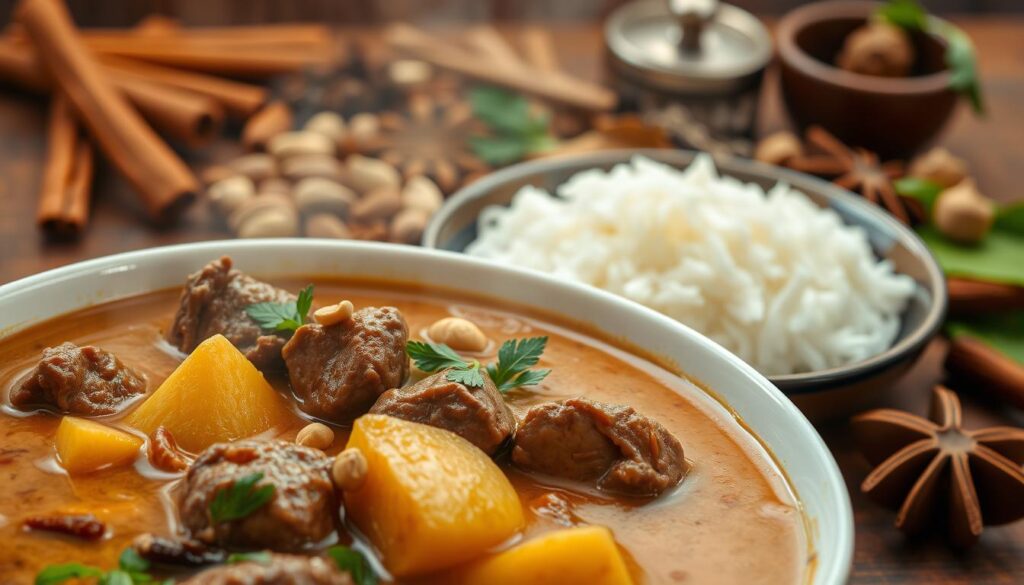
Do you remember the first time a meal truly stopped you in your tracks? That moment when a single bite carries you to another place. For many, that experience comes with a bowl of rich, deeply spiced Thai food.
This dish has a remarkable history. It blends flavors from Persia, India, and Malaysia with classic Thai ingredients. In 2011, and again in 2018, a major news network named it the world’s most delicious food. That honor speaks to its universal appeal.
Our guide unlocks the secrets to creating this masterpiece in your own kitchen. You will achieve restaurant-quality results with fall-apart tender beef and perfectly cooked potatoes. We provide both a traditional from-scratch method and a quicker alternative. This ensures you can make it no matter how busy your schedule is.
Key Takeaways
- Learn to create an authentic, world-renowned Thai dish at home.
- Discover why beef chuck is the ideal cut for achieving melt-in-your-mouth tenderness.
- Follow a comprehensive recipe with options for both traditional and quicker cooking methods.
- Understand the unique, mild spice profile that sets this dish apart from other Thai curries.
- Get step-by-step guidance with photos to build your confidence in the kitchen.
- Adapt the recipe easily for other proteins like chicken, lamb, or tofu.
Introduction to Massaman Curry
What happens when Indian spices meet Thai aromatics in a single pot? You get a culinary creation that stands apart from typical Thai offerings. This dish represents a beautiful fusion of traditions.

What Makes This Curry Unique
Unlike the fiery red or green varieties, this preparation offers a gentle warmth. The heat comes from a comforting hum rather than an aggressive burn. This makes it perfect for those who prefer milder flavors.
The secret lies in the blend of warm spices. Think cumin, coriander, and cinnamon meeting garlic and lemongrass. This combination creates layers of complex taste that unfold slowly.
The Allure of Thai Fusion Flavors
The magic happens when these diverse elements harmonize. Creamy coconut milk provides a rich base. Nutty peanut undertones add depth and texture to the experience.
This dish showcases how culinary borders can blend beautifully. Each spoonful tells a story of cultural exchange. The result is a comforting meal that feels both familiar and exciting.
History and Cultural Roots of Massaman Curry
The journey of this iconic Thai dish begins in the bustling royal courts of 17th century Siam. Persian, Indian, and Malay traders brought exotic spices to Ayutthaya, Thailand’s historical capital. This cultural melting pot created the perfect environment for culinary innovation.
From Persian Influence to Thai Tradition
The name “massaman” comes from the Persian word “mosalman,” meaning Muslim. This reflects the Islamic roots of the dish. Persian merchant Sheik Ahmad Qomi introduced this curry to the Thai court.
His descendants became the noble Bunnag family in Thailand. The Muslim origins explain why traditional recipes use chicken, beef, or lamb instead of pork.
Foreign spices like cardamom, cinnamon, and cumin blended with local Thai ingredients. This created a unique fusion that became royal court cuisine. The dish’s cultural significance appears in an 18th century poem by Prince Itsarasunthon.
“Massaman, a curry made by my beloved, is fragrant of cumin and strong spices. Any man who has swallowed the curry is bound to long for her.”
This royal endorsement helped the dish evolve from court cuisine to worldwide popularity. The first documented recipe appeared in 1889 by Lady Plean Phatsakorawong.
Essential Ingredients for Your Massaman Curry
Before you begin cooking, understanding each component’s role will ensure perfect results. The right ingredients create the authentic flavor profile that makes this dish special.
Spices, Aromatics, and Vegetables
Your homemade curry paste starts with essential aromatics. You’ll need lemongrass, galangal (a citrusy cousin of ginger), eschalots, garlic, and dried Asian chilis.
These spices form the backbone of the flavor profile. Cumin, coriander, cloves, nutmeg, cardamom, and cinnamon create warm, complex notes.
Dried Asian chilis provide mild heat when seeds are removed. This creates the characteristic warm hum rather than aggressive spice.
For the sauce, use full-fat coconut milk for rich flavor. Add fish sauce for saltiness, tamarind for sour notes, and sugar for balance.
Essential vegetables include potatoes and onion. The potatoes absorb flavors and help thicken the sauce. Garnish with chopped peanuts for crunch.
Choosing Quality Meat for Tender Results
Beef chuck is the ideal cut for this recipe. It has the perfect fat content that becomes fall-apart tender during simmering.
Cut your meat into large 4cm cubes rather than small pieces. This traditional method allows the beef to absorb braising liquid flavors fully.
The large cubes become tender enough to fall apart with a touch. Brisket or gravy beef also work well as alternatives.
Your potatoes should be medium-small and cut into 2.5cm pieces. They cook directly in the curry sauce, absorbing all the wonderful flavors.
Mastering Massaman Curry Techniques
Achieving restaurant-quality results at home requires understanding the key preparation methods that define this beloved fusion dish. The foundation lies in your curry paste preparation.
Homemade Curry Paste: Process and Tips
Creating your own massaman curry paste delivers unmatched flavor depth. Start by charring aromatics in a dry skillet over high heat. This takes about 1.5 minutes for optimal smokiness.
Toast dried spices separately for 30 seconds until fragrant. Then blend everything with water until smooth. This cooking technique builds complex layers in your final dish.
Alternative Options with Store-Bought Paste
When time is limited, quality store-bought paste works well. Enhance it by toasting in oil with fresh garlic and ginger. This simple step dramatically improves the flavor.
| Method | Prep Time | Flavor Depth | Best For |
|---|---|---|---|
| Homemade Paste | 20-25 minutes | Exceptional | Special occasions |
| Enhanced Store-Bought | 3-5 minutes | Very Good | Weeknight meals |
| Basic Store-Bought | 1-2 minutes | Good | Quick fixes |
Both approaches yield delicious results. Your choice depends on available time and desired flavor intensity. The table above helps you decide which method suits your needs.
Step-by-Step Cooking Guide: Preparing Beef & Potato Massaman Curry
Your journey to restaurant-quality results begins with understanding how to handle beef and potatoes separately. This two-stage approach ensures perfect texture and flavor absorption.
Braising Beef for Maximum Tenderness
Start by placing 700g beef chuck cubes in a saucepan with 500ml beef broth. Add bay leaves and lemongrass trimmings. The liquid should almost cover the meat but not completely.
Bring to a boil over high heat, then reduce to a gentle simmer. Cook for 1.5-2 hours until fork tender. This time allows the beef to absorb the aromatic braising liquid.
Remove the beef and reduce any excess liquid to about 1.5 cups. This concentrated sauce will enrich your final dish.
Cooking Potatoes to Absorb Flavors
Heat ¼ cup vegetable oil in a pot over medium-high heat. Add curry paste and cook for 3 minutes until fragrant. Pour in coconut milk and stir well.
Add cinnamon, star anise, and the reserved beef liquid. Reduce to medium heat and simmer for 3 minutes. Stir in fish sauce, tamarind, and sugar for balance.
Add potatoes and cook for 7 minutes until tender. They will absorb the rich sauce flavors while naturally thickening the mixture.
Finally, add the braised beef and simmer for 2 minutes. If the sauce becomes too thick, thin it with a little water. Adjust seasoning to taste.
Adapting the Recipe for Different Proteins
One of the greatest advantages of this recipe is how easily it adapts to various meats and vegetarian options. The braising technique used for beef works equally well with other proteins. You simply simmer your chosen meat until it reaches perfect tenderness.
Chicken and Lamb Variations
Chicken represents the most traditional variation due to the dish’s Muslim roots. Use bone-in pieces that become wonderfully succulent during cooking. They absorb the aromatic braising liquid beautifully.
Lamb shanks create an impressive restaurant-style presentation. They become fall-apart tender after 2-3 hours of simmering. This variation earns rave reviews for its dramatic appearance and rich flavor.
Other excellent meat choices include duck, goat, and venison. Cut all proteins into large pieces for proper flavor absorption. Adjust cooking times based on your selection.
Vegetarian Alternatives Using Tofu
Plant-based versions work wonderfully with firm tofu cubes. The cooking time reduces significantly since tofu doesn’t require tenderizing. Focus instead on allowing it to absorb the complex flavors.
Replace fish sauce with soy sauce or tamari for authenticity. Add extra vegetables like cauliflower or sweet potato for substance. These adaptations create equally satisfying meat-free recipes.
Using Store-Bought Curry Paste for Quick Results
When time is limited but flavor cannot be compromised, quality store-bought curry paste becomes your secret weapon. Many home cooks achieve excellent results using prepared options.
Recommended Brands and How to Use Them
For the best massaman curry paste, seek out Maesri brand in small 4-ounce cans. Professional chefs and restaurants consistently use this Thai brand. It offers exceptional quality at around $1.50 per can.
This paste is widely available at major supermarkets and Asian grocery stores. You can also find it online in the US, UK, Canada, and Australia.
Always ignore the instructions on commercial paste jars. Instead, toast the entire can with fresh aromatics. Add two minced garlic cloves, two teaspoons minced ginger, and one tablespoon lemongrass paste.
| Brand | Quality Rating | Best For | Price Range |
|---|---|---|---|
| Maesri | Excellent | All recipes | $1.50-$2.00 |
| Ayam | Very Good | Weeknight meals | $2.50-$3.50 |
| Five Tastes | Good | Quick fixes | $3.00-$4.00 |
| Volcom | Fair | Last resort | $2.00-$3.00 |
Cook the enhanced paste for three minutes until fragrant. This technique creates a rich base similar to homemade versions. The brand matters most in simple recipes where the paste provides the main flavor.
Enhancing the Flavor Profile: Balancing Sweet, Salty, and Sour
The true magic of this dish lies in mastering the delicate balance of three essential flavors. This principle, often called the “holy trinity” of Asian cooking, separates authentic preparations from overly sweet versions.
Your initial seasoning uses specific measurements: 1 tablespoon fish sauce for saltiness, 1 teaspoon tamarind paste for sourness, and 1 tablespoon white sugar for sweetness. The goal emphasizes sweet and sour notes more than salty components.
Optimal Use of Lime Juice, Fish Sauce, and Sugar
Fish sauce provides essential umami depth that regular salt cannot match. This fermented condiment anchors the flavor profile with complex savory notes.
Tamarind paste delivers the distinctive sour tang that brightens the rich coconut milk base. If unavailable, substitute with 2 teaspoons lime juice or 1 teaspoon vinegar.
Final adjustments happen after all ingredients combine. Taste the complete dish and fine-tune the balance by adding more fish sauce, tamarind, or sugar according to your preference.
| Flavor Component | Primary Ingredient | Substitution Option | Adjustment Purpose |
|---|---|---|---|
| Salty | Fish Sauce | None recommended | Enhance umami depth |
| Sour | Tamarind Paste | Lime Juice | Brighten rich sauce |
| Sweet | White Sugar | Palm Sugar | Balance acidity |
For slow cooker versions that tend toward milder flavors, add an extra tablespoon each of fish sauce, sugar, and lime juice. This boost compensates for the gentler cooking method.
The creamy coconut milk base carries all these flavors. Your seasoning must be bold enough to shine through without being overwhelmed by the richness.
Serving Suggestions and Pairing Ideas
The perfect presentation elevates your culinary creation from a simple meal to a memorable dining experience. Choosing the right side is crucial for balancing the rich, creamy sauce.
Your base plays a key role. The classic choice is fragrant jasmine rice. Its slightly sticky texture soaks up the coconut milk sauce beautifully.
For a different experience, try fluffy basmati rice. Its separated grains provide a neutral backdrop for the bold flavors.
Perfect Sides: Jasmine Rice, Roti, and More
Bread makes another excellent side. Roti or naan is perfect for scooping up every last bit of sauce. You can find frozen roti in most supermarkets.
Simply pan-fry it from frozen for a minute or two per side. It becomes golden and deliciously crispy.
Garnishes add the final touch. Generously sprinkle crushed peanuts over the top. This adds a essential crunchy texture and nutty flavor.
Optional toppings include fresh cilantro, lime wedges, or sliced chili. They add brightness and heat.
| Rice Pairing Option | Texture & Flavor | Best For |
|---|---|---|
| Jasmine Rice | Fragrant, slightly sticky | Classic authentic experience |
| Basmati Rice | Light, fluffy, separated grains | Neutral base that absorbs broth well |
| Cauliflower Rice | Fresh, light, low-carb | Health-conscious or lighter meal |
For a complete feast, pair your dish with other Thai favorites. Consider serving it alongside satay skewers or fresh spring rolls. This turns dinner into a vibrant banquet.
Steamed greens like broccoli balance the richness. Pickled vegetables offer a crunchy, tangy contrast. There are many wonderful ways to serve this beloved dish.
Conclusion
Mastering this Thai classic means understanding its remarkable storage properties. Your homemade creation keeps beautifully in the fridge for up to three days. The flavors actually improve overnight as they meld together.
For longer storage, portion your leftovers into freezer-safe containers. They maintain quality in the freezer for three months. Always label and date your containers for easy identification.
Reheating is simple. From the fridge, warm gently on the stove or in the microwave. Add a splash of water if the sauce thickens too much. Frozen portions can be thawed overnight or reheated directly with extra liquid.
Whether made from scratch or using quality store-bought paste, this recipe delivers exceptional results. The massaman curry works wonderfully for meal planning and busy schedules. Your efforts create a versatile dish that serves you well beyond the initial cooking.