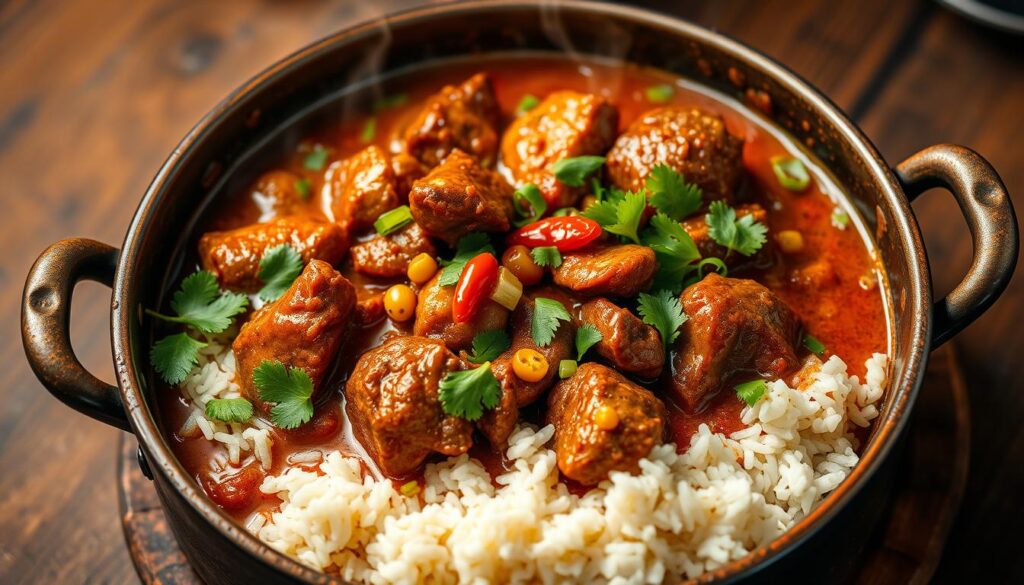
Imagine the rich, inviting aroma of spices filling your home. It’s the kind of scent that promises a meal full of warmth and celebration. This is the feeling we aim to capture with this classic Caribbean preparation.
This guide will help you create a truly memorable dish right in your own kitchen. You will learn the secrets behind one of the island’s most cherished culinary traditions. It’s a celebration of bold flavors and rich cultural heritage.
We will walk you through every step to achieve restaurant-quality results. You’ll master traditional techniques, from proper meat preparation to the essential marination process. The method of toasting the spices unlocks deep, complex flavors that define this specialty.
Get ready to impress family and friends with authentic Caribbean cuisine. This recipe is perfect for special occasions or thoughtful meal prep. The flavors develop beautifully, often tasting even better the next day.
Key Takeaways
- Learn to prepare an authentic Caribbean dish known for its vibrant and spicy flavors.
- Understand the cultural significance of this beloved island tradition.
- Master key techniques like marination and toasting spices for maximum flavor.
- Achieve the perfect balance of heat from peppers and warmth from aromatic spices.
- Discover why this meal is ideal for making ahead for gatherings.
- Gain confidence to recreate a restaurant-quality experience at home.
Introduction to This Spicy Island-Style Dish
This iconic Caribbean creation represents more than just food—it’s a celebration of cultural exchange and flavor evolution. The dish stands alongside jerk chicken as one of the island’s most treasured culinary traditions.

Cultural Roots and Tradition
The recipe emerged from Jamaica’s diverse heritage. Indian indentured laborers introduced curry spices that blended beautifully with local ingredients.
Scotch bonnet peppers and allspice created a uniquely Caribbean flavor profile. This fusion represents centuries of culinary tradition.
The preparation often serves as a centerpiece for special occasions. The time-intensive cooking process demonstrates love and hospitality in Caribbean culture.
Why You’ll Love This Recipe
You’ll appreciate how surprisingly simple this dish is to prepare. Despite its complex appearance, it requires mostly patience as flavors develop.
The slow-cooking method yields fall-apart tender meat in aromatic sauce. This creates a hearty, soul-satisfying meal that delivers both comfort and excitement.
Leftovers taste even better the next day as spices continue to deepen. The hands-off approach makes it perfect for feeding crowds or weekly meal prep.
Jamaican Curry Goat: A Flavorful Tradition
To truly appreciate this Caribbean classic, it’s vital to understand the distinct qualities of its main ingredients. The protein and spice blend work together to create a unique culinary experience.
The Unique Taste of Goat Meat
This protein offers a slightly sweet flavor with nutty undertones. It differs from lamb by having less gamey taste.
The texture resembles beef but becomes incredibly tender with proper cooking. Slow, moist-heat methods like braising are essential for this leaner meat.
You’ll find it packs the same protein as other meats but with less fat. This makes your indulgent-tasting dish surprisingly nutritious.
Understanding the Essence of Jamaican Curry Powder
This specific blend differs from Indian versions. While both contain turmeric and cumin, the Caribbean style is heavier on allspice.
This gives the powder a warm, aromatic quality. If you can’t find authentic brands, enhance regular curry powder with extra allspice.
Combined with ginger and scotch bonnet, it creates complex layers. This distinct spice profile makes the dish truly Caribbean.
Ingredients and Essential Components
Your success with this recipe begins with selecting quality ingredients that form the foundation of flavor. Each component plays a specific role in creating the authentic taste profile.
The right combination ensures balanced heat, warmth, and depth characteristic of this Caribbean specialty.
High-Quality Goat Meat and Its Substitutes
You’ll need 2-4 pounds of this protein cut into large chunks. Bone-in pieces from the shoulder or leg work best for slow cooking.
This meat contains collagen that breaks down to create a rich, silky sauce. Look for it at halal markets, Caribbean stores, or ethnic shops.
If goat meat is unavailable, lamb or beef make excellent substitutes. Choose tougher cuts that benefit from long, slow cooking.
Key Aromatics and Spices to Use
The spice blend requires 6-8 tablespoons of authentic Caribbean curry powder. Brands like Betapac or Montego deliver traditional flavor.
Essential aromatics include white onion, scallions, six cloves of garlic, and fresh ginger. Fresh thyme and allspice build the aromatic foundation.
Use one whole scotch bonnet pepper for authentic heat without overwhelming spice. The pepper infuses flavor while remaining intact.
Prepping and Marinating for Maximum Flavor
The journey to a deeply flavorful dish begins long before the cooking starts. Proper preparation is the secret to transforming tough cuts into succulent, spice-infused masterpieces. This stage sets the foundation for the entire recipe.
Proper Cleaning and Seasoning Techniques
Your first crucial step is to thoroughly clean the goat meat. Place the pieces in a large bowl and cover them with cool water. Add a splash of vinegar or fresh citrus juice to help cleanse the surface.
Gently rub the meat to remove any debris. After a good soak, drain and rinse it well. Pat every piece completely dry with paper towels. This helps the seasonings stick.
Next, use kitchen shears to trim away any large pieces of excess fat. A little fat adds richness, but too much can make the sauce greasy.
Marination Tips for Tender Goat Meat
Now, combine the dried goat with your spice blend and fresh aromatics in the bowl. Use your hands to massage the marinade into every crevice of the meat. This ensures even flavor distribution.
Cover the bowl and let it marinate in the refrigerator. This time is non-negotiable. Aim for at least two hours, but overnight is best for maximum tenderness and flavor penetration.
Before you start cooking, remember to take the marinated goat meat out of the fridge. Let it sit for about 30 minutes to lose its chill. This promotes more even cooking and better browning.
- Thorough cleaning removes debris and reduces any strong scent.
- Patting the meat dry ensures spices adhere properly.
- Extended marination time is essential for tenderizing tough cuts.
Cooking Techniques: Browning and Burning the Curry
Your next step transforms raw ingredients into a deeply aromatic foundation for the dish. This critical technique builds layers of flavor that will define your final result.
The process begins with heating your cooking vessel properly. You’ll need a large, heavy-bottomed pot and the right level of heat to achieve perfect results.
Step-by-Step Browning Process
Start by heating vegetable oil over medium-high heat. Wait until the oil shimmers before adding your spice blend. This ensures proper temperature for the next step.
The term “burning the curry” refers to toasting spices in hot oil. Sprinkle two tablespoons of curry powder into the shimmering oil. Immediately stir with a wooden utensil to bloom the spices.
This quick process takes only about 30 seconds. Watch as the powder transforms to a golden-brown color. The fragrant aroma signals the essential oils have been released.
Now pat your marinated pieces dry before browning. Working in batches prevents overcrowding the pot. Cook each side for approximately two minutes until nicely seared.
The bloomed spice mixture clings to the meat surface. This creates an incredibly fragrant coating that builds flavor depth. Patient browning develops the complex taste profile characteristic of this dish.
Slow Cooking vs. Pressure Cooking Methods
Whether you have hours to spare or need a quick solution, there’s a perfect cooking method for your schedule. Each approach delivers tender results but requires different levels of attention.
Your choice depends on available equipment and cooking time. All methods start with properly marinated and browned ingredients.
Traditional Slow-Simmering on the Stovetop
This classic approach develops deep flavors through patient simmering. After browning, return all meat to the pot with aromatics.
Add coconut milk, tomatoes, and enough water to nearly cover the ingredients. Bring to a gentle simmer then reduce heat to low.
Cover and cook for at least two hours. Check every thirty minutes, adding water if needed. The extended cooking time ensures fall-apart tenderness.
Quick Cooking with Pressure Cooker and Instant Pot
Modern pressure cooking significantly reduces hands-on time. Use the sauté function for browning, then add stock and potatoes.
Set to high pressure for 35-45 minutes. Allow natural pressure release to maintain tenderness. Finish with a quick simmer to thicken the gravy.
| Method | Total Time | Active Time | Best For |
|---|---|---|---|
| Stovetop Simmering | 2-3 hours | 30 minutes | Weekend cooking |
| Pressure Cooker | 45-60 minutes | 15 minutes | Weeknight meals |
| Slow Cooker | 8-10 hours | 20 minutes | Hands-off preparation |
Each method produces excellent results with proper technique. The extended cooking time on the stovetop allows flavors to develop gradually.
Pressure cooking offers convenience without sacrificing quality. Choose based on your schedule and equipment availability.
Accompaniments to Enhance Your Meal
The perfect accompaniments can transform your main course into a complete Caribbean feast. Your side dishes should balance the rich, spicy flavors while adding contrasting textures.
Traditional pairings create harmony on your plate. They turn a single dish into a memorable culinary experience.
You’ll discover how each component contributes to the overall meal. The right combinations make every bite more satisfying.
Perfect Side Dishes Like Rice and Peas and Fried Plantains
Rice and peas stands as the most essential pairing for this specialty. This coconut-infused rice with kidney beans creates a creamy base.
The dish features scallions, thyme, and subtle pepper heat. It absorbs the rich gravy beautifully.
Sweet fried plantains offer a delightful contrast to the savory stew. Use ripe, yellow plantains with black spots for optimal sweetness.
Slice them diagonally and fry until golden and caramelized. The natural sugars create a perfect balance against the spices.
| Side Dish | Flavor Profile | Preparation Style | Pairing Strength |
|---|---|---|---|
| Rice and Peas | Creamy, aromatic | Simmered | Essential |
| Fried Plantains | Sweet, caramelized | Pan-fried | Classic |
| Cabbage with Carrots | Light, crisp | Steamed or fried | Refreshing |
| Fried Dumplings | Buttery, dense | Deep-fried | Gravy-absorbing |
For lighter options, consider steamed cabbage with carrots. The crisp texture cuts through the richness effectively.
A simple green salad provides cool contrast. Fried dumplings excel at soaking up every last drop of gravy.
This combination represents quintessential West Indian comfort food. It delivers the same satisfaction as other Caribbean classics.
Tips, Variations, and Troubleshooting Common Issues
The true art of Caribbean cooking lies in knowing how to adjust recipes and solve problems that may arise during preparation. This section helps you customize the dish to your preferences while avoiding common pitfalls.
Recipe Variations for Different Preferences
You can easily adapt this recipe to suit various tastes. If the traditional protein is unavailable, lamb or beef make excellent substitutes. Both options work well with the same cooking techniques.
For a creamier sauce, some recipes include one or two cans of coconut milk. Traditional versions often skip this ingredient or use it sparingly. The choice depends on your preference for richness.
Adjust the heat level by modifying the quantity of scotch bonnet peppers. Use just one whole pepper for mild spice. Increase to four or five peppers if you prefer fiery food.
How to Prevent Burning Spices and Balance Flavors
Bitter flavors can occur if the spice blend burns during sautéing. Make sure to bloom the powder for only thirty seconds until fragrant. Monitor the heat carefully to avoid scorching.
Watch the whole scotch bonnet pepper throughout cooking. Remove it immediately if it begins to split. Burst peppers release seeds that create excessive heat and potential bitterness.
Before adding potatoes and final seasonings, always taste the sauce. The liquid will reduce during cooking, concentrating flavors. Adjust salt at this stage for perfect balance.
| Thickening Method | Preparation | Best Use | Result |
|---|---|---|---|
| Potatoes | Add during last hour of cooking | Traditional approach | Natural thickening with added heartiness |
| Cornstarch Slurry | 1 tablespoon cornstarch + 1 tablespoon water | Quick adjustment | Clear, smooth gravy |
| Simmer Reduction | Cook uncovered to evaporate liquid | Time-permitting | Intensified flavors |
Store leftovers in airtight containers for three to four days. The flavors actually improve over time as spices continue to meld. Reheat gently with a splash of water to refresh the gravy.
Conclusion
You now possess all the knowledge needed to master this Caribbean specialty in your own kitchen. From selecting quality meat to perfecting the spice-toasting technique, you’ve learned the essential steps.
Patience remains the key ingredient. The extended marination time and slow cooking transform tough cuts into tender, flavorful results. Your dedication to proper technique ensures authentic taste.
Serve your creation with traditional sides like rice and peas for a complete meal. The flavors will continue to develop, often tasting even better the next day.
Store leftovers properly to enjoy this dish for days. With this comprehensive recipe, you can confidently bring vibrant island flavors to your table anytime.