
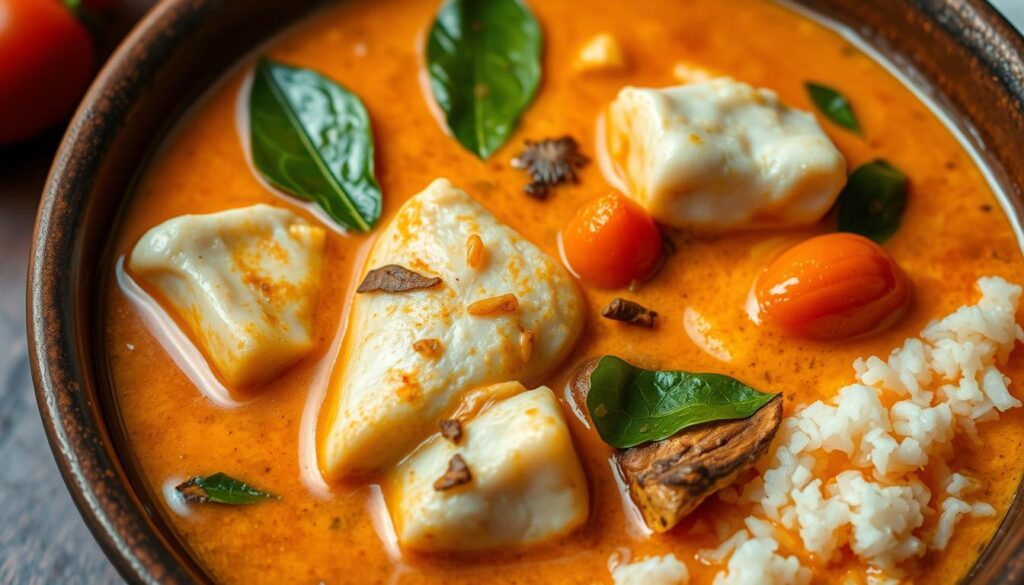
Imagine walking along a sun-drenched coastline, where the air carries the scent of sea salt and simmering spices. This is the sensory world that inspires one of the most beloved coastal creations. The dish we’re exploring today captures this essence perfectly.
This iconic preparation represents generations of culinary wisdom from an island nation surrounded by abundant waters. You’ll discover how simple ingredients transform into something extraordinary. The balance of flavors tells a story of tradition and innovation.
What makes this coastal specialty so remarkable is its beautiful complexity. It combines fiery heat with soothing creaminess, creating a harmony that dances on your palate. Each spoonful offers a journey through contrasting yet complementary tastes.
Whether you prefer gentle warmth or bold intensity, this guide will help you master the authentic approach. You’ll learn to create a meal that feels both exotic and comforting. The techniques we’ll share honor tradition while adapting to modern kitchens.
Key Takeaways
- Discover the unique flavor profile that combines spicy, sour, and creamy elements
- Learn about the two main preparation styles with different intensity levels
- Understand how coastal heritage influences this iconic dish’s character
- Explore the essential ingredients that create its distinctive taste
- Gain insight into adapting the recipe to match your personal preference
- Prepare for a comprehensive journey into authentic preparation methods
- Appreciate why this creation has gained international popularity
Introduction and Cultural Background
The story of this iconic dish begins with geography – an island surrounded by abundant waters that shaped its food traditions. You’ll discover how location influenced every aspect of this culinary art.
The Origins of Sri Lankan Fish Curry
Living on an island in the Indian Ocean means seafood dominates daily meals. Coastal communities developed their signature preparation methods over generations. This created a rich tradition of seafood curries that vary by region.
Each coastal area adds its unique touch to the basic recipe. The result is a diverse culinary landscape where the same core ingredients create distinct flavors. This variety reflects local preferences and available resources.

Understanding the Role of Coconut Milk and Tamarind
Coconut milk serves as the foundation for creaminess and heat balance. It tempers spicy elements while adding distinctive tropical flavor. This ingredient creates the velvety texture that defines authentic preparations.
Tamarind, particularly the local goraka variety, provides the essential sour note. Unlike stronger alternatives, goraka offers subtle acidity that complements delicate seafood. The combination creates perfect harmony between creamy and tangy elements.
These two components work together to elevate simple ingredients into extraordinary dishes. They represent the genius of traditional island cooking techniques.
Essential Ingredients & Flavor Components
Building the perfect balance of flavors begins with sourcing the right components. Each element plays a specific role in creating the dish’s signature taste profile.
Key Spices and Curry Leaves
The spice blend forms the heart of this preparation. Authentic curry powder delivers superior freshness compared to generic alternatives.
Your spice roster should include turmeric, cardamom, cumin, black pepper, and cayenne. Fresh curry leaves are non-negotiable for genuine flavor.
Fresh Fish Selection and Preparation
Choose firm-fleshed varieties that maintain their texture during cooking. Swordfish, tuna, mackerel, and snapper work beautifully.
Cut larger fish into 2-3 inch chunks. Smaller varieties like mackerel benefit from being prepared as steaks with bone and skin intact.
The Importance of Coconut Milk and Tamarind in Flavor
Full-fat coconut milk creates the rich, creamy base that defines this dish. It balances the spices while adding tropical notes.
Tamarind provides the essential sour element that completes the flavor profile. Use concentrate, paste, or traditional goraka for authentic results.
Citrus juice can substitute tamarind, but start with half the amount. The goal is harmonious balance between creamy and tangy elements.
Preparing the Fish: Marination and Pre-Cooking Tips
Before the simmering begins, careful attention to marination sets the stage for culinary success. This crucial step ensures every bite carries the intended flavor profile.
Marinating Techniques for Firm Fish
Start by cutting your selection into 2-3 inch pieces. The size doesn’t need to be exact, but consistent pieces cook evenly.
Sprinkle the pieces with 1 tsp sea salt, ¼ tsp turmeric powder, 1 tsp authentic curry powder, ½ tsp ground black pepper, and ½ tsp cayenne pepper. Mix thoroughly to coat each piece.
Let the mixture rest for 10-30 minutes. This waiting period allows the spices to penetrate deeply. The turmeric adds earthy notes and golden color.
How to Balance Spices for an Authentic Taste
While the fish rests, prepare your other ingredients. Slice onions, mince garlic and ginger, and measure remaining spices. This efficient approach saves time during active cooking.
Remember that spice measurements are flexible guides. Reduce chili for milder heat or add lime juice for extra tang. Personal preference shapes the final result.
For a crispy exterior, consider deep-frying marinated pieces before adding to the base. This technique works especially well for drier versions of the dish.
Cooking Techniques for a Perfect Curry
Mastering the cooking process is where your preparation transforms into the authentic dish you’re aiming to create. Proper technique ensures every ingredient contributes to the final flavor profile.
Sauteing Aromatics and Toasting Spices
Begin by heating 1-2 tablespoons of oil in your pan over medium heat. Use vegetable, canola, or coconut oil for best results. When the oil is hot, add chopped onion and sauté until softened.
Add minced garlic and ginger next. Continue cooking until fragrant. This builds the aromatic foundation that supports the entire dish.
The critical step comes when you add curry leaves, green chili, and all ground spices. Toast them for 30-60 seconds until intensely aromatic. This process awakens the spices’ essential oils.
Simmering Methods: Coconut Milk vs. Water
Your choice of simmering liquid dramatically affects the final texture and flavor. Each method creates a distinct character in the finished preparation.
Full-fat coconut milk provides the richest flavor and creamiest consistency. It splits during cooking, concentrating the tropical notes. This traditional approach delivers authentic results.
For a creamier texture, simmer your ingredients in water first. Add coconut milk at the end to prevent splitting. This maintains a smooth, velvety base.
The water-only method creates a spicier, more intense flavor profile. Known as mirisata style, this approach lets the spices shine without creamy balance.
| Simmering Method | Liquid Used | Final Texture | Flavor Profile |
|---|---|---|---|
| Coconut Milk Throughout | Full-fat coconut milk | Rich, slightly separated | Creamy with concentrated coconut |
| Water First, Milk Last | Water then coconut milk | Smooth and velvety | Balanced creamy and spicy |
| Water Only | Water only | Thinner, broth-like | Intensely spicy (mirisata style) |
After adding your chosen liquid, bring the mixture to a boil over medium-high heat. Then reduce to a gentle simmer. Cook for 20-30 minutes until everything is perfectly tender.
Sri Lankan Fish Curry Recipe: Step-by-Step Guide
Now you’re ready to bring all the elements together in a straightforward cooking process. This detailed recipe breaks the preparation into three clear stages for perfect results every time.
Step One: Prepping Ingredients and Marinating the Fish
Begin by cutting 450-500g of your chosen seafood into 2-3 inch pieces. Mix with 1 tsp sea salt, ¼ tsp turmeric powder, 1 tsp authentic curry powder, ½ tsp black pepper, and ½ tsp cayenne pepper.
Let this marinate for 10-20 minutes. Meanwhile, prepare your other ingredients including sliced onion, minced garlic and ginger, and measured spices.
Step Two: Building the Curry Base
Heat 1-2 tbsp oil over medium heat. Sauté onion until soft, then add garlic and ginger. Add curry leaves, green chili, and all ground spices including ½ tsp turmeric and 2 tsp curry powder.
Toast for 30-60 seconds until fragrant. Gently add your marinated pieces and 1 tsp tamarind, coating them evenly with the spice mixture.
Step Three: Simmering and Finishing Touches
Add 2 cups coconut milk and bring to a boil. Reduce to a gentle simmer and cook uncovered for 20 minutes until perfectly tender.
Shake the pan gently instead of stirring to keep pieces intact. Finish with a squeeze of lime juice and let rest 10-20 minutes before serving.
Serving Suggestions and Accompaniments
How you serve your masterpiece can elevate the entire dining experience significantly. The right pairings and presentation transform a single dish into a complete meal that honors traditional preparation methods.
Pairing with Rice, Roti, or Other Sides
Basmati rice makes an excellent companion for this preparation. Its long grains absorb the flavorful sauce perfectly. Each bite delivers maximum enjoyment.
Traditional breads offer wonderful alternatives. Pol roti, roti canai, and string hoppers work beautifully. They soak up the delicious sauce while adding texture.
Vegetable side dishes create balanced meals. They complement the main preparation without overpowering its distinctive flavors.
Garnishing Ideas for Extra Freshness
Fresh cilantro and thinly sliced red chilli add color and heat. These simple touches enhance both appearance and taste.
Chopped radish, celery, and tomatoes provide extra texture. A final drizzle of coconut milk adds richness to the presentation.
For storage, refrigerate leftovers in airtight containers. Reheat gently to preserve the delicate seafood texture. Fresh preparation always delivers the best results.
Conclusion
The journey through this culinary tradition culminates in your ability to craft a dish that balances tradition with personal creativity. You’ve mastered the techniques needed to create an authentic coastal preparation bursting with complex flavors.
This versatile recipe adapts beautifully to your preferences. You can adjust spice levels, choose between creamy coconut milk or spicier versions, and even use different seafood varieties. Remember that patience enhances the final result – allowing the preparation to rest for 20-30 minutes lets flavors meld perfectly.
You now possess restaurant-quality skills for creating a healthy, satisfying meal. The balance of earthy spices, tangy tamarind, and rich coconut creates a light yet flavorful experience. Experiment with different accompaniments and share your culinary achievements.