
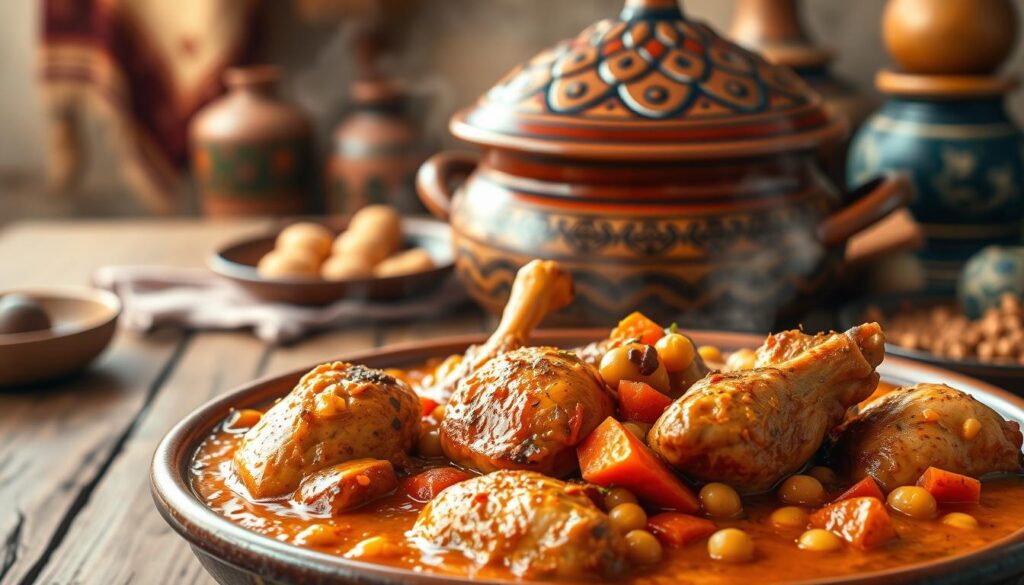
Have you ever longed to travel through your taste buds? To discover flavors that transport you to distant lands without leaving your kitchen? There’s something magical about uncovering a dish that feels both exotic and comforting at the same time.
This North African creation captures the essence of culinary adventure. The aromatic spices mingle in a way that awakens your senses. Each ingredient tells a story of tradition and warmth.
What makes this preparation so special is its beautiful balance. You get the richness of tender poultry combined with vibrant seasonings. The result is a meal that feels both celebratory and perfectly suited for everyday dining.
Best of all, this approach brings authentic tagine flavors within reach. You don’t need special equipment to create something truly memorable. The method simplifies traditional techniques while preserving the soul of the dish.
This is more than just following steps – it’s about embracing a culinary heritage. You’re about to discover why this combination has become a beloved staple. It represents the generous spirit of North African hospitality.
Key Takeaways
- Discover what makes this North African dish stand out with its unique spice combinations
- Learn how to achieve authentic tagine flavors using regular kitchen equipment
- Understand why this preparation has become a household favorite in its region of origin
- Explore the complex flavor profile that balances warm spices with citrus notes
- Master a versatile dish suitable for both special occasions and weeknight meals
- Appreciate how this recipe represents rich culinary traditions
- Gain confidence in creating international flavors at home
Introduction to Moroccan Chicken Curry
Traditional cooking methods often hold the key to unlocking flavors that modern techniques can’t replicate. This North African specialty has been perfected over centuries using a unique clay vessel called a tagine.
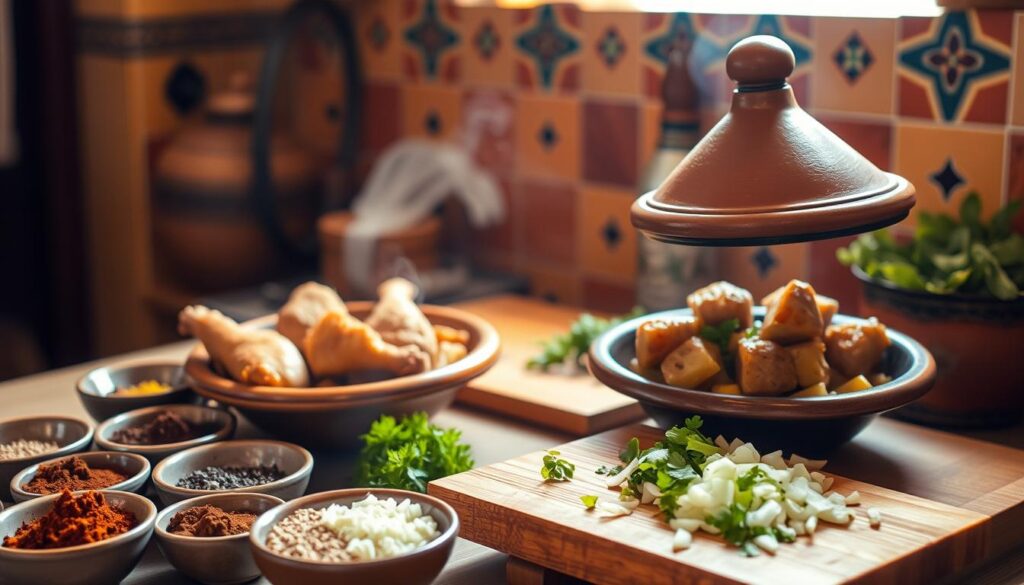
The tagine’s cone-shaped lid creates a special steam cycle that tenderizes meat and concentrates spices. You don’t need this traditional equipment though. A Dutch oven or heavy pot works beautifully for this recipe.
The magic happens during the gentle braising process. Spices, aromatics, and liquids meld together over low heat. This creates complex layers of flavor that make the dish restaurant-quality.
What makes this preparation so appealing for busy schedules? It offers impressive results without demanding constant attention. The hands-on time is minimal, letting the stove do most of the work.
The balance of sweet and savory elements represents the heart of this culinary tradition.
You’ll discover how accessible ingredients create authentic tastes. Preserved lemons, olives, and common spices transform chicken into something extraordinary. This approach brings world flavors to your weeknight routine.
Essential Ingredients and Spices
Building authentic flavors begins with understanding each ingredient’s unique contribution. The right components work together to create the signature taste profile that makes this dish special.
Key Chicken Choices and Preparation
Selecting quality poultry forms the foundation of your creation. Bone-in pieces provide richer flavor during the cooking process.
Signature Spice Blends and Aromatics
Onions create the aromatic base that supports all other flavors. They caramelize beautifully, adding natural sweetness to balance the spices.
Additional Flavor Enhancers
Greek cracked green olives offer distinctive briny notes. Use about 1/2 cup of pitted and halved olives for authentic taste.
Citrus elements bring essential brightness. Combine 1 teaspoon lemon zest with minced garlic for a potent finishing mixture.
Fresh lemon juice, starting with 1 tablespoon, balances rich savory elements. You can also add thinly sliced lemon to the cooking liquid.
A bit of honey provides gentle sweetness that complements the spices. Fresh cilantro leaves add an herbaceous finish to complete the dish.
Step-by-Step Cooking Process
Each step in the cooking process builds upon the previous one, creating layers of flavor and texture. The sequence matters for achieving the perfect balance.
Browning, Searing, and Skin Management
Start by browning the poultry pieces to develop rich flavor. This initial step creates a golden crust that seals in juices.
Proper skin management ensures crispy texture while preventing excess grease. The right amount of heat creates the ideal foundation.
Building the Rich, Aromatic Sauce
After browning, you’ll create the sauce base using accumulated juices. This forms the flavorful liquid that will simmer with the main ingredients.
The aromatic components meld together during this phase. Their flavors infuse the sauce over gentle heat.
Simmering and Integrating Flavors
Return the poultry to the pot with accumulated juices. Reduce the heat to medium-low and cover for 10 minutes.
Add carrot coins around the pieces and continue cooking. The vegetables should become tender-crisp in about 10 more minutes.
Different cuts require adjusted cooking times. Split breasts need about 40 minutes of gentle simmering with the lid slightly vented.
| Cooking Method | Temperature | Time Required | Best For |
|---|---|---|---|
| Stovetop Simmer | Medium-Low | 20-40 minutes | Quick Preparation |
| Slow Cooker High | High Setting | 2-2.5 hours | Busy Schedules |
| Slow Cooker Low | Low Setting | 4-5 hours | All-Day Cooking |
The slow cooker method offers flexibility for different schedules. High setting takes 2 to 2.5 hours, while low requires 4 to 5 hours.
This extended simmering period allows flavors to integrate completely. The result is tender, perfectly cooked meat infused with aromatic spices.
Techniques for a Perfect Moroccan Chicken Curry
The true secret to exceptional flavor lies in understanding how heat and timing work together. Mastering these elements ensures your dish reaches its full potential.
Optimizing Heat and Timing
Gentle simmering allows spices to meld beautifully. Low heat prevents burning while developing complex flavors.
Timing affects texture and taste integration. Follow recommended cooking periods for optimal results.
Adjusting Spices for Personal Taste
Don’t worry if you’re missing one or two spices from the list. The blend remains flavorful and adaptable.
Experiment with the amount of each spice to suit your preferences. Start conservatively since you can always add more.
Be careful with cinnamon—too much creates bitterness. Stick to 1/4 to 1/2 teaspoon for warm notes.
Final adjustments make the difference. Taste at the end and add salt, pepper, or lemon juice as needed. Crushed fennel seeds add subtle aromatic quality without overwhelming other flavors.
Serving Suggestions and Side Dish Pairings
The final presentation of your dish can transform a simple meal into an unforgettable dining experience. Thoughtful plating enhances both visual appeal and flavor perception.
You have several options for serving this flavorful creation. Each approach offers different benefits for various dining situations.
Couscous, Toasted Almonds, and Fresh Herbs
Fluffy couscous makes the perfect foundation for your meal. It absorbs the rich sauce beautifully while providing a neutral base.
Traditional presentation involves serving the poultry on the bone. This method preserves authenticity and maintains juiciness.
For family-friendly meals, you might remove meat from the bone beforehand. This approach makes eating easier, especially for children.
Generously spoon the sauce with vegetables over everything. Garnish with fresh cilantro or toasted almond slices for added texture.
Creative Presentation Ideas
Family-style serving creates a warm, communal atmosphere. Arrange everything on a large platter over a couscous bed.
Individual plating offers a more refined approach. Place couscous as the base with one or two pieces on top.
Alternative sides provide flexibility for different preferences. Consider roasted potatoes, rice, or mashed potatoes.
The nutrition profile remains excellent with any pairing. This protein-rich meal satisfies while delivering balanced nutrition.
Your creation improves when made ahead. Refrigerate for up to two days and gently reheat before serving.
Conclusion
With these techniques now in your cooking arsenal, you can confidently recreate authentic tagine flavors anytime. You’ve mastered the essential methods for this North African specialty.
The beauty of this moroccan chicken recipe lies in its adaptability. Whether using a Dutch oven or slow cooker, you achieve tender, restaurant-quality results. The flavors actually improve when the dish rests for a day or two.
This versatile preparation works for both weeknight dinners and special occasions. You can adjust spices to suit your preferences while maintaining authentic character.
Each time you make this chicken recipe, the process becomes more intuitive. You’ll develop a feel for perfect heat levels and timing adjustments.
This reliable moroccan chicken curry joins your collection of go-to dishes. It brings warmth and exotic flavors to your table with minimal stress and maximum enjoyment any day of the week.