Disclosure: As an Amazon Associate, Curry Ingredients earns from qualifying purchases. If you buy through links on this page we may earn a small commission at no extra cost to you. We only recommend gear that suits the curries we cook on this site.
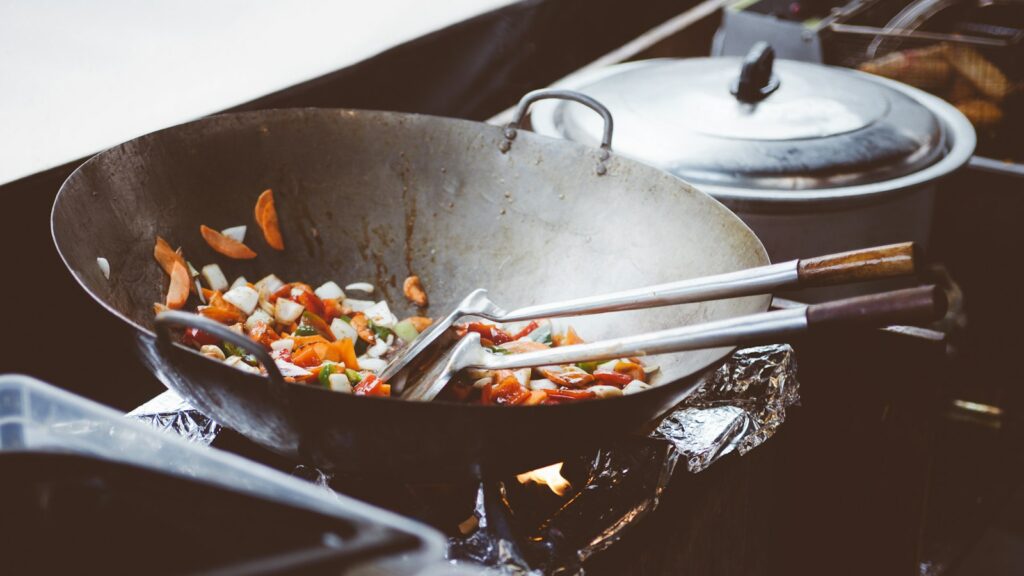
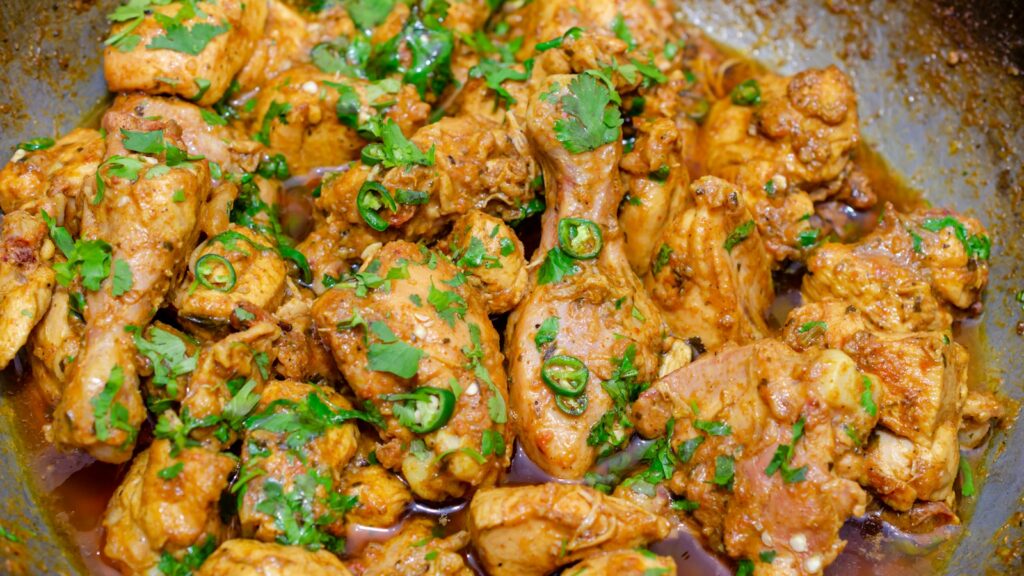
A karahi (or kadai) is the deep, round pan used across India and Pakistan for quick, high-heat curries – it is where the famous chicken karahi gets its name. Its cousin, the Chinese wok, does the same job for stir-fries and Thai and Malaysian curries such as Thai green curry. If you only buy one extra pan for curry, make it one of these.
Karahi vs Wok: What’s the Difference?
- Karahi: deeper and heavier, with two loop handles. Great for frying onions, simmering thick masalas and deep-frying pakoras.
- Wok: lighter, with a long handle, made for tossing food over very high heat.
Both work for most curries. Choose a karahi if you cook mostly Indian and Pakistani food, and a wok if you also cook a lot of stir-fries.
Which Material Is Best?
- Carbon steel: heats up fast, gets very hot and becomes naturally non-stick once seasoned. The favourite of restaurant cooks.
- Cast iron: holds heat brilliantly for slow-cooked masalas, but it is heavy and slower to heat.
- Stainless steel (tri-ply): no seasoning needed and safe with acidic sauces – a great low-maintenance karahi.
- Non-stick: easy for beginners, but it can’t take the highest heat and the coating wears out.
Flat or Round Bottom?
For electric, glass or induction hobs, choose a flat-bottomed pan. Round-bottomed woks need a gas burner (or a wok ring) to sit safely.
Our Recommended Woks and Karahis
1. Carbon Steel Wok (Flat Bottom)
The classic all-rounder. Season it once and it gets better every time you cook. A 13–14 inch wok is the most useful size for a home kitchen.
Why we like it:
- Heats up fast and gets very hot
- Light enough to toss food
- Inexpensive and lasts for years
Keep in mind:
- Needs seasoning and drying after washing
- Can rust if left wet
See Carbon Steel Wok (Flat Bottom) on Amazon →
2. Stainless Steel Karahi (Tri-Ply)
Our pick for Indian curries. A tri-ply stainless karahi heats evenly, needs no seasoning and is happy with tomato, yogurt and tamarind.
Why we like it:
- No seasoning needed
- Works on induction
- Dishwasher safe
Keep in mind:
- Food can stick until you learn to preheat it properly
See Stainless Steel Karahi (Tri-Ply) on Amazon →
3. Cast Iron Karahi
Heavy, traditional and perfect for slow-cooked masalas and deep-frying. It holds heat so well that the oil temperature hardly drops when you add pakoras.
Why we like it:
- Superb heat retention
- Very affordable
- Lasts for generations
Keep in mind:
- Heavy
- Needs seasoning like other cast iron
See Cast Iron Karahi on Amazon →
How to Season a Carbon Steel Wok or Karahi
- Scrub off the factory oil with hot soapy water and dry the pan on the stove.
- Heat it until the metal starts to change colour.
- Rub a thin layer of high smoke-point oil all over the inside with a paper towel.
- Heat until it stops smoking, cool slightly, and repeat 2–3 times.
- After each use, wash with hot water, dry on the stove and wipe with a few drops of oil.
Pair your new pan with fresh spices from your masala dabba and try our Moroccan chicken curry or bunny chow.
Frequently Asked Questions
Can I make curry in a wok?
Yes. A wok is excellent for Thai and Malaysian curries and works well for Indian curries too. A karahi is deeper and better for long simmering.
What size karahi should I buy?
A 10–12 inch (25–30 cm) karahi is right for curries for 2–4 people.
Is carbon steel safe for cooking?
Yes. Carbon steel is iron with a little carbon. Once seasoned it is naturally non-stick and contains no synthetic coating.