

Imagine holding a warm, fragrant meal in your hands. The rich aroma of spices fills the air. This is the magic of discovering a truly unique food for the first time.
It’s a dish born from practicality and cultural fusion. It tells a story of community and flavor. This experience is at the heart of one of South Africa’s most beloved street foods.
This iconic creation turns a simple loaf of bread into an edible bowl. It is generously filled with a spicy, aromatic curry. The sauce soaks into the soft walls of the bread, creating an unforgettable taste.
Its journey from humble beginnings to international fame is a testament to its delicious power. It represents a perfect blend of culinary traditions. You are about to explore the secrets behind this portable feast.
Key Takeaways
- Discover the unique story behind this famous street food from Durban.
- Learn how a hollowed-out loaf becomes an edible container for curry.
- Understand the humble working-class origins of this practical meal.
- See how it represents a fusion of Indian and South African culinary traditions.
- Explore why the combination of bread and complex curry flavors is so satisfying.
- Identify the essential elements that make an authentic version of the dish.
Introduction to South African Bunny Chow
The genius of this dish lies in its perfect combination of practicality and flavor in one edible package. It represents a culinary innovation born from necessity.
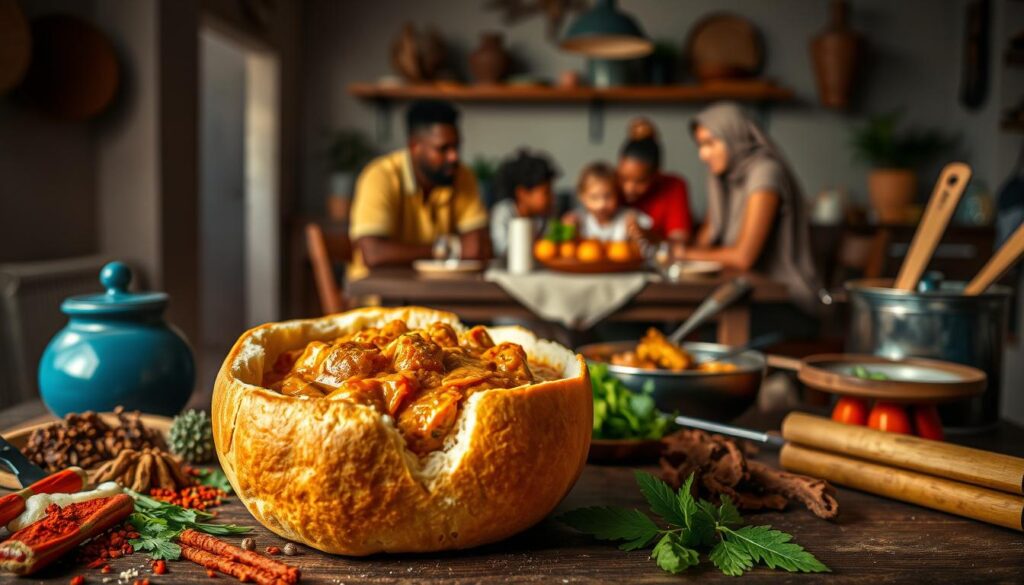
This iconic South African food tells a story of cultural fusion. It brings together diverse traditions in a unique way.
Overview and Cultural Significance
You’ll discover how this meal serves as both nourishment and cultural symbol. The hollowed bread acts as a natural container for the flavorful curry.
Traditional preparation involves eating with your hands. This makes it the ultimate portable meal. No utensils are needed for this experience.
Regional variations show the dish’s widespread appeal. Different communities have their own names and adaptations.
| Regional Name | Meaning | Common Characteristics |
|---|---|---|
| Kota | Quarter (referring to loaf size) | Smaller portion, popular in townships |
| Scambane | Local adaptation | Often includes additional fillings |
| Shibobo | Community-specific term | Reflects local linguistic diversity |
Portion sizes range from quarter to full loaves. This allows people to choose based on their appetite. The curry fillings feature complex spice blends.
Each component works together harmoniously. The bread soaks up the rich sauce. This creates layers of flavor in every bite.
Historical Journey and Origins
The origins of this iconic street food trace back to the 1940s in Durban, where necessity sparked culinary innovation. You’ll discover how practical needs shaped a dish that would become a cultural symbol.
Durban’s Indian Culinary Heritage
Indian laborers working in KwaZulu-Natal’s sugar cane fields needed a practical way to carry their lunches. They found the perfect solution using a hollowed bread loaf as a container.
Traditional roti bread was often unavailable or too fragile for transport. The white bread loaf became the ideal vessel for carrying flavorful vegetarian curries to work sites.
The Story Behind the Name “Bunny Chow”
The unusual name has fascinating roots in local history. “Bunny” likely comes from “bania,” referring to Indian merchants, while “chow” means food in local slang.
During apartheid, racial segregation laws created unique challenges for food service. Many establishments found creative ways to serve all customers despite restrictions.
| Restaurant | Claim Date | Historical Significance |
|---|---|---|
| Patel’s Vegetarian Refreshment Room | 1932 | Family claims first commercial sale |
| Victory Lounge | 1945 | Popularized during apartheid era |
| Kapitan’s | 1940s | Name origin connection |
These eateries played a crucial role in making the dish accessible to everyone. They defied segregation laws by serving food creatively to all people.
Ingredients and Preparation Essentials
Before you start cooking, gathering the right components ensures your final creation captures authentic taste. Proper preparation sets the stage for a successful meal that honors tradition.
You’ll need to organize your workspace and ingredients systematically. This approach makes the cooking process smooth and enjoyable.
Essential Spices, Meat, and Bread Selection
Your choice of spices forms the flavor foundation. Traditional blends include cumin, coriander, and cinnamon for depth.
Select fresh curry leaves and quality garam masala. These aromatic ingredients create complex layers in your curry.
For meat options, consider lamb chunks or beef pieces for traditional preparations. Chicken thighs also work well for a lighter version.
Choose a sturdy, unsliced white bread loaf. It must hold the curry without becoming too soggy.
Prepping Your Vegetables and Proteins
Begin by finely chopping onions and creating a fresh garlic ginger paste. These aromatics build your flavor base.
Cube potatoes into uniform pieces for even cooking. Dice fresh tomatoes and measure tomato puree for the sauce.
Cut your meat into bite-sized chunks. This ensures thorough cooking and better flavor absorption.
Gather fresh coriander leaves for garnish. Have plain yogurt ready to balance the heat if needed.
Step-by-Step Cooking Process
The cooking process unfolds in two distinct phases that build upon each other systematically. You’ll create the curry first, then prepare the bread vessel for assembly.
Building the Flavorful Curry Base
Begin by heating oil or ghee over medium-high heat. When the oil is hot, add whole spices like cumin seeds and a cinnamon stick.
Bloom these spices for about 30 seconds until fragrant. Then add chopped onions and cook for 5 minutes until translucent.
Stir in garlic-ginger paste and ground spices. Add tomatoes and combine everything well.
Introduce cubed potatoes and add just enough water or stock to cover them. Simmer for 20-30 minutes until vegetables soften.
Add your protein choice and continue cooking with minimal additional liquid. The curry must remain thick to prevent soggy bread.
Assembling and Filling the Hollowed-Out Bread
Cut your bread into quarters and carefully hollow out each piece. This creates sturdy edible bowls for your curry.
The assembly technique is crucial for proper flavor absorption. First, ladle gravy down the inside walls to soak the bread.
| Assembly Step | Time Required | Key Technique |
|---|---|---|
| Bread Preparation | 2-3 minutes | Hollowing without breaking walls |
| Gravy Soaking | 1 minute | Even distribution on all sides |
| Curry Filling | 2 minutes | Layering potatoes then meat |
| Final Topping | 30 seconds | Extra gravy over the top |
Add potato pieces before spooning in the main curry. Finish with additional gravy over the top.
Use the scooped-out bread for dipping. This completes your authentic preparation.
South African Bunny Chow: Authentic Recipe Variations
The true beauty of this traditional meal lies in its remarkable adaptability to different tastes and dietary preferences. You can explore countless variations while staying true to the dish’s authentic spirit.
Protein Options and Customizing Your Curry
Your choice of protein defines the character of your final creation. Traditional recipes often feature lamb as the most authentic option.
Chicken and beef curries offer equally delicious alternatives. Each protein brings unique flavors to the rich spice blend.
Vegetarian versions substitute meat with hearty vegetables. Cauliflower, chickpeas, or lentils work beautifully in these recipes.
| Protein Choice | Cooking Time | Flavor Profile | Best Pairings |
|---|---|---|---|
| Lamb Curry | 60-90 minutes | Rich, robust | Traditional white bread |
| Chicken Curry | 30-45 minutes | Mild, aromatic | Whole wheat loaf bread |
| Beef Curry | 45-60 minutes | Hearty, savory | Sourdough loaves |
| Vegetable Curry | 20-30 minutes | Light, versatile | Various bread options |
Time-saving shortcuts make this dish accessible for busy schedules. Pre-cut ingredients and pressure cookers reduce preparation time significantly.
Batch cooking lets you freeze portions for future meals. The flavors often improve when the curry sits overnight.
Serve your creation with traditional accompaniments like fresh sambals and Indian pickles. These additions enhance the overall flavor experience.
Conclusion
Your journey into this iconic street food has revealed a story of culture and flavor. You’ve gained the knowledge to create an authentic version of this beloved meal.
This dish represents more than just a recipe. It stands as a testament to community resilience. The annual Bunny Chow Barometer competition celebrates this tradition.
Modern versions now come in special boxes instead of newspaper. Yet the essence remains the same. Eating with your hands is the traditional way to enjoy it.
You’re now ready to bring this experience to your kitchen. Share it with friends and family. Connect with a vibrant culinary heritage through each delicious bite.