Disclosure: As an Amazon Associate, Curry Ingredients earns from qualifying purchases. If you buy through links on this page we may earn a small commission at no extra cost to you. We only recommend gear that suits the curries we cook on this site.
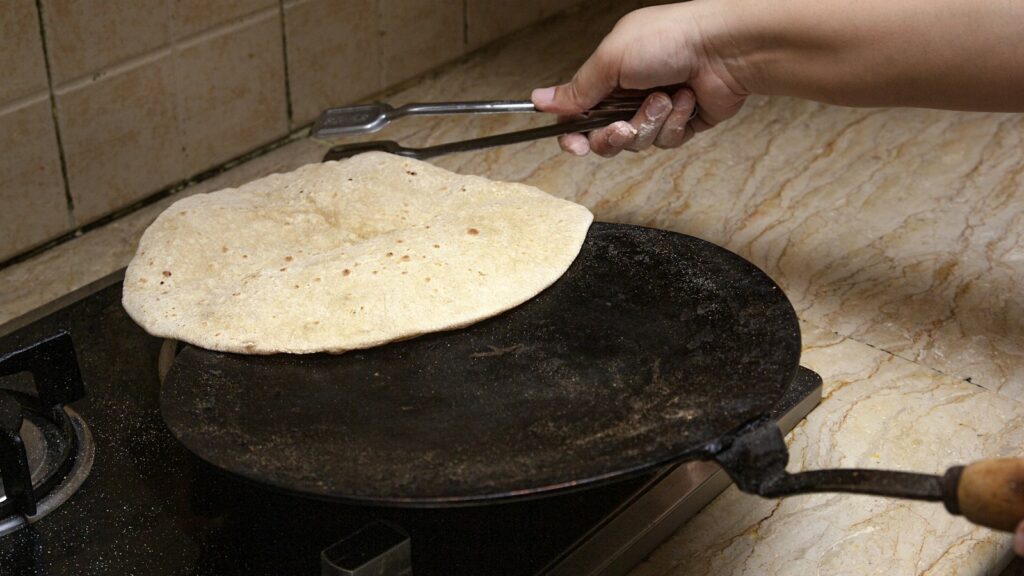
A curry is only half a meal without something to scoop it up. Soft roti, flaky paratha and crisp dosa all start on a tawa – the flat or slightly concave griddle found in every South Asian kitchen. Serve them with butter chicken, paneer makhani or a thick dal and dinner is complete.
What Makes a Good Tawa?
- Even heat: roti puff up when the whole surface is evenly hot. Thin, cheap tawas get hot spots and burn the edges.
- Right shape: a slightly concave tawa is traditional for roti; a completely flat one is better for dosa and on electric or induction hobs.
- Size: 10–11 inches (25–28 cm) suits roti and paratha. Choose 12 inches or more for dosa.
- Handle: a long, heat-proof handle makes flipping and moving the tawa safer.
Iron, Non-Stick or Carbon Steel?
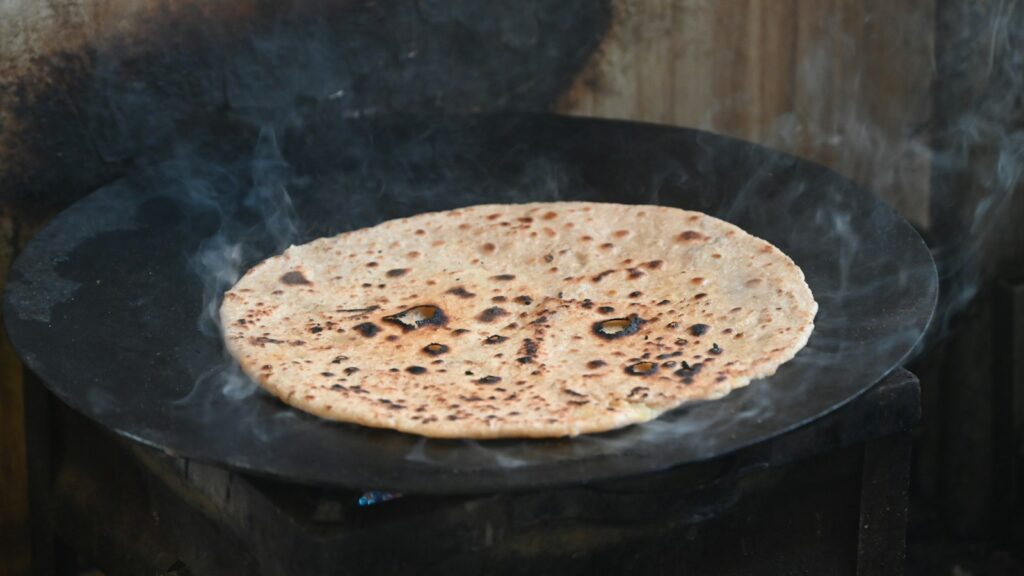
Cast iron holds heat brilliantly and gives the best puffed roti and crisp dosa. It needs seasoning and is heavy, but it will last for generations.
Pre-seasoned carbon steel or iron is lighter than cast iron and heats faster, with the same natural non-stick surface once it is well seasoned.
Non-stick (hard-anodised with a coating) is the easiest for beginners and needs almost no oil, but it can’t take very high heat and the coating wears out over time.
Our Recommended Tawas
1. Cast Iron Tawa
The traditional favourite. Once seasoned, a cast iron tawa gives you perfectly puffed roti and golden, crisp paratha every time.
Why we like it:
- Superb, even heat
- Naturally non-stick when seasoned
- Lasts for decades
Keep in mind:
- Heavy
- Needs drying and oiling after washing
See Cast Iron Tawa on Amazon →
2. Pre-Seasoned Iron Tawa (Flat, for Dosa)
A wide, flat tawa that works on gas, electric and induction. Ideal if you want to make dosa and uttapam as well as roti.
Why we like it:
- Large cooking area
- Works on all hobs
- Lighter than cast iron
Keep in mind:
- Season it a few more times before making dosa
See Pre-Seasoned Iron Tawa (Flat, for Dosa) on Amazon →
3. Non-Stick Tawa
The low-maintenance choice. Great for beginners, for parathas cooked with little oil and for quick weekday chapati.
Why we like it:
- Easy to use and clean
- Needs very little oil
- Light
Keep in mind:
- Coating wears out with time
- Avoid metal spatulas and very high heat
See Non-Stick Tawa on Amazon →
How to Season an Iron Tawa
- Wash the new tawa with hot soapy water to remove the factory coating, then dry it on the stove.
- Rub a thin layer of oil all over the surface.
- Heat until it starts to smoke, then turn off and let it cool.
- Repeat 3–4 times. Many cooks also rub the surface with a cut onion dipped in oil.
- After each use, wipe or rinse with water only, dry on the heat and rub with a few drops of oil.
Tips for Soft, Puffy Roti
- Let the dough rest for at least 20 minutes.
- Heat the tawa well before the first roti goes on.
- Flip when small bubbles appear, then press gently with a cloth so it puffs.
- Stack finished roti in a cloth-lined container to keep them soft.
Frequently Asked Questions
Which tawa is best for roti?
A cast iron or seasoned iron tawa gives the best roti because it holds an even, high heat. Non-stick is easier for beginners.
Can I use a tawa on an induction hob?
Yes, if the base is flat and magnetic. Cast iron and most iron tawas work; check the label for non-stick models.
Why is my roti not puffing?
The tawa may not be hot enough, the dough may be too dry, or the roti may be rolled unevenly. Heat the tawa well and roll the dough to an even thickness.