Disclosure: As an Amazon Associate, Curry Ingredients earns from qualifying purchases. If you buy through links on this page we may earn a small commission at no extra cost to you. We only recommend gear that suits the curries we cook on this site.
The fastest way to make your curries taste better is to grind your own spices. Whole cumin, coriander and cardamom keep their aroma for a year or more, while ground spices fade in weeks. Toast them, grind them, and your butter chicken or massaman curry will smell like it came from a restaurant kitchen.
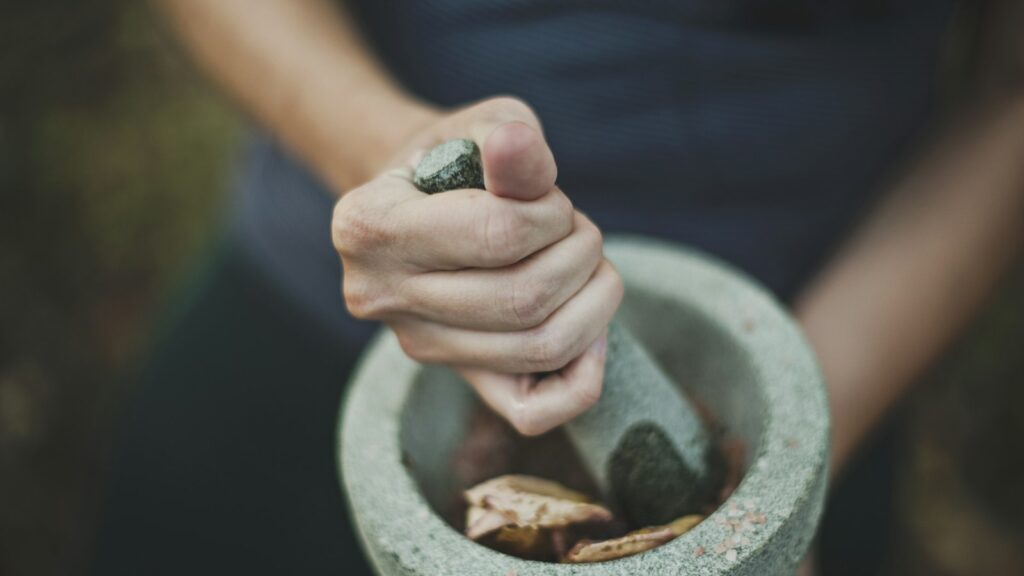
You have two options: an electric spice grinder or a mortar and pestle. Most serious curry cooks end up owning both.
Electric Spice Grinder vs Mortar and Pestle
| Electric grinder | Mortar and pestle | |
|---|---|---|
| Best for | Dry spice blends, curry powder, garam masala | Wet pastes (ginger, garlic, chilli), small amounts, Thai curry paste |
| Speed | Seconds | A few minutes |
| Texture | Fine and even | Coarse to fine, you control it |
| Flavour | Very good | Excellent – crushing releases more oils |
| Price | Low to medium | Low |

What to Look For in an Electric Spice Grinder
- Stainless steel blades and bowl that don’t stain from turmeric.
- Removable bowl – much easier to clean than a fixed one.
- Enough power to handle hard spices like cinnamon bark and dried chillies.
- Keep it separate from your coffee grinder, or your coffee will taste of cumin.
What to Look For in a Mortar and Pestle
- Granite is the best all-round material: heavy, non-porous and rough enough to grip spices.
- Size: choose a bowl of at least 2 cups (about 500 ml) so pastes don’t fly out.
- Heavy pestle: let the weight do the work.
Our Recommended Picks
1. Electric Spice and Coffee Grinder (Krups or Cuisinart style)
A compact blade grinder is the quickest way to make curry powder or garam masala. Models with a removable stainless steel bowl are the easiest to keep clean.
Why we like it:
- Grinds a batch in seconds
- Small and affordable
- Fine, even powder
Keep in mind:
- Not good for wet pastes
- Wipe it out with dry rice or bread to remove old aromas
See Electric Spice and Coffee Grinder (Krups or Cuisinart style) on Amazon →
2. Granite Mortar and Pestle
Heavy, unpolished granite is ideal for crushing whole spices and for pounding ginger, garlic and chilli into a paste – the base of our Thai green curry.
Why we like it:
- Releases the most flavour
- Perfect for wet pastes
- Lasts forever
Keep in mind:
- Heavy
- Season it first by grinding a little dry rice
See Granite Mortar and Pestle on Amazon →
3. Small Wet-and-Dry Grinder
A small Indian-style mixer grinder handles both dry spices and wet masalas like onion-tomato bases. A good upgrade if you cook curry most days.
Why we like it:
- Does both wet and dry grinding
- Larger capacity
Keep in mind:
- Bulkier and louder than a simple spice grinder
See Small Wet-and-Dry Grinder on Amazon →
How to Make Fresh Curry Powder
- Toast whole coriander, cumin, mustard seeds, fenugreek, black pepper, cardamom, cloves and a small piece of cinnamon in a dry pan for 2–3 minutes until fragrant.
- Let them cool completely on a plate.
- Grind to a fine powder, then mix in ground turmeric and a little ground ginger.
- Store in an airtight jar away from light and use within three months.
Keep your fresh blends close to the stove in a masala dabba.
Frequently Asked Questions
Can I use a coffee grinder for spices?
Yes, a blade coffee grinder works very well for spices. Just keep one only for spices, because the smell of cumin and cardamom stays in the grinder.
Is granite or marble better for a mortar and pestle?
Unpolished granite is better for spices because its rough surface grips seeds. Polished marble is smooth and better for soft herbs.
How do I clean turmeric stains from a grinder?
Grind a spoonful of dry uncooked rice, wipe it out, then wash the bowl with warm soapy water and a little baking soda.