
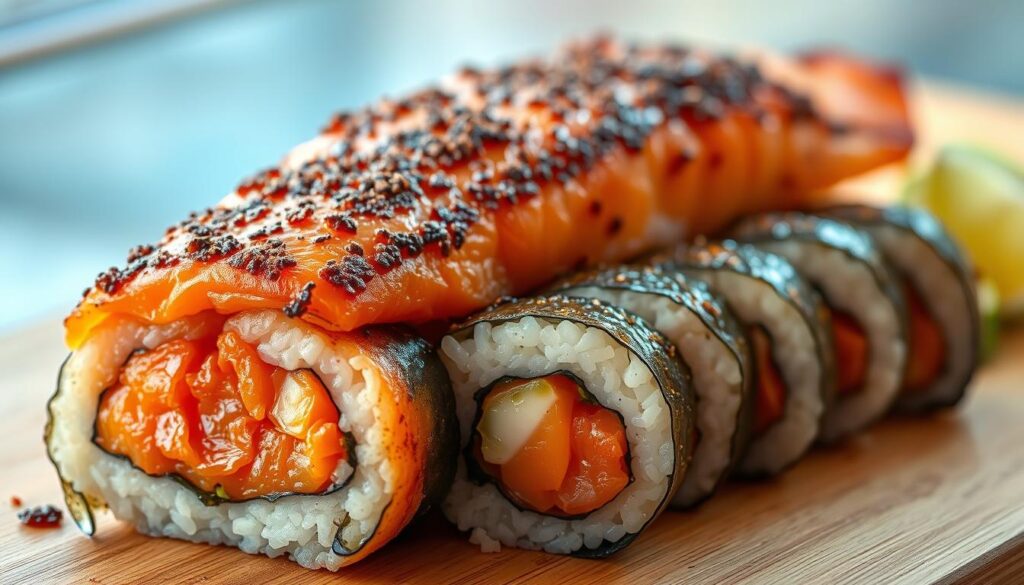
Imagine the warmth of a casserole and the freshness of sushi rice together. That’s what you get with sushi baked salmon. It’s a mix of seasoned sushi rice and a creamy salmon topping, all baked until it’s hot and bubbly.
This dish is easy to make, perfect for a weeknight. You don’t need to roll sushi. Just assemble it, bake, and serve. You’ll need sushi rice, furikake, Kewpie mayo, and unagi sauce, all found at most stores or Asian markets.
Learn how to serve it in different ways, like casserole squares or baked sushi cups. You’ll also find a detailed recipe, variations, tips for baking, and drink pairings. It’s a fun way to enjoy sushi at home.
Try this recipe and make it your own. Add your favorite spices or toppings. With just a few ingredients, you can enjoy restaurant-style sushi baked salmon tonight.
Jump to RecipeTable of Contents
What is Baked Salmon Sushi?
Baked salmon sushi is a new twist on classic sushi rolls. It’s a warm, shareable dish made with sushi rice, seasoned salmon, and a creamy mix. This mix browns in the oven, creating a casserole-like dish.
The Origins of Baked Sushi
The trend of sushi bake started with home cooks on TikTok. They turned maki and nigiri flavors into a casserole. This way, you can serve it family-style.
Many recipes use unagi-style sauces for a sweet-savory glaze. They also use oven-friendly techniques for ease and appeal.
Key Ingredients Used
Start with short-grain sushi rice and season it with rice vinegar, sugar, salt, and sesame oil. Use boneless, skinless salmon filets for protein. You can also use leftover or canned salmon.
Kewpie mayonnaise adds creaminess and umami flavor. If you can’t find Kewpie, mix regular mayo with rice vinegar and sugar. Some recipes add cream cheese or sour cream for extra richness.
Add sriracha and an unagi-style glaze for heat and depth. Top with furikake, sesame seeds, green onions, avocado, and tobiko. Serve with nori sheets or seaweed snacks, or press into muffin tins for baked sushi cups.
Differences from Traditional Sushi
Sushi bake is hot and bubbly, with cool toppings added after baking. Traditional sushi is cold or room temperature.
Preparing sushi bake is different. You press rice in a pan, add a salmon layer, and bake. It’s served in a casserole or individual cups, unlike traditional sushi.
Food safety is also different. Baked sushi uses cooked salmon, making it safe for those who avoid raw fish. This method keeps sushi flavors while simplifying preparation for groups.
Why You Should Try Baked Salmon Sushi
Baked salmon sushi adds a warm twist to sushi. It offers a mix of tastes and textures that make each bite exciting. This dish is perfect for home cooking and entertaining.
Unique Flavor Profile
Your first bite combines seasoned sushi rice with salmon. The rice is tangy, and the salmon is savory. Creamy mayo or cream cheese adds richness, while sriracha adds spice.
Unagi sauce gives a sweet-savory finish. The texture is interesting too. Sticky rice is the base, and a melty topping contrasts with crisp edges.
Sesame seeds or crunchy nori add crunch. Brief broiling makes the top golden and intensifies flavors. Baked sushi cups offer crisp nori shells and easy bites.
Health Benefits of Salmon
Salmon is packed with protein and omega-3s. These support heart and brain health. A typical bake gives about 18 g of protein per serving.
It also has potassium and vitamins. You can adjust sodium and fat to fit your diet. Use tamari or low-sodium soy, lighter mayonnaise, or skip cream cheese for a leaner version.
A Fusion of Cultures
This dish combines Japanese condiments with American casserole-style cooking. It keeps sushi flavors while being easy to make. It’s great for weeknight meals, meal prep, or parties.
It’s loved by all ages. Kids enjoy the creamy toppings, and adults love the flavors and health benefits. It’s perfect for any occasion, from casual dinners to big events.
How to Make Baked Salmon Sushi at Home
Making sushi with baked salmon at home is simple. You’ll need basic tools and follow a few steps. This guide will help you make a delicious bake for any occasion.
Essential Tools and Equipment
You’ll need a rice cooker or a heavy pot with a tight lid for cooking rice. Use a 9×9 or 9×13 baking dish for the casserole. A muffin tin is great for making sushi cups.
Don’t forget mixing bowls, a rubber spatula, and measuring tools. A baking sheet for salmon and a strainer for rinsing rice are also necessary. A sharp knife is needed for slicing avocado and nori.
Optional items include a broiler-safe rack and parchment paper for easy removal. A food processor can make sauces faster and neater.
Step-by-Step Recipe
Rinse 1¼ cups of short-grain sushi rice until the water is clear. Soak it for 15–20 minutes. Then, cook it with 1¾ cups of water for about 20 minutes.
While the rice is still warm, mix in 4 tablespoons of rice vinegar, 1 tablespoon of sugar, ½ teaspoon of salt, and ½ teaspoon of toasted sesame oil. Let it cool before you start assembling.
Preheat your oven to 375°F (190°C). Place 1 lb of boneless skinless salmon on a baking sheet. Add ¼ teaspoon of pepper, 2–3 cloves of minced garlic, 1 tablespoon of soy sauce, and ½ tablespoon of olive oil. Bake for 15–16 minutes, then remove the skin and flake it into chunks.
For an optional eel-style drizzle, simmer equal parts soy sauce, sugar, and rice vinegar (about 3½ tablespoons each) for 4–6 minutes until slightly reduced. Save a tablespoon for finishing.
In a bowl, mix ½ cup of Kewpie mayo (or ½ cup of mayo mixed with rice vinegar), ½ cup of softened cream cheese, 3 tablespoons of sriracha, 5 tablespoons of eel sauce (save 1 tablespoon), and 1 chopped green onion. Fold in the flaked salmon, keeping the chunks intact.
Grease a 9×9 dish and press the cooked rice into an even layer. Sprinkle 1½ tablespoons of furikake over the rice. Spread the salmon mixture evenly on top. Bake at 400°F (200°C) for 12–15 minutes until heated and creamy. For a browned top, broil for 1–2 minutes while watching closely.
Top with chopped green onions, drizzle reserved eel sauce, extra kewpie mayo, and sriracha. Add avocado slices, sesame seeds, and tobiko if you like. Serve with nori sheets or seaweed snacks for scooping, or cut into squares to plate.
To make sushi cups, press rice on 2×2 nori squares in a greased muffin tin. Top with marinated cubed salmon and bake for 15–17 minutes. Finish with diced avocado and a creamy avocado sauce.
Tips for Perfecting the Bake
Use short-grain sushi rice or Calrose. Press the rice firmly into the pan so your bake holds shape. Avoid long-grain rice to prevent a loose, soupy texture.
Season the rice while it is still warm and let it cool slightly before layering. Do not over-flake the salmon; keep meaty chunks for texture.
Watch the broiler closely to avoid burning. Broil only briefly for a golden top. For gluten-free versions, swap tamari or coconut aminos and check eel sauce labels.
Prepare rice and salmon ahead to shorten assembly time. Bake just before serving to keep texture fresh. Do not freeze the completed bake; rice and mayonnaise separate when frozen.
| Step | Time | Key Tip |
|---|---|---|
| Rinse and soak rice | 15–20 min | Rinse until water runs clear for the best texture |
| Cook and season rice | 20 min | Season while warm, then cool to room temp |
| Bake salmon | 15–16 min | Use bone-free, skinless fillet; leave chunks |
| Assemble and bake | 12–15 min (+broil 1–2) | Press rice firmly; watch broiler closely |
| Serve | Immediate | Serve with nori, avocado, and extra sauces |
Popular Variations of Baked Salmon Sushi
Discover new ways to enjoy baked salmon sushi. These ideas range from creamy casserole-style dishes to spicy platters and plant-based options. They cater to everyone, from vegetarians to those who love a little heat.
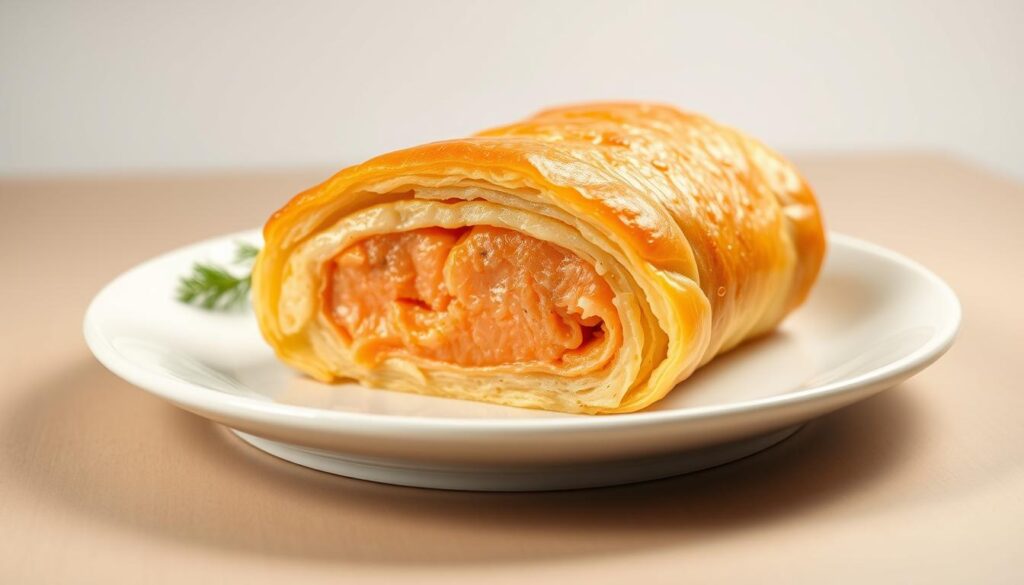
The creamy baked salmon roll is like a warm casserole. It combines flaked salmon with cream cheese and Kewpie mayo. A drizzle of eel sauce adds a sweet-savory touch. Bake until it’s bubbly and serve over seasoned rice for a smooth texture.
For an extra creamy touch, add more cream cheese. Top with avocado slices and sprinkle with toasted sesame seeds.
Spicy baked salmon sushi adds a kick with sriracha, chili oil, or jalapeño slices. Mix up to 3 tbsp of sriracha into the salmon. Add a spicy mayo drizzle on top for extra heat. You can offer mild and spicy halves for different tastes.
For a vegetarian twist, use marinated tofu, shiitake mushrooms, or eggplant instead of salmon. Use vegan mayo or Greek yogurt to keep it creamy without dairy or fish.
Baked sushi cups are great for vegetarian options. Fill nori cups with rice, marinated tofu or mushrooms, and avocado. Top with a creamy avocado sauce and add cucumber, pickled radish, and sesame seeds for extra flavor and texture.
Other easy swaps include canned salmon, smoked salmon, cooked shrimp, or imitation crab. Serve as sushi nachos, onigirazu rice paper sandwiches, or individual hand-rolls for a fun twist.
| Variation | Key Ingredients | Heat Level | Best For |
|---|---|---|---|
| Creamy baked salmon roll | Flaked salmon, cream cheese, Kewpie mayo, eel sauce, avocado, sesame | Low to Medium | Comfort meals, potlucks, sushi recipes that mimic rolls |
| Spicy baked salmon sushi | Salmon, sriracha, spicy mayo, chili oil, jalapeño | Medium to High | Heat lovers, family servings with mild/spicy halves |
| Vegetarian sushi baked salmon alternatives | Marinated tofu, shiitake or eggplant, vegan mayo or Greek yogurt, avocado | Low | Vegetarians, plant-forward diners, baked sushi cups |
| Presentation swaps | Canned salmon, smoked salmon, shrimp, rice chips, nori squares | Varies | Casual entertaining, creative sushi recipes |
Where to Find the Best Baked Salmon Sushi in the U.S.
Looking for the best baked salmon sushi? Start with local Japanese-fusion eateries and trendy sushi bars. They often have a “sushi bake” or “salmon bake” special. Check menus and ask staff about seasonal or pop-up offerings to find sushi baked salmon.
Top Restaurants to Visit
Neighborhood izakaya-style restaurants are great for hot dishes and classic sushi. Modern sushi bars in cities like Los Angeles and New York test baked salmon ideas on their menus.
High-end places like Nobu might serve hot fusion plates. But, viral sushi bake creations are more common at casual spots. Make sure they use short-grain sushi rice and fresh salmon for the best taste.
Popular Sushi Chains
Regional fast-casual concepts and big chains sometimes have baked salmon rolls. Call ahead to confirm availability and any special sauces like Kewpie or unagi glaze.
Chains offer consistent portions and flavors. Use Yelp and Instagram to find which outlets post baked items often.
Local Favorites in Major Cities
In cities like New York, Los Angeles, and Honolulu, try casual sushi restaurants and bakeries. Markets in Japantown or Little Tokyo often have vendors selling ready-to-bake dishes.
If you prefer making sushi at home, check Asian grocery stores. They have sushi bake kits or cups you can finish in your oven. This way, you can enjoy the trend with less effort.
| City | Where to Look | What to Ask For |
|---|---|---|
| New York City | Casual sushi bars, food halls, pop-ups | Seasonal salmon bakes, fresh salmon, Kewpie mayo |
| Los Angeles | Little Tokyo, Koreatown spots, fusion izakaya | Baked salmon ideas, short-grain rice, unagi sauce |
| San Francisco | Japantown vendors, sushi bakeries, markets | Sushi bake cups, spicy baked rolls, fresh fillet |
| Seattle | Neighborhood sushi bars, Asian grocery deli counters | Salmon sushi rolls, oven-ready trays, mayo blends |
| Chicago | Trendy sushi lounges, food hall stalls | Sushi bake specials, portion sizes, heat level |
| Honolulu | Local bakeries, seafood-focused eateries | Island-style baked salmon, fresh-caught options |
Scan hashtags like #sushibake and #salmonsushibake on social media. You’ll find new vendors and homemade sellers with unique baked salmon ideas and sushi at home alternatives.
Pairing Baked Salmon Sushi with Drinks
Choosing the right drink can make baked salmon sushi unforgettable. You want to find something that refreshes your palate and brings out the umami. Here are some tips to pick the perfect drink for sushi at home or out.
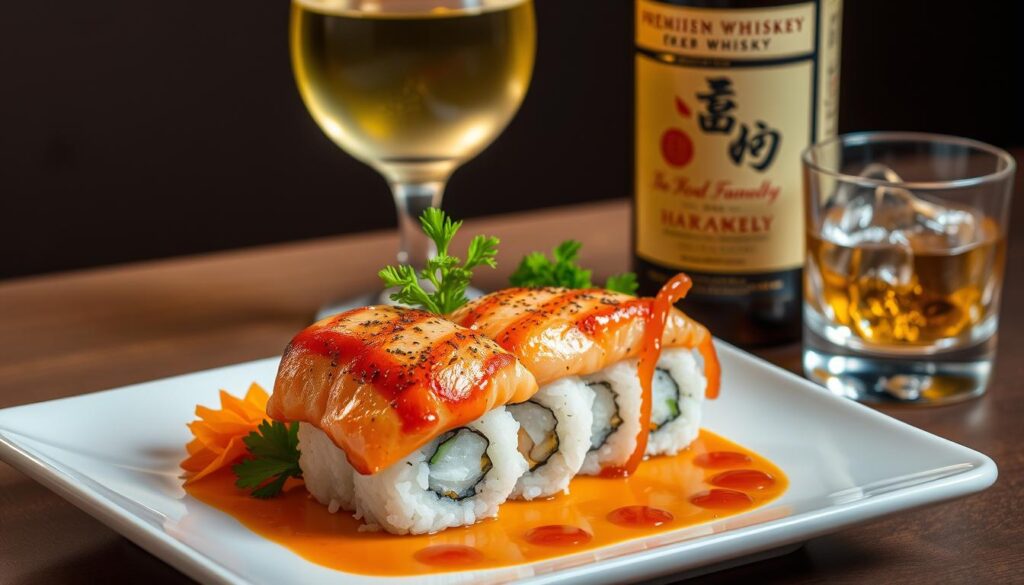
Best Beverages to Complement Sushi
Dry white wines like Sauvignon Blanc or Pinot Grigio are great. They cut through the richness and brighten the flavors. Unoaked Chardonnay adds a fuller mouthfeel that complements creamy sauces without overpowering the fish.
Crisp lagers and pilsners work well with rice vinegar and sriracha. Wheat beers with citrus notes offer a light, refreshing contrast. For a classic beer choice, try chilled Japanese beers like Asahi or Sapporo.
Non-Alcoholic Options
For those who don’t drink alcohol, hot or iced green tea is a clean choice. Sparkling water with lime or yuzu soda adds acidity that cuts through mayo and cream cheese. This keeps the flavors bright.
Iced barley tea (mugicha) and ginger soda pair well with savory Asian flavors. They help balance spice. For family-friendly gatherings, try a cucumber-lime mocktail or cold-brewed iced tea to keep things light and refreshing.
Traditional Choices
Sake is a classic match for sushi. Choose a light Junmai or Ginjo and serve it chilled or slightly warm. The clean rice notes in sake enhance the salmon without masking its texture.
Japanese beers from brands like Kirin are great with richer toppings. They’re a popular choice in many restaurants. Keep small dishes of soy sauce and wasabi nearby for dipping nori-wrapped bites or adding heat.
Pairing tips: match acidity to richness so drinks cut through creamy elements. Think about temperature contrast; a hot miso or warm green tea works well with a hot baked casserole and cool garnishes. Use these ideas to refine your pairing sushi baked salmon experience and pick the best beverages for sushi for any occasion.
Conclusion: Enjoying Baked Salmon Sushi
Baked salmon sushi is a simple way to enjoy sushi at home. It doesn’t require rolling skills. Just bake, rest, and top with cool avocado or cucumber.
Tips for Serving and Enjoying
Serve your sushi hot with cool toppings like avocado, cucumber, and green onions. Cut it into squares and offer nori sheets or seaweed snacks. This way, guests can make their own hand-rolls.
Let the bake rest for 3–5 minutes to avoid runny parts. If you want a golden top, broil briefly. Store leftovers in the fridge for up to two days. Reheat gently in the oven, but avoid freezing.
Experimenting with Your Own Recipes
Start with easy sushi recipes and then try new things. Swap proteins with canned salmon, cooked shrimp, or smoked salmon. You can also use vegetarian options like marinated tofu or mushrooms.
Add extra spice with sriracha or jalapeños. Make your own sauces, like spicy mayo or a creamy avocado sauce. Change the presentation to suit any occasion.
Sharing the Experience with Friends
Make it a social event with a potluck or DIY sushi-bake party. Guests can add their favorite toppings. It’s perfect for family dinners and casual gatherings.
Share your creations on social media. Use relevant tags to find new ideas and tips. Baked salmon sushi is easy, adaptable, and great for sharing.
FAQ
What exactly is sushi baked salmon or a sushi bake?
Do you use raw fish in a baked salmon sushi recipe?
What type of rice should I use?
What are the must-have pantry items and condiments?
Can I make this gluten-free?
How long does the assembled bake keep in the refrigerator?
Can I prepare components ahead of time?
How can I adjust the spice level for picky eaters or kids?
What are easy vegetarian or vegan swaps?
How do I serve baked salmon sushi—squares, cups, or hand-rolls?
Is broiling necessary and what does it do?
Where can I find good sushi bake near me?
What drinks pair best with baked salmon sushi?
Can I substitute Kewpie mayo if I can’t find it?
How do I prevent the rice from getting soggy?
If you enjoyed this Recipe, don’t miss our other delicious desserts on Here — you’ll find easy ideas, tips, and inspiration for every occasion. For more festive recipes and global favorites, check out WhatForDinner.com and discover what everyone’s cooking next!
Baked Salmon Sushi
Equipment
- 1 Rice cooker or pot
- 1 Mixing bowls
- 1 9×9 or 9×13 baking dish
- 1 Oven
- 1 Knife & cutting board
- 1 Baking Sheet
- 1 Rubber spatula
Ingredients
For the Rice
1¼ cups short-grain sushi rice
1¾ cups water
4 tbsp rice vinegar
1 tbsp sugar
½ tsp salt
½ tsp toasted sesame oil
For the Salmon Layer
1 lb boneless, skinless salmon
¼ tsp black pepper
2–3 cloves garlic, minced
1 tbsp soy sauce (or tamari)
½ tbsp olive oil
For the Creamy Topping
½ cup Kewpie mayo (or regular mayo + 1 tsp rice vinegar + ½ tsp sugar)
½ cup cream cheese, softened
3 tbsp sriracha (adjust to taste)
5 tbsp unagi/eel sauce (reserve 1 tbsp for topping)
1 green onion, chopped
For Layering & Toppings
1½ tbsp furikake seasoning
Extra Kewpie mayo and sriracha (drizzle)
1 tbsp reserved unagi sauce
1 avocado, sliced (optional)
Sesame seeds (optional)
Tobiko (optional)
Nori sheets or seaweed snacks (for serving)
Instructions
- Prepare the RiceRinse sushi rice until water runs clear.Soak for 15–20 minutes, then cook with water for 20 minutes.While warm, mix in vinegar, sugar, salt, and sesame oil.Let it cool slightly.Bake the SalmonPreheat oven to 375°F (190°C).Place salmon on a baking sheet; season with pepper, garlic, soy sauce, and olive oil.Bake 15–16 minutes.Remove skin and flake into chunks.Make the Creamy Salmon MixIn a bowl combine Kewpie mayo, cream cheese, sriracha, 4 tbsp eel sauce, and green onion.Fold in the flaked salmon gently.Assemble the Sushi BakePreheat oven to 400°F (200°C).Grease a 9×9 baking dish.Press the cooled sushi rice into an even layer.Sprinkle furikake on top.Spread the creamy salmon mixture evenly over the rice.BakeBake for 12–15 minutes.Broil for 1–2 minutes to brown the top (optional — watch carefully).Add Toppings & ServeDrizzle with mayo, sriracha, and remaining eel sauce.Add avocado, sesame seeds, green onions, or tobiko.Serve warm with nori sheets for scooping.
Notes
- Use Calrose rice if sushi rice isn’t available.
- For kids, reduce or remove sriracha.
- Do not freeze — rice + mayo separates.
- Make ahead: prepare rice & salmon separately and assemble right before baking.
- Gluten-free: use tamari + GF eel sauce.