
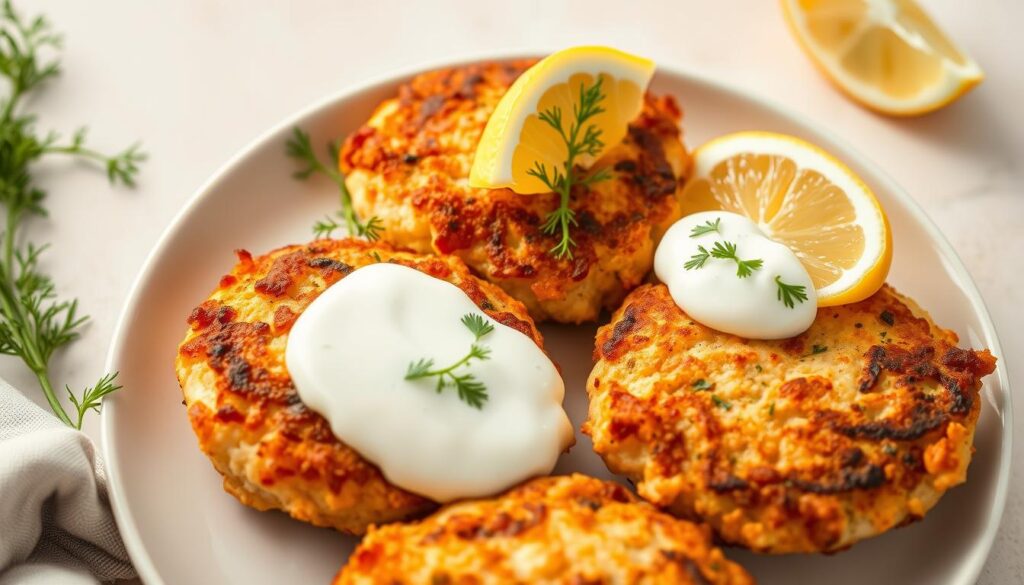
Ever feel like dinner comes together smoothly? These baked salmon cakes are that moment. They offer crisp edges and a soft, flaky inside. Plus, they’re much easier to make than pan-frying, saving you time on busy nights.
Whether you use fresh salmon or canned, you’ll love these cakes. They’re great as appetizers, burgers, or a main dish. Canned salmon is affordable and quick to use, while fresh makes them feel more special.
Preparation is fast, just 10 minutes. Baking takes 20–30 minutes, or 3–4 minutes per side on the stovetop. Baking is better for easy cleanup and a consistent texture. These cakes are a hit with everyone and are perfect for taking to potlucks.
They’re also good for you, with over 20 grams of protein per serving. They have moderate calories, depending on what you add. Each bite is satisfying and delicious, making them a great choice for a quick meal or appetizer.
Table of Contents
What Are Baked Salmon Cakes?
Baked salmon cakes are a tasty dish you can make any night. You mix flaked salmon with egg and mayonnaise. Then, add lemon and mustard for flavor. Shape it into patties and bake for a golden crust and tender inside.
Overview of Salmon Cakes
Salmon patties and croquettes are similar. Egg and mayo bind the mix. Panko adds crunch. Onions, scallions, or bell peppers add texture and flavor.
You can use fresh or canned salmon. Cooking methods include baking, pan-frying, or air-frying. Each method gives a different texture and taste.
Cultural Significance
Salmon cakes are a comfort food in the U.S. They’re made with leftover salmon or canned fish for convenience. Coastal areas might add Old Bay, while New England uses dill and lemon.
These cakes inspire other dishes like crab and tuna cakes. They’re popular at gatherings and in casual restaurants. Canned salmon is making a comeback for its affordability and taste.
| Characteristic | Baked Method | Pan-Fry | Air-Fryer |
|---|---|---|---|
| Cook Time | About 20 minutes, turn once | 3–4 minutes per side | ≈10 minutes at 400°F |
| Texture | Evenly golden, crisp exterior | Deeply seared crust | Lightly crisp, less oil |
| Best For | Batch cooking and ease | Quick stovetop dinners | Healthier, low-oil option |
| Common Ingredients | Fresh salmon cakes or canned salmon, panko, egg, mayo | Salmon patties with breadcrumbs and aromatics | Salmon croquettes adapted for air circulation |
Ingredients Needed for Baked Salmon Cakes
When making baked salmon cakes, pick ingredients that mix flavor, moisture, and structure. This ensures your cakes are tender and hold together well. We’ll guide you through choosing the right protein, binders, fats, and spices for delicious homemade salmon cakes.
Fresh Salmon vs. Canned Salmon
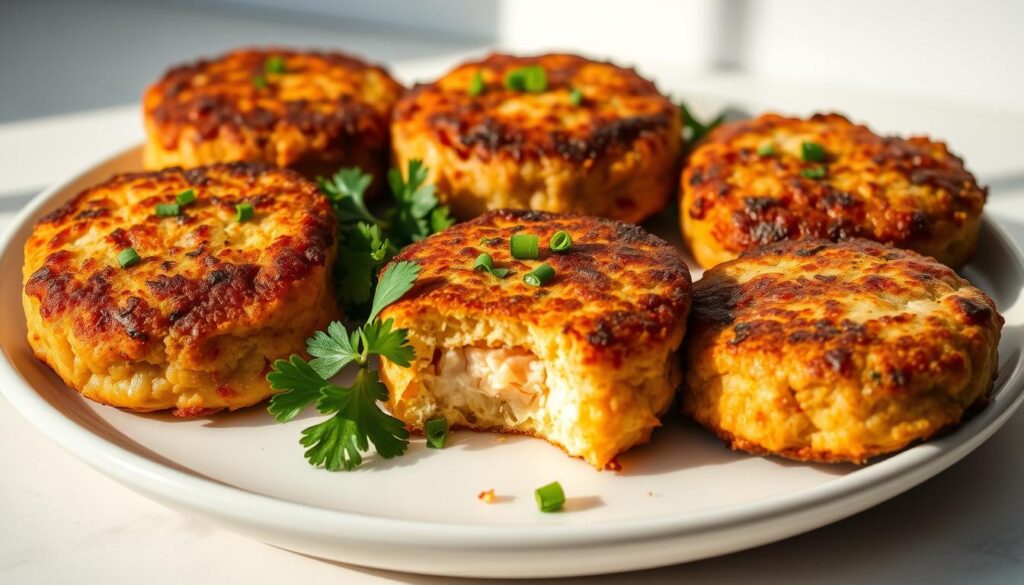
Fresh salmon gives a delicate texture and clean taste. Use leftover cooked fillets that are boneless and skinless. Flake the fish gently. If using raw fillets, cook and cool them before mixing.
Fresh salmon cakes are light and have bright herb flavors.
Canned salmon is quicker and cheaper. Use pink or sockeye cans from 6 oz to 14–15 oz. Drain the fish, flake it, and remove large bones if you like. Canned salmon makes firmer patties that stay together well.
Essential Spices and Seasonings
Seasoning is key for tasty homemade salmon cakes. Start with garlic powder or garlic salt and black pepper. Add Old Bay for a classic taste. A splash of Worcestershire and 1–2 tablespoons of Dijon or yellow mustard enhance umami and tang.
Lemon juice adds brightness. Use fresh dill or parsley, chopped scallions, or diced onion for extra flavor. For some heat, try a pinch of cayenne or Cajun seasoning. Make sure the spices complement the salmon without overpowering it.
Binders and texture agents prevent your cakes from falling apart. For small batches, use one large egg and about 1/4 cup mayonnaise. Add 1/2 cup panko to help the patties stick together. Use gluten-free options like almond flour or gluten-free Bisquick if needed.
For cooking fats, olive oil or avocado oil work well in a skillet. If baking, preheat a cast-iron skillet with a thin oil film for a crisp crust. Start with 6–15 oz canned salmon, 1/2 cup panko, 1 large egg, 1/4 cup mayonnaise, 1–2 Tbsp lemon juice or Dijon, 1–2 Tbsp chopped fresh dill or 1/4 cup parsley, and about 2 Tbsp oil for cooking.
- Protein: fresh salmon cakes (leftover fillet) or canned salmon (6–15 oz)
- Binders: 1 large egg, 1/4–1/2 cup mayonnaise, 1/2 cup panko
- Seasoning: essential spices—garlic powder, black pepper, Old Bay, Worcestershire, mustard, lemon, fresh herbs
- Texture: flour, Bisquick, or gluten-free alternatives
- Fats: olive oil or avocado oil for stovetop; oil-coated skillet for oven-baked cakes
Health Benefits of Salmon
Salmon is packed with nutrients that are great for weeknight meals. Whether you use fresh fillets or canned fish, it supports heart and brain health. Plus, it makes meals satisfying and easy to prepare.
Omega-3 Support for Heart and Brain
Salmon is full of omega-3 fatty acids EPA and DHA. These fats are good for your heart and brain. They help lower bad fats, support blood pressure, and reduce inflammation.
Eating baked salmon cakes is a convenient way to get these omega-3s. Canned salmon has similar levels of omega-3s as fresh fish. So, choosing canned for your baked salmon cakes still offers great heart health benefits.
Regularly eating these fats can improve brain function as you get older. It also helps keep your mood stable.
Lean, Complete Protein for Muscle and Satiety
Salmon is a lean source of high-quality protein. Many salmon cake recipes have about 20 to 25 grams of protein per serving. This amount helps repair muscles, supports recovery after exercise, and keeps you full.
Baking salmon cakes instead of frying makes them leaner. Using egg, panko, or almond flour helps control sodium and carbs. This keeps the dish tasty and protein-rich.
| Nutrient | Benefit | Typical Source in Salmon Cakes |
|---|---|---|
| Omega-3 fatty acids (EPA, DHA) | Heart health, brain support, lower inflammation | Fresh or canned salmon |
| High-quality protein | Muscle maintenance, satiety, recovery | Salmon fillet or canned salmon (per serving ~20–25 g) |
| Calcium | Bone health | Canned salmon with soft bones |
| Vitamin D | Bone and immune support | Salmon flesh (fresh or canned) |
| Selenium & B vitamins | Antioxidant defense, energy metabolism | All salmon varieties used in baked salmon cakes |
| Potassium | Electrolyte balance, blood pressure support | Fresh or canned salmon |
To keep your salmon cakes healthy, bake them instead of frying. Serve them with salads or roasted veggies for extra fiber and vitamins. Making small changes, like using less mayo and more herbs, makes your salmon cakes both tasty and healthy.
How to Make Baked Salmon Cakes
Learn a simple way to make baked salmon cakes that are moist inside and crispy outside. This guide helps you turn canned or leftover salmon into delicious cakes for any night. It’s easy and quick.
Step-by-Step Guide
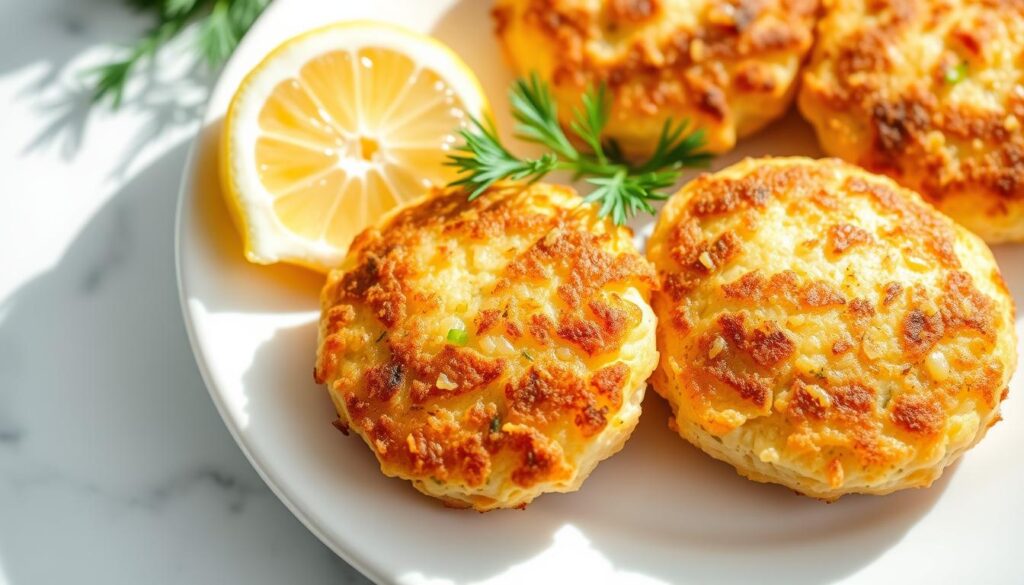
First, preheat your oven to 400°F. Coat a 10″ cast-iron skillet or baking pan with 1–2 tablespoons oil. Place it in the oven to heat until sizzling-hot. This step is crucial for crispy salmon cakes.
Next, sauté aromatics in 1 tablespoon olive oil plus 1 tablespoon butter over medium heat. Use 1 cup finely diced yellow onion and 1/2 cup diced red bell pepper or chopped scallions. Cook about 7–9 minutes until softened, then cool slightly.
In a large bowl, combine flaked salmon (6–15 oz canned or leftover boneless, skinless fresh salmon), 1/2 cup panko breadcrumbs, 1 beaten large egg, 2 tablespoons mayonnaise, 1 teaspoon Worcestershire or 1 tablespoon Dijon, 1 teaspoon garlic salt or 1/2 teaspoon sea salt plus 1/4 teaspoon garlic powder, 1/4 teaspoon black pepper, 1/4 cup finely chopped parsley or 1 tablespoon dill, and 1 tablespoon lemon juice. Fold gently to keep the salmon flaky.
Form the mixture into patties. Make five larger patties or 14–15 smaller ones based on your needs. Chill the patties 20–30 minutes if you want firmer shapes prior to baking.
Carefully remove the hot skillet from the oven. Place patties into the pan and return to the oven. Bake about 10 minutes, flip carefully, then bake another 8–10 minutes until golden and cooked through, roughly 20 minutes total. For a stovetop option, heat 1 tablespoon oil plus 1 tablespoon butter and sauté 3–4 minutes per side until browned.
For an air fryer, preheat to 400°F, lightly spray patties with oil, and cook about 10 minutes, flipping halfway. Yield depends on size: expect 4–14 patties and total time of 20–40 minutes depending on batch size and method.
Tips for Perfect Texture
Don’t overmix the filling. Leave the salmon in flakes to avoid dense patties. This small change keeps the interior tender while the exterior crisps up.
Adjust moisture as needed. Add extra mayonnaise if the mix seems dry. Add more breadcrumbs if the mixture is too wet. Use panko for extra crispness.
Preheat a cast-iron skillet in the oven so the hot surface creates a crunchy crust on contact. That step is key for truly crispy salmon cakes.
Avoid overcooking. Bake or pan-sear until golden but still moist inside. Overcooked salmon cakes will dry out quickly.
| Step | Key Action | Timing |
|---|---|---|
| 1 | Preheat oven and heat pan | 400°F, 5–10 minutes |
| 2 | Sauté aromatics | 7–9 minutes, then cool |
| 3 | Mix ingredients gently | 5 minutes to combine |
| 4 | Form and chill patties (optional) | 20–30 minutes chill |
| 5 | Bake and flip once | 10 minutes per side, ~20 minutes total |
| Alternative | Pan-sear or air-fry for crisp finish | 3–4 min per side (pan) or 10 min total (air fryer) |
Baking vs. Frying Salmon Cakes
Choosing between oven and stovetop methods changes flavor, texture, and nutrition. You can get crispy salmon cakes without drowning them in oil. The right technique gives you a balance of crunch and a lighter bite that fits your meal plan.
The oven method keeps your kitchen cleaner and makes batch cooking simple. A preheated cast-iron skillet on a hot baking sheet or an air fryer produces a crisp exterior while using very little oil. This approach makes healthy salmon cakes an easy option for meal prep and reheating.
Advantages of Baking
Baking reduces splatter and cuts the need for frequent oil replenishment. You can cook many patties at once on a sheet pan, which saves time when serving a family. Oven-fried patties reheat well in the oven or air fryer, preserving texture for leftovers.
Using olive oil or avocado oil keeps saturated fat lower than deep frying. If you want extra crispness, brush a touch of oil on the patties or sear briefly in a hot skillet before finishing in the oven. Air fryers give similar results with minimal oil and fast cook times.
Nutritional Comparisons
Frying raises total fat and calories because the patties absorb more oil. A typical fried recipe can show about 387 kcal and 28 g total fat per serving in some tests, while oven or reduced-oil versions tend to be lower in calories and fat.
Protein counts stay close across methods, often around 20–23 g per serving. Swapping panko for almond flour supports gluten-free needs and changes the carb and fat profile. Using Bisquick will alter texture and calories because it adds leavening and different carbohydrates.
Your choice should match the crispness you want, the equipment you have, and your nutrition goals. If lower fat and easier cleanup matter, pick baking. If you prefer ultra-crisp edges and a quick single-batch cook, choose pan-frying.
Serving Suggestions for Salmon Cakes
Make your meal pop with these serving suggestions for salmon cakes. A short list of sauces, sides, and pairing ideas is perfect for weeknight dinners or weekend entertaining.
Choose sides and dips that match your cakes’ texture and seasoning. Classic tartar sauce with chopped capers and lemon is a great choice. Try a dill sauce made from Greek yogurt or mayonnaise, plus fresh dill and lemon zest for a creamy contrast.
Keep lighter options on hand for a fresher plate. Steamed asparagus, lemony quinoa, or a simple arugula salad with olive oil let the salmon shine. For heartier meals, roasted potatoes or creamy coleslaw add satisfying texture and warmth.
Think about meal pairings to vary how you serve the cakes. Form larger patties and place them in brioche buns to create salmon burgers for casual lunches. Serve smaller cakes as appetizers at cocktail gatherings with toothpicks and dipping sauces on the side.
Regional seasonings steer your accompaniments. Old Bay with fries gives a coastal pub feel. Dijon and dill with buttered new potatoes evoke New England comfort. Pair drinks that complement the fish, such as a crisp Sauvignon Blanc or iced tea with lemon.
| Course | Suggested Side or Dip | Why It Works |
|---|---|---|
| Appetizer | Creamy dill sauce | Light tang and herb freshness cut richness without overpowering |
| Main | Roasted honey-mustard potatoes | Caramelized edges add texture and a savory-sweet counterpoint |
| Lunch | Salmon burgers on brioche | Hearty format with soft bun makes an easy handheld meal |
| Light option | Lemony quinoa and steamed greens | Bright, nutrient-dense base that keeps the plate balanced |
| Pairing | Crisp white wine or citrus cocktail | Acid cuts oiliness and lifts the seafood flavors |
Garnish with fresh parsley or dill and lemon wedges for visual appeal and flavor boost. Place tartar sauce and other ideal sides and dips in small bowls so guests can customize their bites. These serving suggestions salmon cakes help you serve attractive plates that taste as good as they look.
Storing and Reheating Leftover Salmon Cakes
Keep your salmon patties tasting fresh by following simple storage and reheating steps. Proper handling keeps texture and flavor intact, cuts waste, and makes meal prep easier when you want a quick dinner or packed lunch.
Store cooled patties in airtight containers to limit moisture and bacterial growth. For short-term use, place leftover salmon cakes in the refrigerator for 2–4 days. If you plan longer storage, move patties to the freezer to extend shelf life.
Best Storage Practices
Cool salmon cakes completely before sealing them. Condensation ruins the crisp exterior and creates sogginess. Use shallow containers to let patties chill fast.
Refrigerate cooked patties up to 2–4 days depending on ingredients. Label containers with the date so you know when to use them.
For longer keeping, freeze cooked patties in single layers or individually wrap them and place in airtight bags. Freezer salmon cakes stored this way stay good for 2–3 months.
If you assemble patties but don’t cook them, freeze them on a parchment-lined tray until solid, then transfer to freezer bags. Raw-formed patties can last up to 6 months when frozen properly.
Reheating Methods
Oven reheating at 350°F for about 10–12 minutes warms through while preserving a crisp crust. This method works well when you reheat several patties at once.
Use a skillet over medium-low heat with 1–2 teaspoons of oil to revive crispness in 6–8 minutes. Turn gently to prevent breakage.
An air fryer set between 350–400°F takes 5–8 minutes and produces the best quick crisp on leftover salmon cakes. Check midway to avoid over-browning.
The microwave is fine for fast reheating but will soften the exterior. If you use the microwave, heat in short bursts and finish in a skillet or oven to regain texture when reheating salmon patties.
Thaw frozen patties overnight in the refrigerator before reheating. If patties were frozen raw, thaw then cook as directed for best results.
| Storage Option | Temperature | Duration | Best Use |
|---|---|---|---|
| Refrigerated cooked patties | 40°F (4°C) | 2–4 days | Quick meals, salads, sandwiches |
| Frozen cooked patties | 0°F (-18°C) | 2–3 months | Prep ahead, grab-and-go dinners |
| Frozen raw formed patties | 0°F (-18°C) | Up to 6 months | Make-ahead cooking, longer storage |
| Reheat: Oven | 350°F (175°C) | 10–12 minutes | Best for even heating and crispness |
| Reheat: Skillet | Medium-low | 6–8 minutes | Restores crust quickly |
| Reheat: Air fryer | 350–400°F (175–205°C) | 5–8 minutes | Fastest crisp finish |
| Reheat: Microwave | High (short bursts) | 1–2 minutes | Fast, may soften exterior |
Variations of Baked Salmon Cakes
Try different twists to keep your salmon croquettes exciting. Small changes to herbs, spices, and mix-ins let you make crispy salmon cakes. These can be perfect for weeknight meals or a special dinner. Below are practical ideas to expand your repertoire while keeping the same easy baking method.
Creative Flavor Additions
Add fresh dill, parsley, lemon juice, and zest for a bright, classic profile. For regional flair, stir in Old Bay, Cajun seasoning, smoked paprika, or a pinch of cayenne. This brings warmth and depth. Mix-ins such as chopped celery, shredded carrots, spinach, jalapeños, scallions, or finely chopped bell pepper boost texture and nutrition.
A splash of Dijon mustard, Worcestershire sauce, or hot sauce deepens the savory base. A light grate of Parmesan or cheddar can enrich the patties without overpowering the salmon.
Gluten-Free Options
To make gluten-free salmon cakes, replace panko with almond flour, gluten-free Bisquick, or crushed gluten-free crackers. You can also use an extra beaten egg as a binder when you want fewer dry ingredients. Check labels on canned salmon and condiments like mustard to avoid hidden gluten.
Note that almond flour yields denser patties, whereas gluten-free panko most closely mimics crispness when baked or air-fried. Experimentation helps you create variations baked salmon cakes that match your dietary needs and flavor goals. You can apply the same technique to crab cakes or tuna cakes if you want a crossover, or skip crumbs for a lower-carb version and add more egg or almond flour.
With a few smart swaps, your gluten-free salmon cakes and classic recipes will both deliver reliable, crispy salmon cakes every time.
FAQ
What makes baked salmon cakes different from pan-fried salmon patties?
Can I use fresh salmon or canned salmon for baked salmon cakes?
What are the core ingredients in salmon patties or croquettes?
What typical quantities and timing should I expect?
How do egg, mayonnaise, and panko affect texture?
What seasonings work best for salmon cakes?
Are baked salmon cakes a healthy option?
Does canned salmon retain omega-3s and other nutrients?
What’s the best method to get a crisp crust without deep-frying?
How do I prevent salmon cakes from falling apart?
Can I make gluten-free salmon cakes?
How should I store and reheat leftover salmon cakes?
Can I make salmon cakes in an air fryer?
What sides and dips pair well with salmon cakes?
How can I adapt salmon cakes into other seafood cakes?
What are easy tips to cut calories but keep flavor?
If you enjoyed this Recipe, don’t miss our other delicious desserts on CurryIngredients.com — you’ll find easy ideas, tips, and inspiration for every occasion. For more festive recipes and global favorites, check out WhatForDinner.com and discover what everyone’s cooking next!
Tags: