
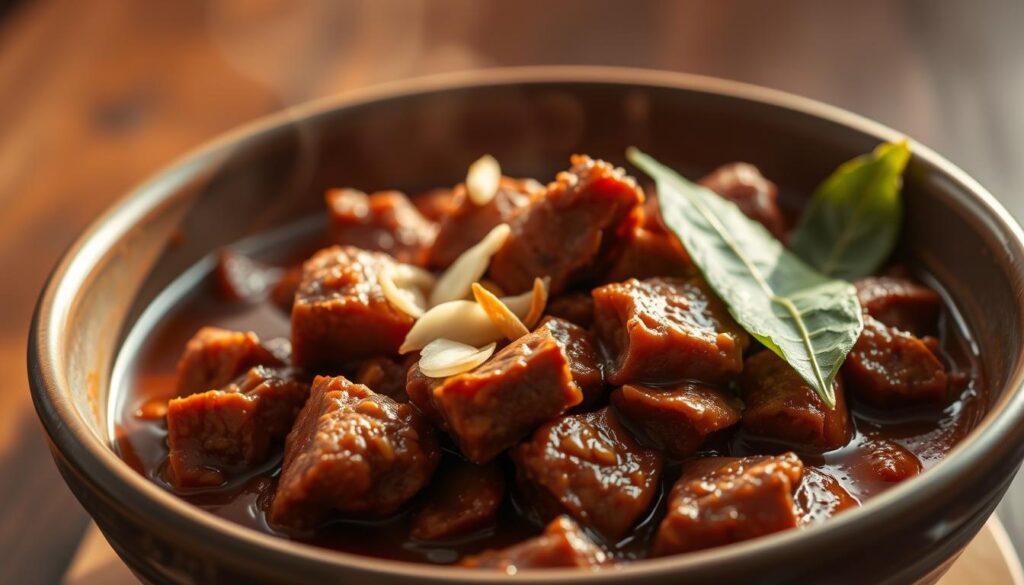
Remember that one unforgettable meal that stays with you forever? Beef Rendang The kind where every bite tells a story of patience, tradition, and love? That’s the magic you’re about to discover with this incredible beef dish.
This remarkable food earned the title “World’s Best Food” from CNN for good reason. What makes rendang so special is its unique cooking method. Unlike typical curries with soupy sauces, this is a dry curry where the liquid slowly reduces into a rich, caramelized coating.
The process transforms tough cuts of beef into melt-in-your-mouth perfection through hours of gentle simmering. Creamy coconut milk and complex spices work together to create layers of flavor that simply can’t be rushed.
While the cooking time spans several hours, the technique itself is surprisingly approachable. This celebratory dish represents more than just great food—it’s a tradition of gathering and sharing that has traveled across Southeast Asia.
You’ll find that despite the impressive ingredient list, each component plays a crucial role in building the signature taste that makes this dish unforgettable. The reward for your patience is restaurant-quality results right in your own kitchen.
Key Takeaways
- Beef rendang was named “World’s Best Food” by CNN for its exceptional flavor and technique
- This is a dry curry where the sauce reduces to a thick, caramelized paste instead of remaining liquid
- The slow cooking process (2-3 hours) transforms the beef into incredibly tender pieces
- Originally developed as a preservation method, the technique creates intense flavor depth
- Despite the long cooking time, the process is beginner-friendly and requires patience over advanced skills
- This celebratory dish is traditionally prepared for special occasions throughout Southeast Asia
- Restaurant-quality results are achievable at home with the right technique and ingredients
Overview of Indonesian Rendang
The magic of this preparation unfolds over hours, as coconut milk and spices reduce to a glossy, caramelized cloak for the beef. This technique creates a dry curry where the sauce clings to the meat, delivering an intense flavor in every bite.
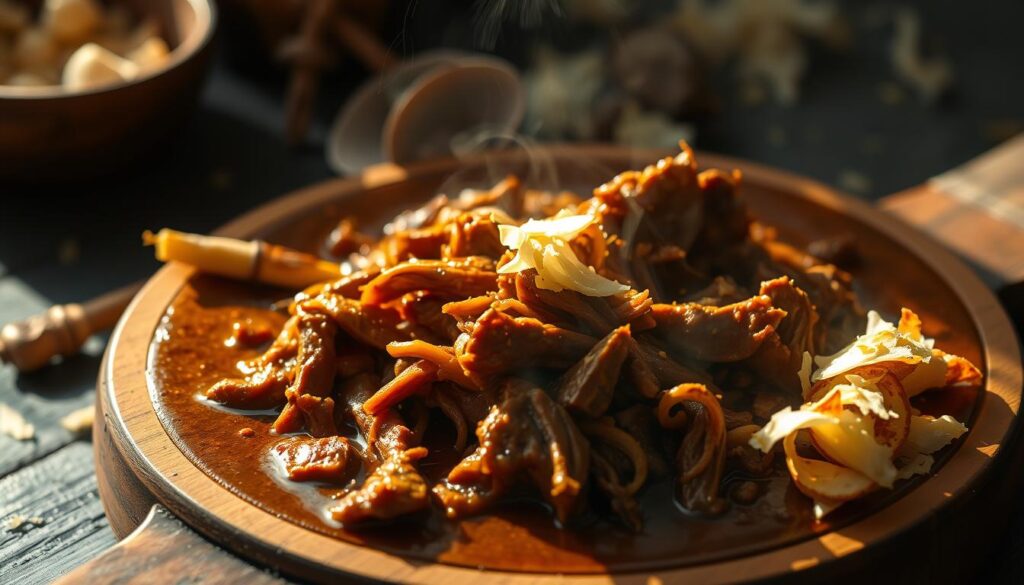
What Makes Rendang Special
You will notice the difference from the first taste. The long, slow simmering breaks down tough cuts of beef into incredibly tender pieces. Rich coconut milk and a complex blend of spices slowly cook down.
This process intensifies the flavors into a thick paste. The result is a deeply savory and aromatic food experience. It is a testament to how patience creates perfection.
Cultural Significance in Southeast Asia
This beef rendang is far more than a meal. It is a centerpiece at major celebrations. You will find it at weddings, religious holidays, and large family gatherings.
Originally, the cooking method served as a brilliant preservation technique. It allowed people to store meat without refrigeration. Today, it symbolizes generosity and community.
| Feature | Rendang | Typical Thai Curry | Japanese Curry |
|---|---|---|---|
| Sauce Consistency | Thick, dry coating | Liquid, brothy | Thick, gravy-like |
| Cooking Time | 2-4 hours (slow) | 20-40 minutes (fast) | 30-60 minutes (medium) |
| Primary Liquid | Coconut milk (reduced) | Coconut milk or stock | Water or stock |
| Beef Texture Goal | Fall-apart tender | Tender but distinct | Firm to tender |
Traditionally, this iconic beef rendang is served with steamed rice. It also pairs wonderfully with compressed rice cakes. These dishes perfectly absorb the flavorful sauce.
History and Origins of the Dish
Centuries ago in West Sumatra, a brilliant culinary solution emerged from the Minangkabau people’s kitchens. Their innovative approach combined practical needs with exceptional flavor development. This method would eventually gain worldwide recognition.
The Minangkabau ethnic group developed this preparation as both cooking art and food preservation. In tropical climates without refrigeration, the extended cooking time created a protective coating around the meat. This allowed the beef to remain edible for weeks.
Minangkabau Culinary Traditions
You’ll discover how this dish reflected the Minangkabau’s matrilineal society and rich traditions. It became essential for special occasions and long journeys. The technique demonstrated both hospitality and practical wisdom.
The preparation spread from West Sumatra throughout Southeast Asia. Each region developed slight variations while maintaining the core technique. Today, this beef rendang represents centuries of culinary evolution.
Originally served at ceremonies and festivals, the dish symbolized celebration and skill. The long cooking process wasn’t just about flavor—it was essential technology. This practical beginning explains why rendang remains so distinctive today.
Key Ingredients That Define Beef Rendang
The foundation of this iconic dish’s legendary flavor lies in its carefully selected components. Each ingredient serves a specific purpose in building the complex taste profile that makes this preparation so distinctive.
Choosing the right beef cut is crucial for success. Tough, affordable cuts like chuck roast work best because their marbling and collagen break down during slow cooking. This creates fork-tender meat that absorbs all the rich flavors.
“The quality of ingredients determines the soul of the dish—each component must harmonize to create culinary magic.”
Coconut Milk and Kerisik
Full-fat coconut milk provides the rich, creamy base that caramelizes into the signature coating. The high fat content is essential for proper reduction and flavor development.
Kerisik, made from toasted grated coconut, adds irreplaceable nutty depth. This paste contributes to the characteristic texture and caramelized richness that defines authentic preparation.
Essential Spices and Aromatics
The spice paste forms the flavor foundation with shallots, garlic, ginger, and galangal. Fresh lemongrass releases bright oils, while rehydrated chilies provide color and moderate heat.
Supporting ingredients like makrut lime leaves and star anise add complexity. Each component works together to create the multi-layered flavor profile that makes this dish unforgettable.
| Cut Type | Fat Content | Best For | Cooking Time |
|---|---|---|---|
| Beef Chuck | High marbling | Ideal balance | 2-3 hours |
| Short Ribs | Very high | Extra richness | 3-4 hours |
| Stewing Beef | Moderate | Budget option | 2-3 hours |
Cut your beef into 1½-inch cubes for optimal results. This size maintains structure while allowing full flavor absorption from the spices and coconut milk.
Essential Tools and Preparations
Before the slow simmering begins, careful preparation of ingredients ensures optimal results. Proper setup makes the cooking process smoother and more successful.
You will need the right equipment to achieve authentic flavors. A heavy-bottomed pot distributes heat evenly during the long reduction.
Cutting Techniques for Beef
When you cut beef for this dish, aim for uniform 1½ to 2-inch cubes. Larger pieces maintain their structure better during extended cooking.
These substantial beef chunks become fork-tender without falling apart. They withstand frequent stirring as the sauce reduces.
Blending and Toasting Spices
Create a smooth spice paste using a blender or food processor. Add minimal water or oil only if needed for blending.
Toast whole spices like cumin seeds in a dry pan over low heat. This releases essential oils for deeper flavor.
| Technique | Tool Required | Time Needed | Key Benefit |
|---|---|---|---|
| Cutting Beef | Sharp chef’s knife | 5-10 minutes | Uniform cooking |
| Blending Paste | Food processor | 5 minutes | Smooth texture |
| Toasting Spices | Dry skillet | 2-3 minutes | Enhanced aroma |
Rehydrate dried chilies in boiling water before blending. Remove the seeds to control heat levels in your final dish.
Step-by-Step Guide to Making Indonesian Rendang
Transforming simple ingredients into a culinary masterpiece starts with creating the perfect spice blend. This beef rendang recipe follows a logical progression that builds flavor layer by layer.
Creating the Spice Paste
Begin your rendang recipe by blending shallots, garlic, ginger, and galangal with rehydrated chilies. Add ground coriander, fennel, and cumin to create a thick, concentrated paste.
Avoid adding too much water during blending. You want a dense mixture that will coat the beef effectively. This foundation determines the final flavor intensity.
Building the Base with Aromatics
Heat oil in your heavy pot over medium heat. Add whole spices like cinnamon and star anise, frying until fragrant. This initial step releases essential oils.
Stir in your blended spice paste and sauté for about 5 minutes. Constant stirring prevents burning while the mixture darkens and intensifies.
Add bruised lemongrass stalks and beef chunks, coating them thoroughly. The meat will release juices that mostly evaporate during this crucial cooking phase.
| Technique | Blending Time | Consistency Goal | Key Benefit |
|---|---|---|---|
| Traditional Mortar | 15-20 minutes | Coarse texture | Authentic flavor release |
| Food Processor | 3-5 minutes | Smooth paste | Quick and efficient |
| High-Speed Blender | 1-2 minutes | Ultra-smooth | Maximum integration |
“The initial sautéing of spices creates the aromatic foundation that carries through the entire cooking process.”
Slow Cooking Techniques for Tender Beef Rendang
Achieving that signature caramelized coating requires a carefully controlled cooking process that cannot be rushed. The slow cooking phase is where tough cuts of beef transform into melt-in-your-mouth perfection.
After adding coconut milk and seasonings, bring your mixture to a gentle boil. Immediately reduce the heat to the lowest possible setting on your stovetop. This critical step prevents burning while allowing gradual caramelization.
Importance of Low and Slow Heat
The extended cooking time of 2-3 hours breaks down collagen in the beef. This transforms inexpensive cuts into exceptionally tender pieces. Low heat ensures the coconut milk reduces properly without scorching.
Stir your beef rendang every 20-30 minutes during the first 90 minutes. Scrape the bottom to prevent sticking. Consistent attention ensures even cooking throughout the pot.
During the final 30 minutes, increase stirring frequency to every 5 minutes. The concentrated sauce becomes more prone to burning as liquid evaporates. Watch for oil separation – this visual cue indicates your dish is nearly ready.
If the sauce reduces too quickly before the beef tenderizes, add a splash of water. This extends the cooking time without compromising texture. The extended hours allow for complete flavor development.
Traditional households sometimes stew their beef rendang for 3-4 hours for super-soft results. The magic truly happens after the 2-hour mark when deep caramelization occurs.
Indonesian Rendang Recipe: Mastering the Flavors
The magic truly happens when you introduce the rich coconut elements to your simmering pot. This crucial step transforms the aromatic base into the signature sauce that defines this iconic dish.
Integrating Coconut and Lime Leaves
Pour in full-fat coconut milk or cream along with palm sugar, salt, tamarind paste, and kerisik. Stir everything together until well combined. Your pot should have a saucy consistency at this stage.
Always tear or bruise makrut lime leaves before adding them. This releases their intense citrus oils that will permeate the entire beef rendang. Don’t worry if the coconut milk looks curdled initially—this is normal.
The combination of coconut milk and toasted coconut paste creates that signature thick texture. It coats each piece of beef rather than forming a thin liquid. The palm sugar balances the savory spices perfectly.
| Product Type | Fat Content | Best For | Resulting Texture |
|---|---|---|---|
| Full-Fat Coconut Milk | High | Traditional results | Rich and creamy |
| Coconut Cream | Very high | Extra richness | Ultra-thick coating |
| Light Coconut Milk | Low | Lighter version | Thinner sauce |
Watch as the sauce reduces to a dark brown coating that clings to the beef. The beef should become fork-tender during this process. Taste and adjust salt or sugar for perfect balance.
While traditional rendang is a dry curry, you can add water near the end if you prefer more gravy. This customization makes the rendang recipe adaptable to personal preferences.
Tips and Tricks for the Perfect Rendang>
Mastering the final stages of cooking transforms good rendang into exceptional rendang. These professional techniques ensure your beef achieves perfect tenderness while developing that signature caramelized coating.
Managing Sauce Reduction
Begin with the “meat sweating” technique. Allow your beef to release its natural juices during initial cooking. This step enhances flavor and extends shelf life.
Keep the heat at the lowest possible setting for 2-3 hours. Stir every 20-30 minutes during the first 90 minutes. Increase stirring to every 5 minutes in the final 30 minutes.
Watch for fat separation from the sauce. This indicates proper reduction. If the gravy becomes too dry before the beef tenderizes, add about one cup of water.
Adjusting Spice Levels
Control your curry’s heat through chili preparation. Deseeding chilies before blending reduces spiciness while maintaining color. The long cooking time naturally tempers the heat.
Use this simple guide for spice adjustment:
- 6 dried chilies: Mild curry with subtle warmth
- 12 dried chilies: Fairly spicy version with robust flavor
Serve your finished rendang with steamed rice to balance the rich flavors. The rice perfectly complements the thick sauce clinging to each piece of beef.
Make-Ahead, Storage, and Reheating Suggestions
One of the greatest advantages of slow-cooked dishes is their exceptional storage capabilities. Your carefully prepared meal actually improves in flavor as it rests.
Allow your creation to cool completely before storage. This prevents condensation that could affect texture. Transfer to airtight containers for best results.
Short-Term and Freezer Storage Guidelines
Properly prepared dishes can remain at room temperature for several days. Refrigeration extends freshness up to five days. The beef continues absorbing spices during this time.
Freezing works beautifully for long-term storage. Portion into freezer-safe containers or heavy-duty bags. Your frozen meals maintain quality for three months.
| Storage Type | Duration | Preparation Needed | Best For |
|---|---|---|---|
| Room Temperature | 5-7 days | Cool completely | Short-term use |
| Refrigeration | Up to 5 days | Airtight container | Weekly meal prep |
| Freezing | 3 months | Portion before freezing | Long-term planning |
Thaw frozen portions overnight in the refrigerator. Reheat gently on the stovetop over low heat. Stir frequently to prevent burning.
If the sauce thickens too much during storage, add a splash of water or coconut milk when reheating. This restores the perfect consistency for serving over fresh rice.
“The true test of a great recipe is how well it stands up to storage and reheating while maintaining its character.”
These storage techniques make perfect for busy schedules. You can prepare meals hours or days in advance. Simply reheat when ready to enjoy with steamed rice.
Conclusion
Your culinary adventure has reached its flavorful destination with this world-class beef preparation. You now possess the knowledge to create authentic beef rendang from selecting the right cut to mastering the slow cooking technique.
Serve your masterpiece over steamed rice to soak up the rich gravy. A simple side of pickled cucumbers provides refreshing contrast. Remember that this dish improves with time, tasting even better the next day.
Each component—from lemongrass and ginger to cinnamon stick and palm sugar—contributes essential flavors. Explore other recipes like Ayam Masak Merah once you’ve mastered this iconic rendang.